On the way to Horn Head for today’s hike we stopped in Dunfanaghy to buy our lunch provisions.
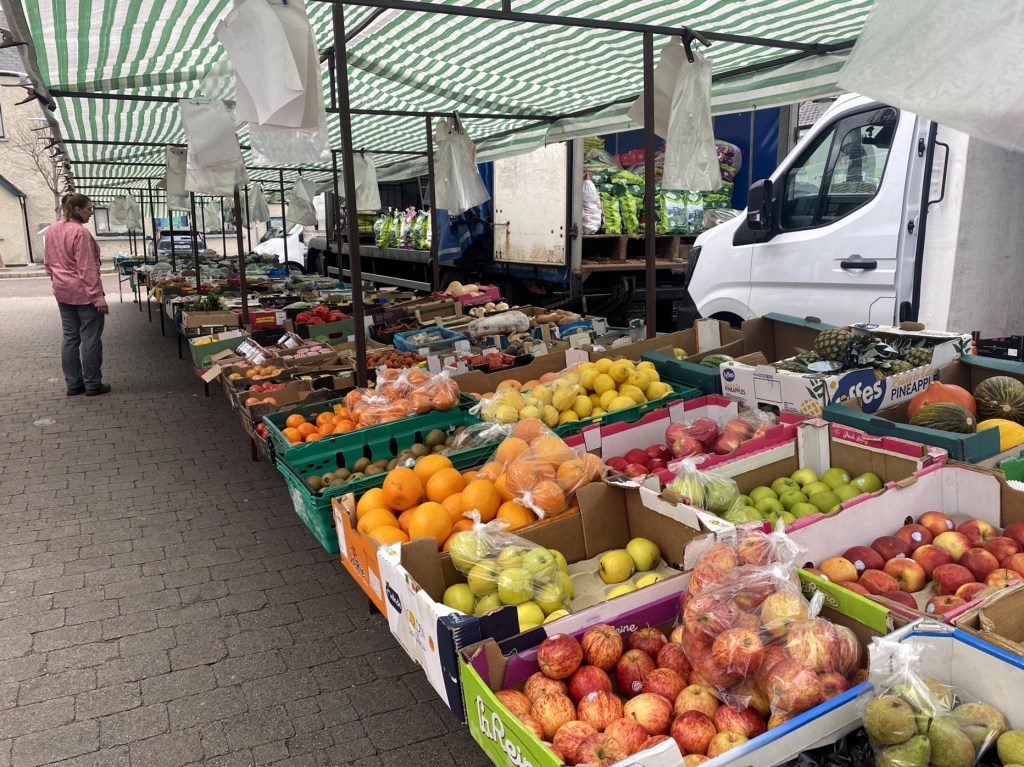
Since it was Saturday, there was a farmer’s market in the town square where we could buy fresh fruit. Nancy also bought a carrot.
Our other critical stop in Dunfanaghy before heading to the trailhead was the restroom.
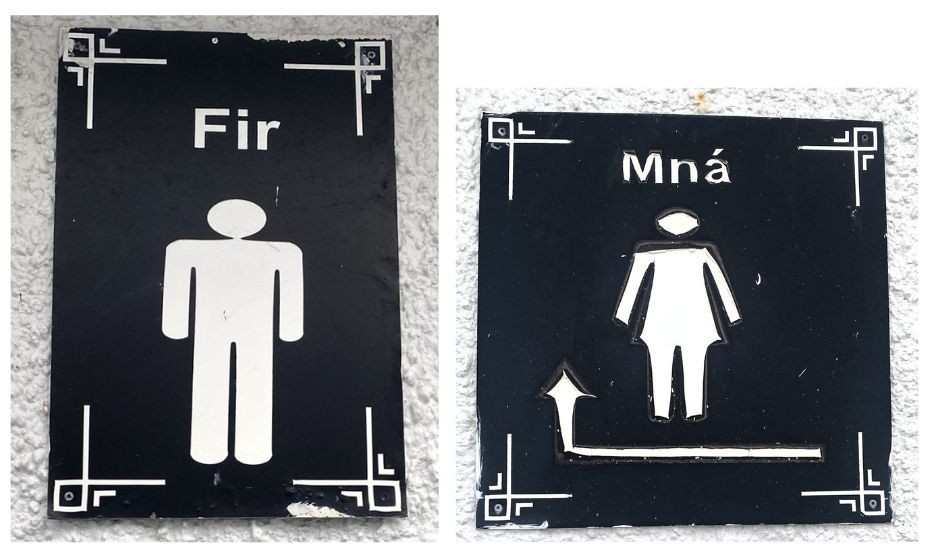
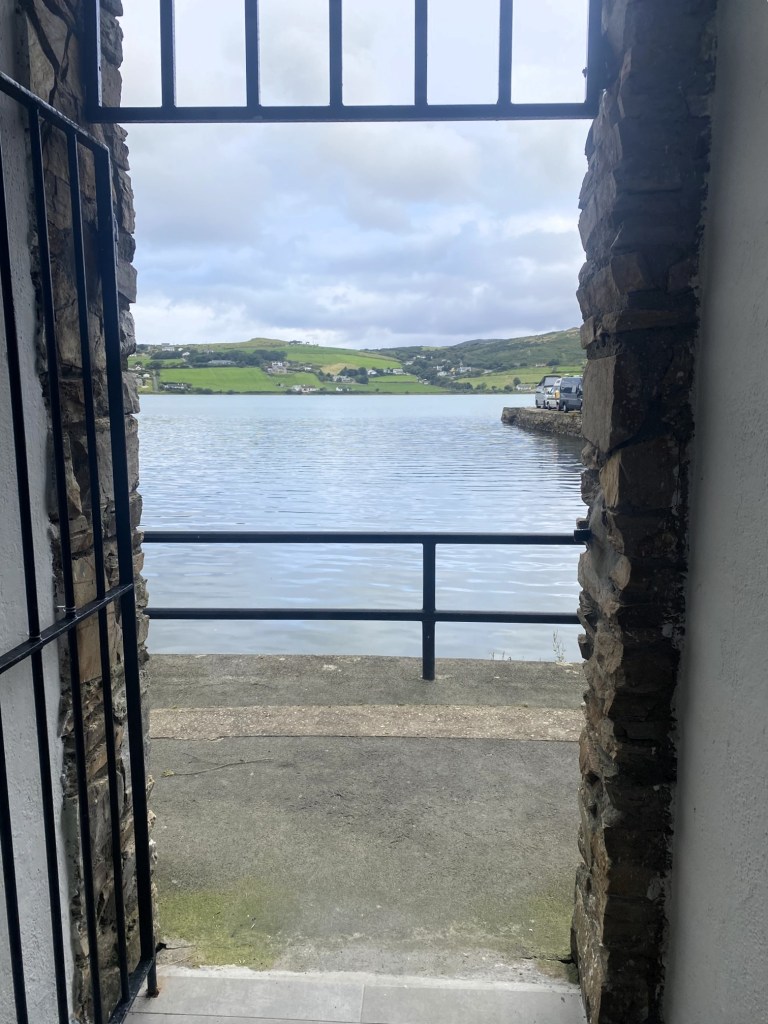
The public restroom was barely adequate, but the view of Dunfanaghy Bay was splendid.
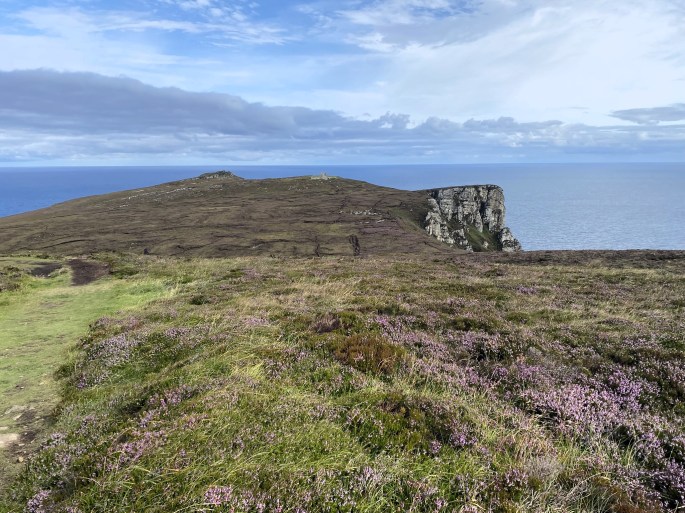
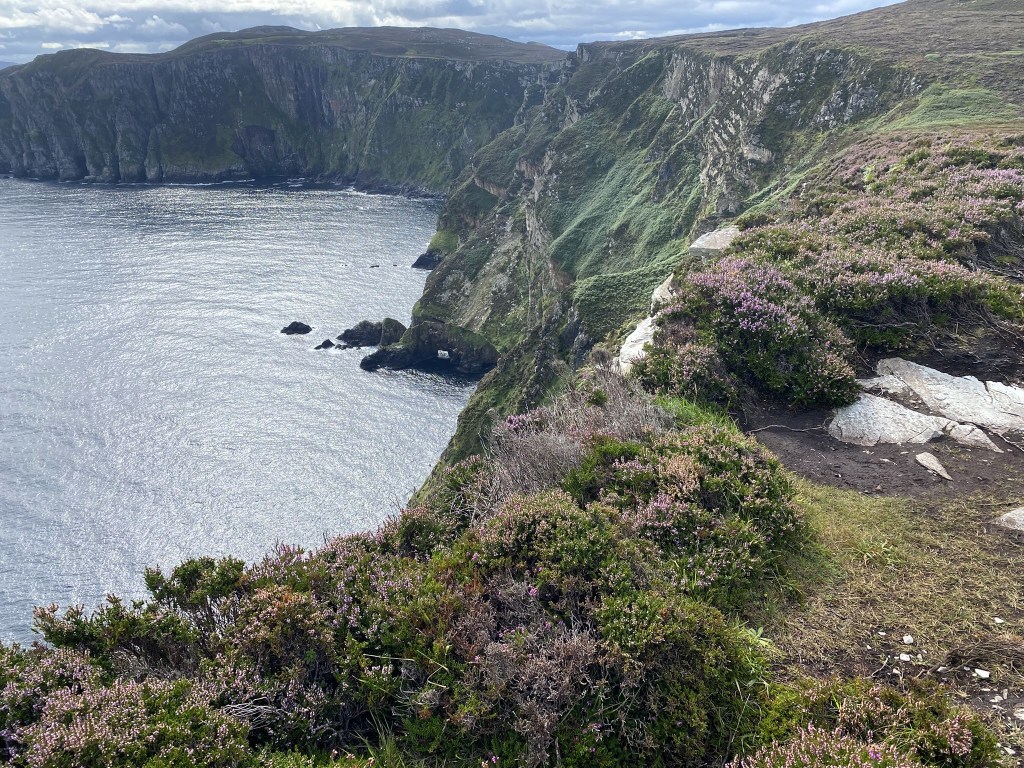
Horn Head, or Corrán Binne, means ‘point of the cliff’.
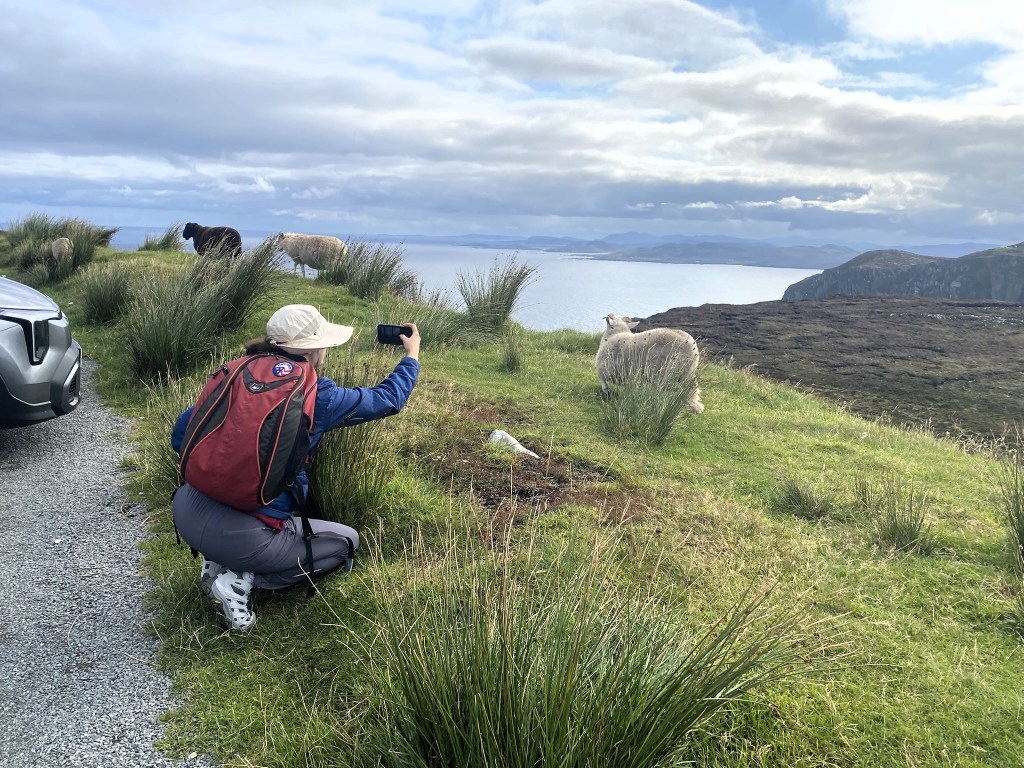
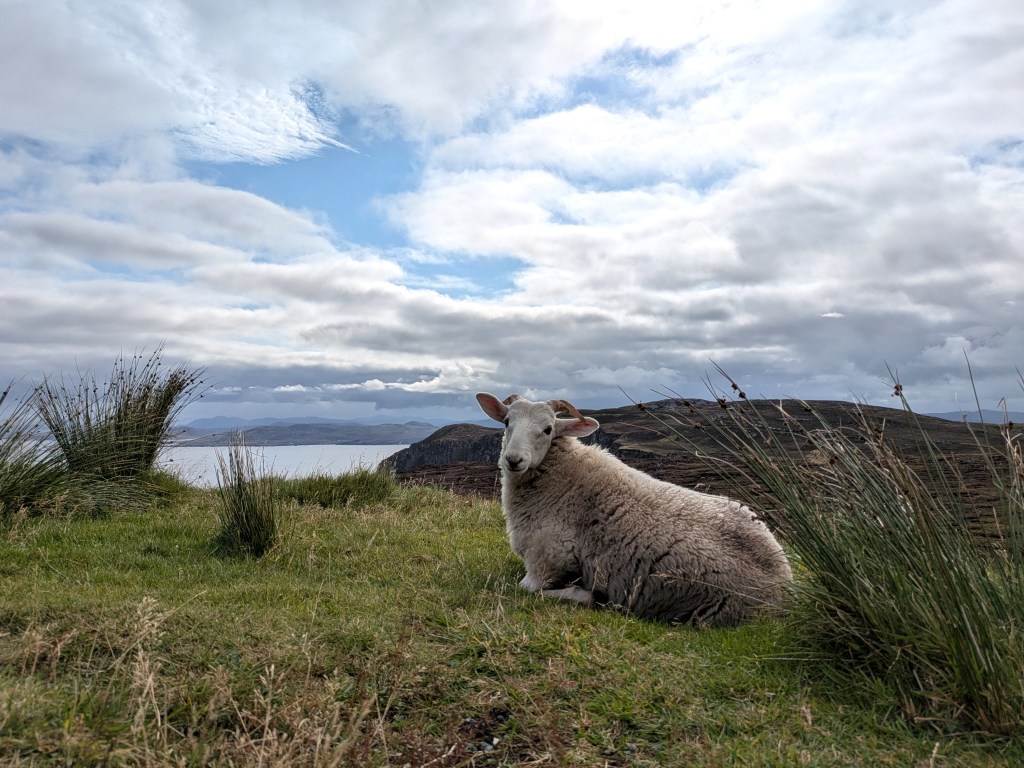
“Portrait of a Sheep” by Nancy
We learned that it costs far more to shear Irish sheep than their wool is worth, and most of the meat is exported.
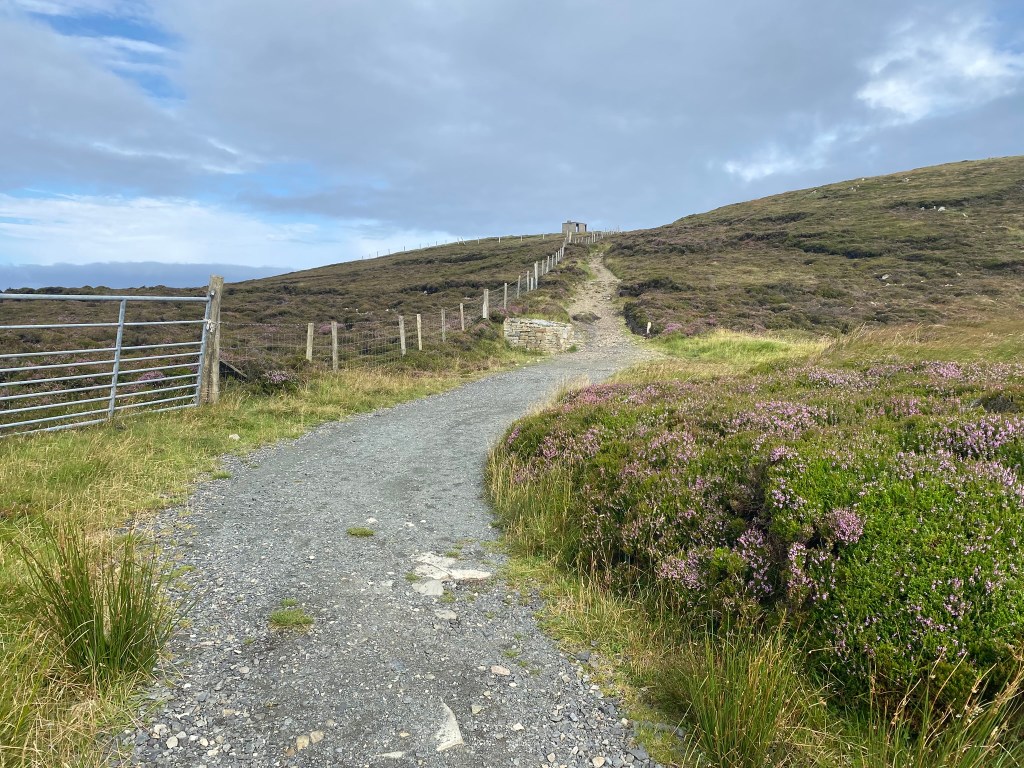
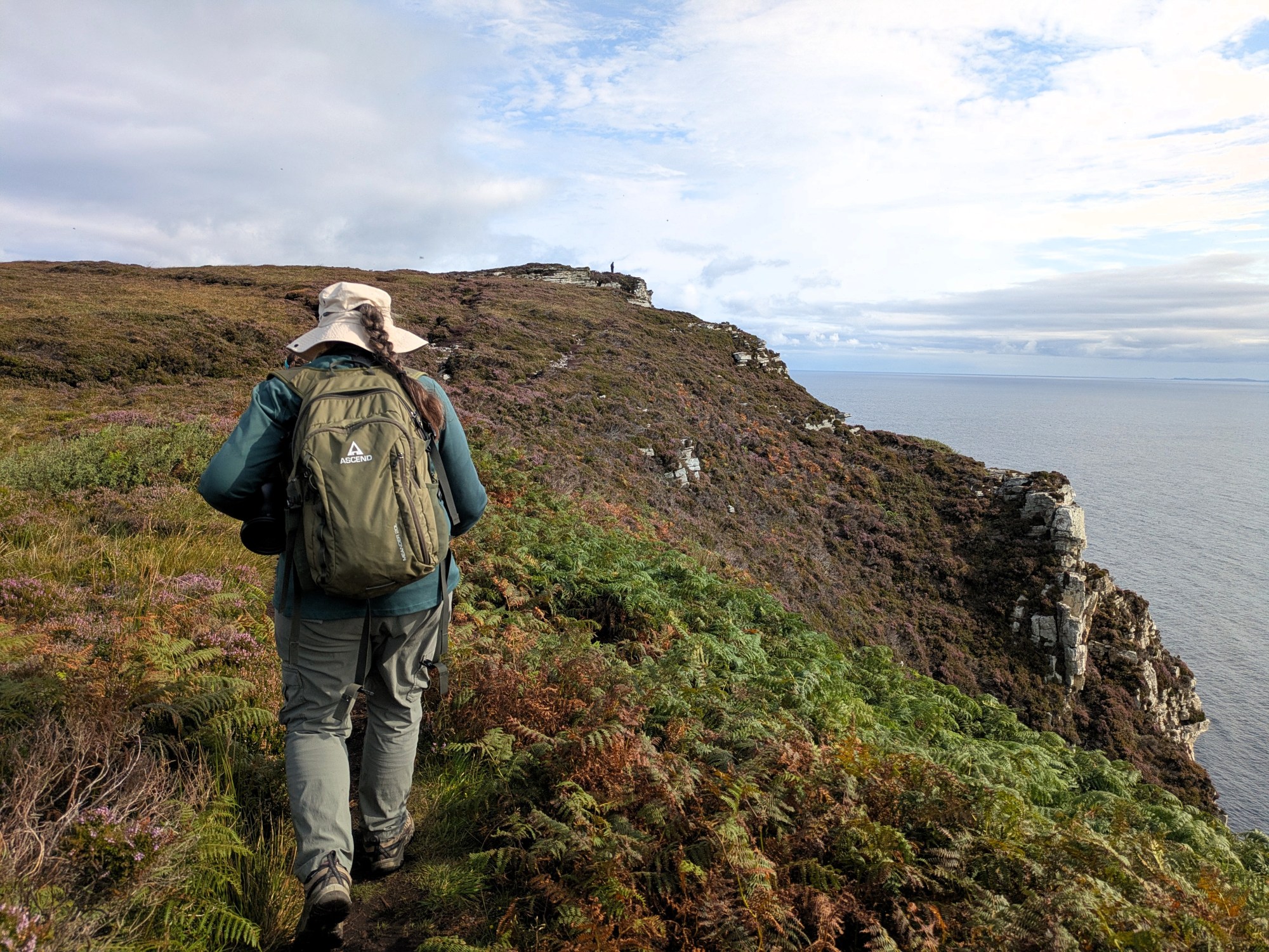
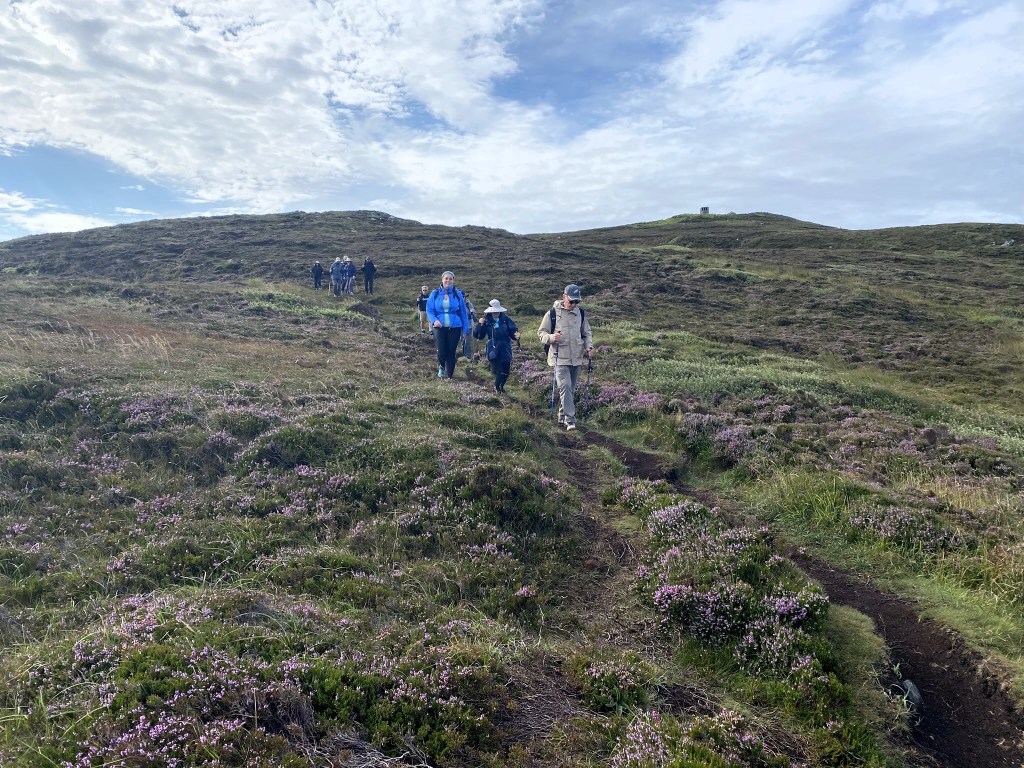
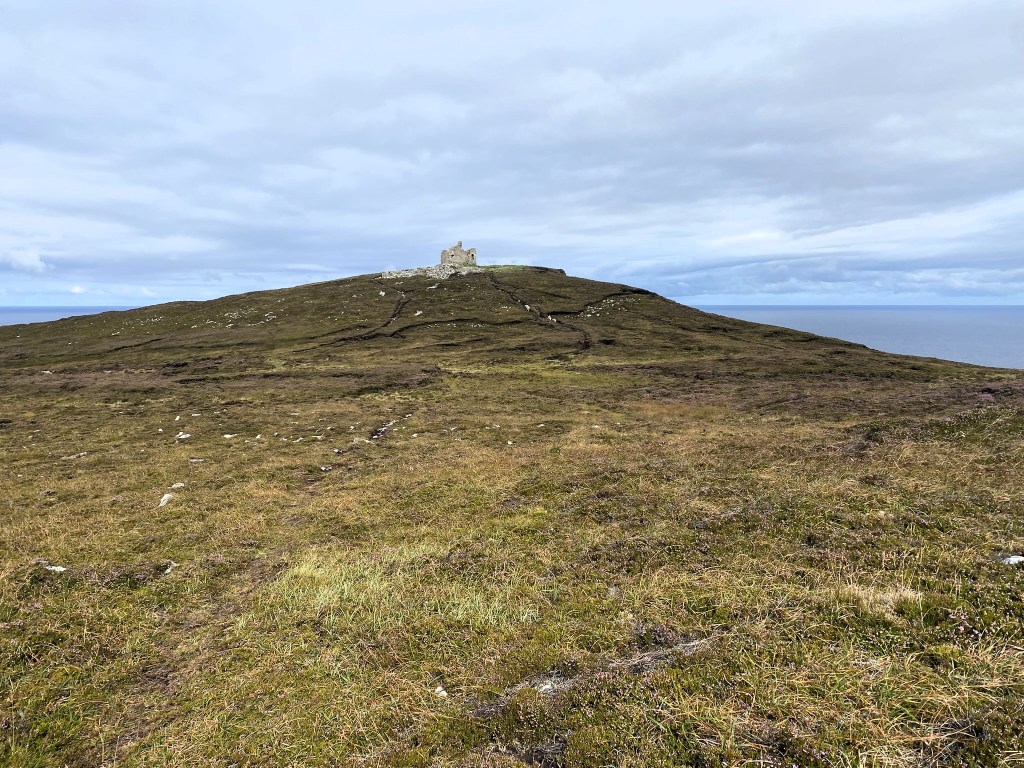
Up the hill we go to that tower in the distance.
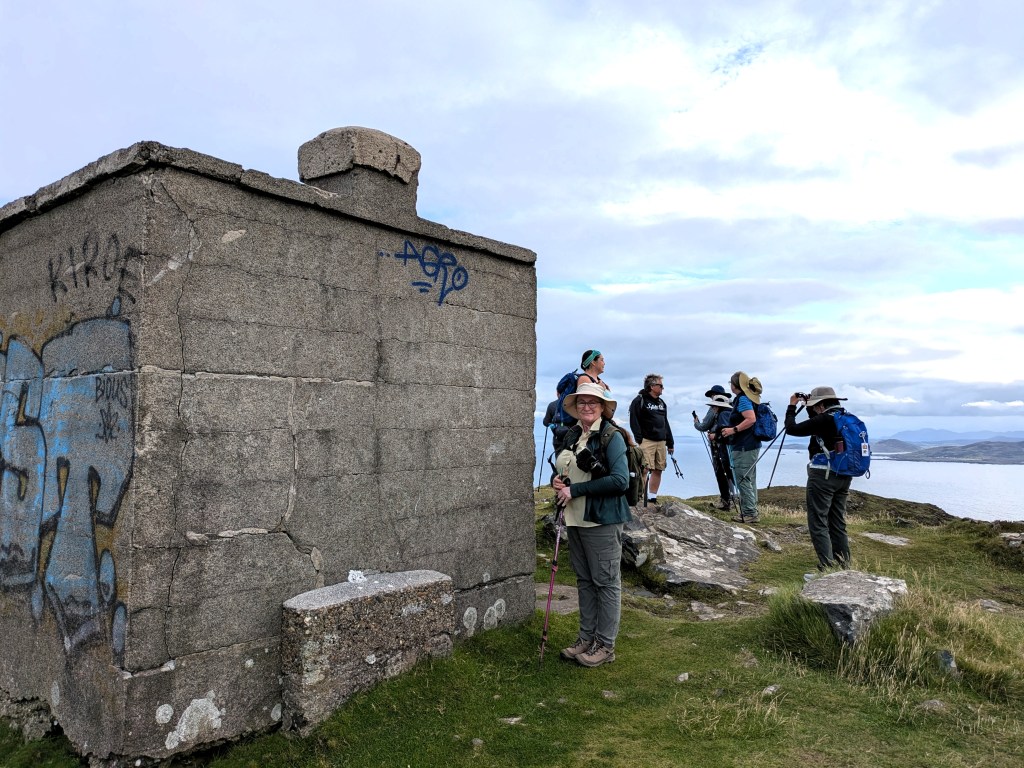
A series of signal towers were built along the western coast in response to the repeated attempts by Napoleonic French forces to invade Ireland during the late 1790’s.
Think: “The Beacons of Gondor.”
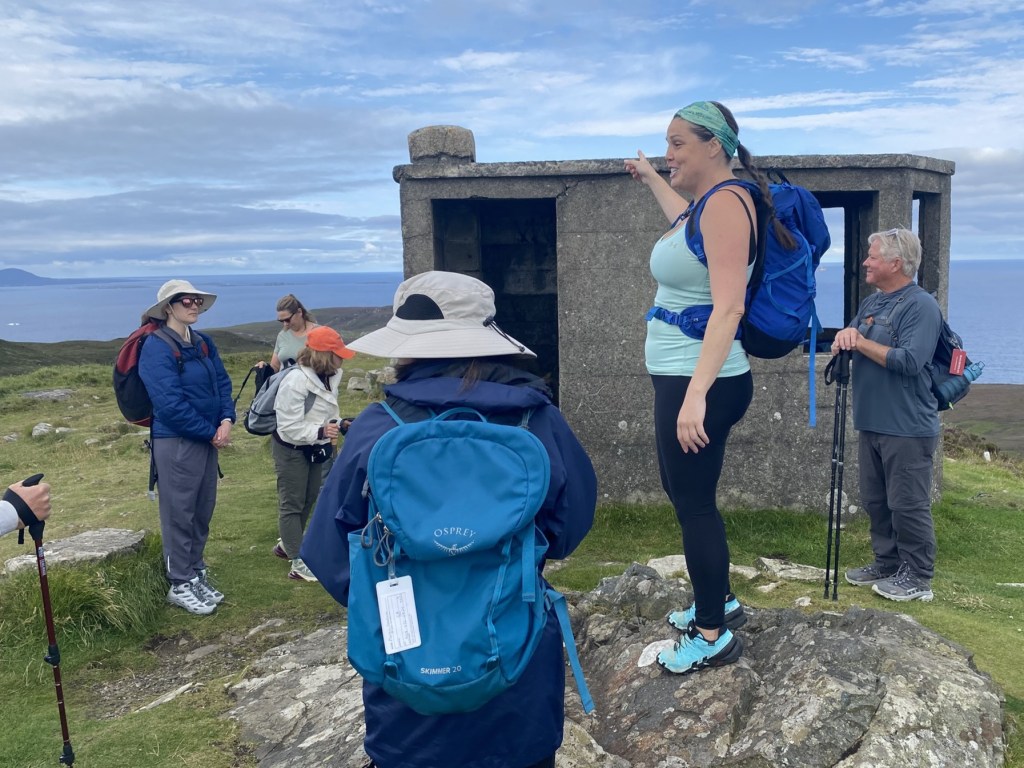
Our local hiking guide Fiona shared history, culture, and information about plants throughout the morning.
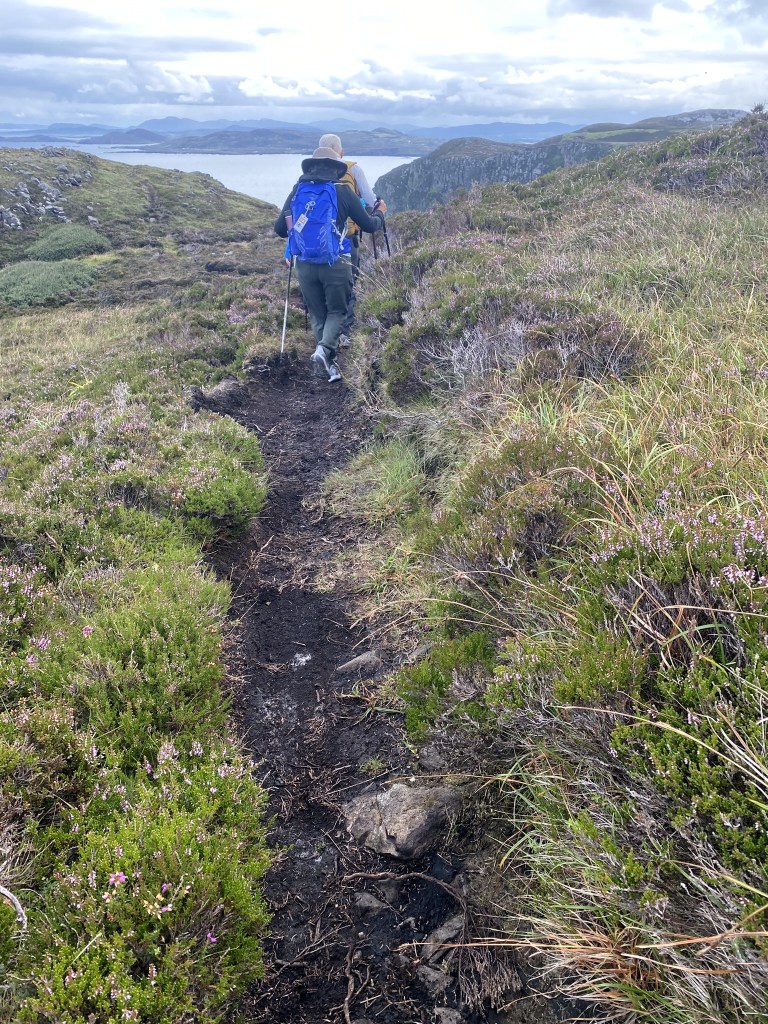
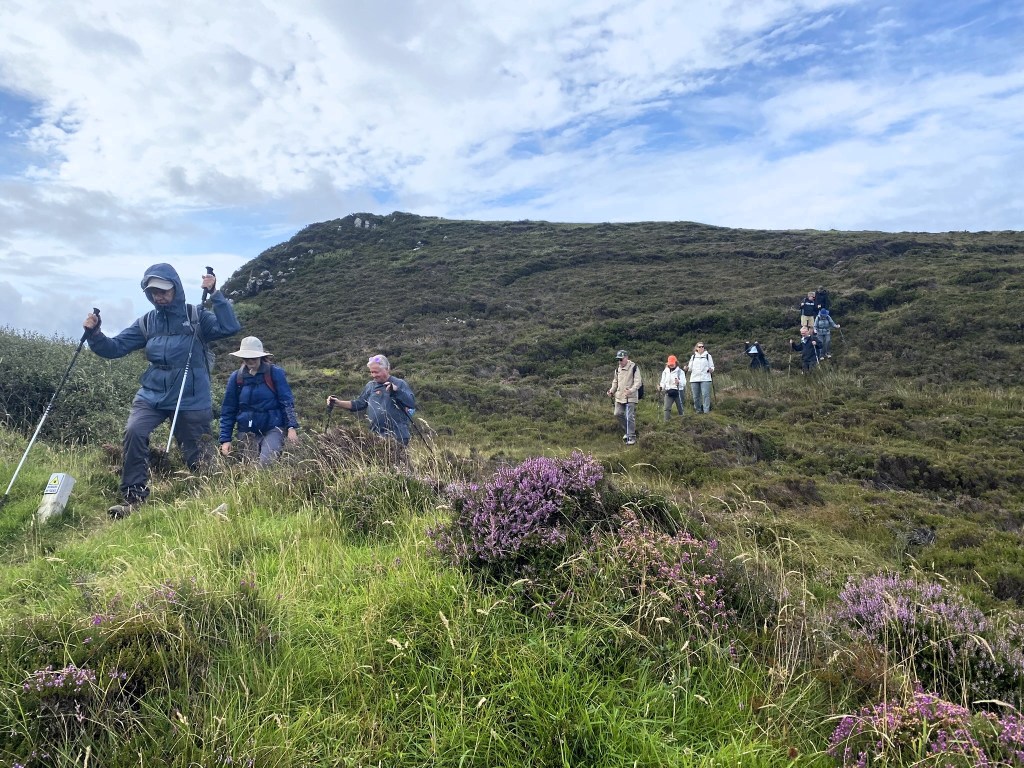
As we made our way across the heather and bogland, I was very happy I had waterproof boots!
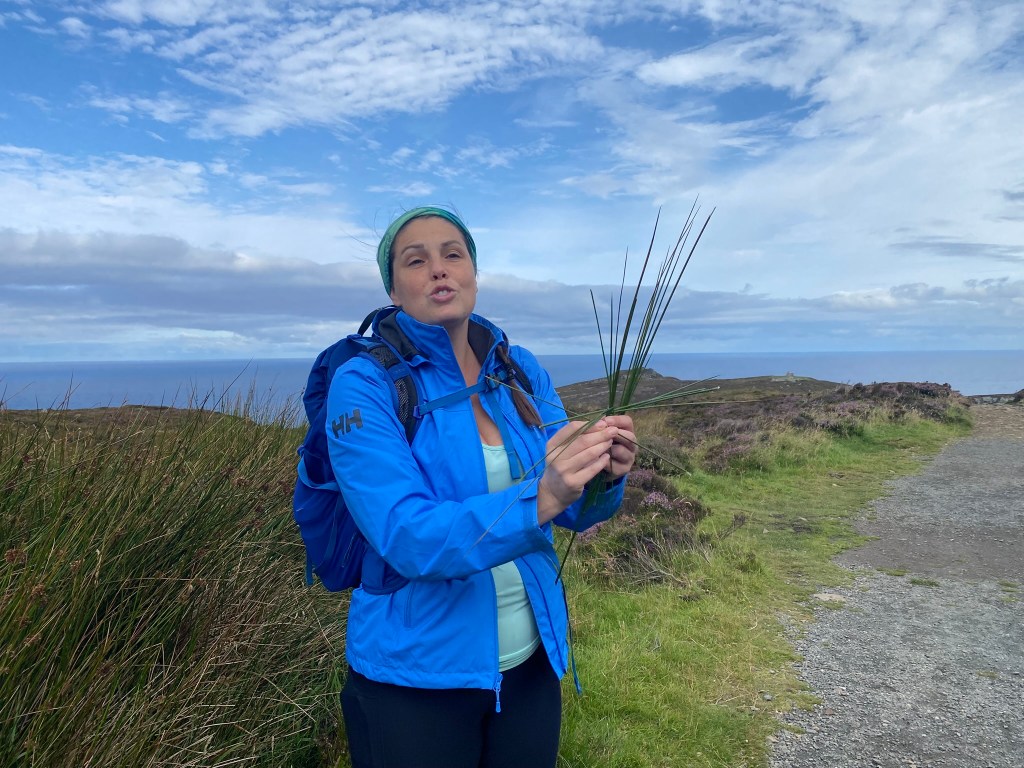
Fiona demonstrated how the Irish make a St. Brigid’s cross from reeds. It’s woven on February 1, the saint’s feast day, and is hung in the rafters for good luck the rest of the year.
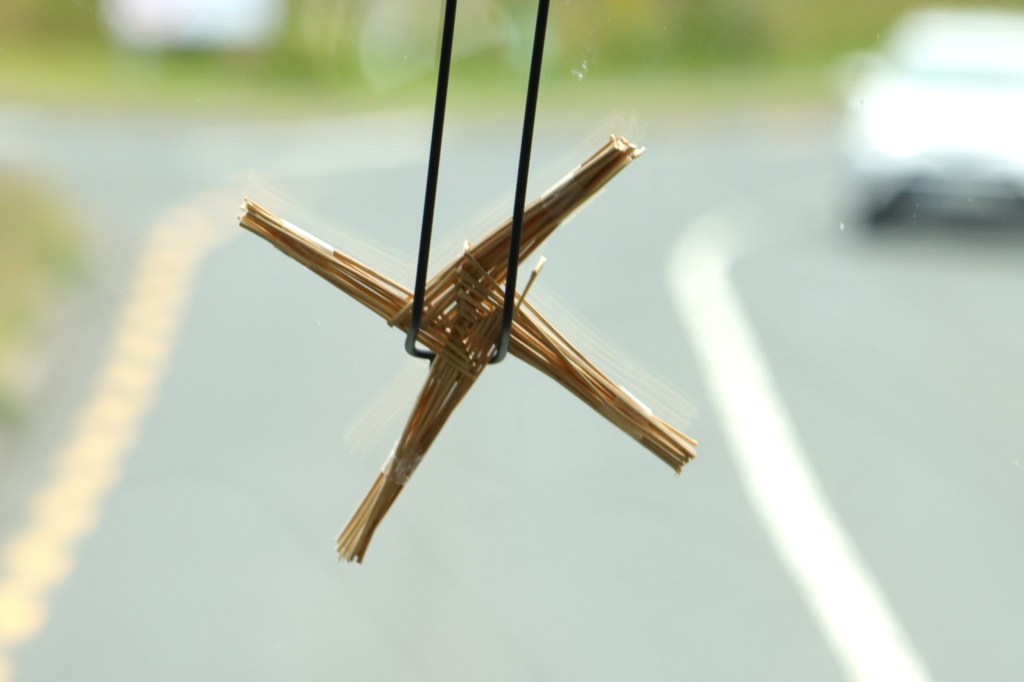
Or you can hang it in the bus!
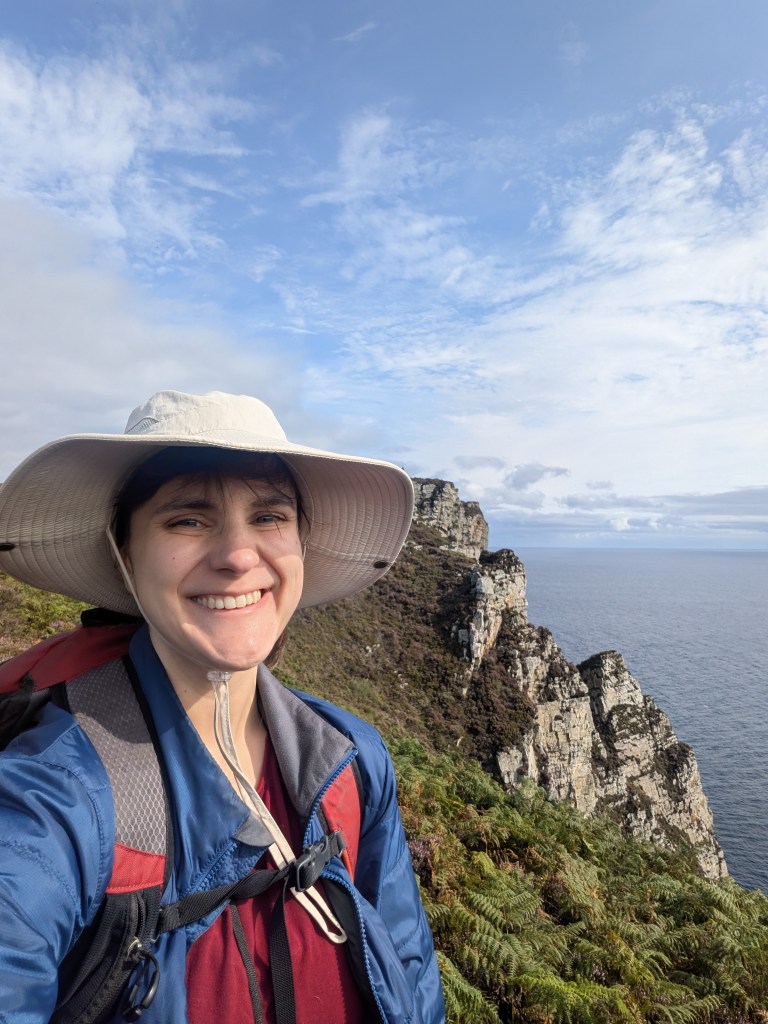
We also got colorful stories about the last people to die by falling (or jumping) off the cliffs.
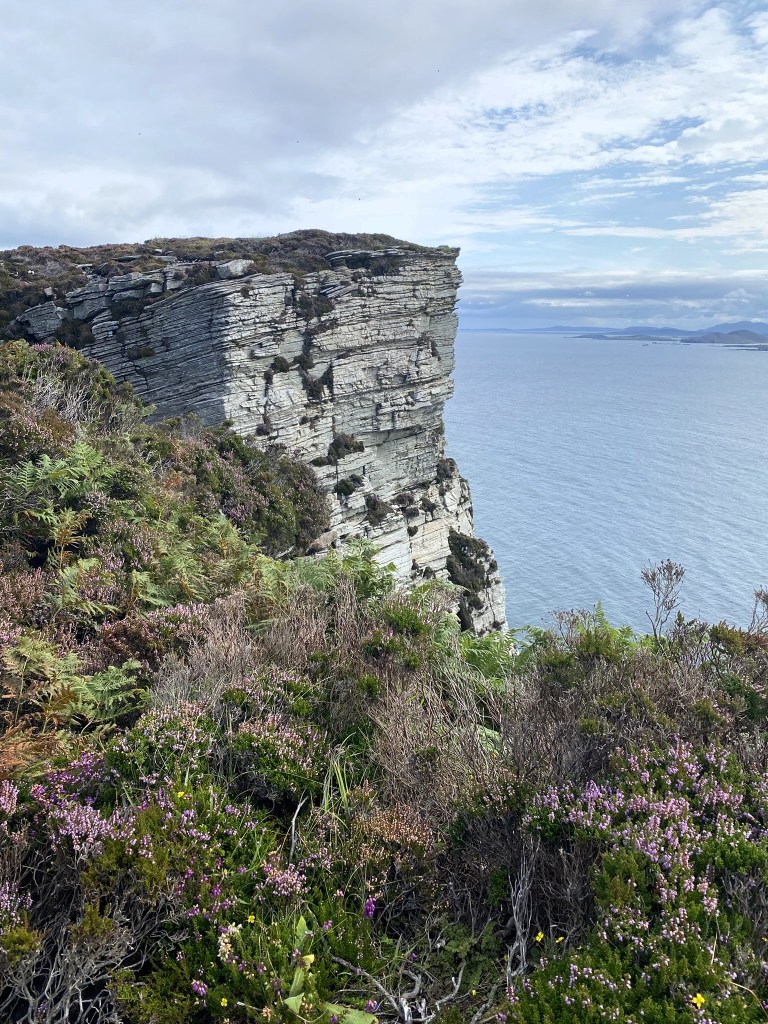
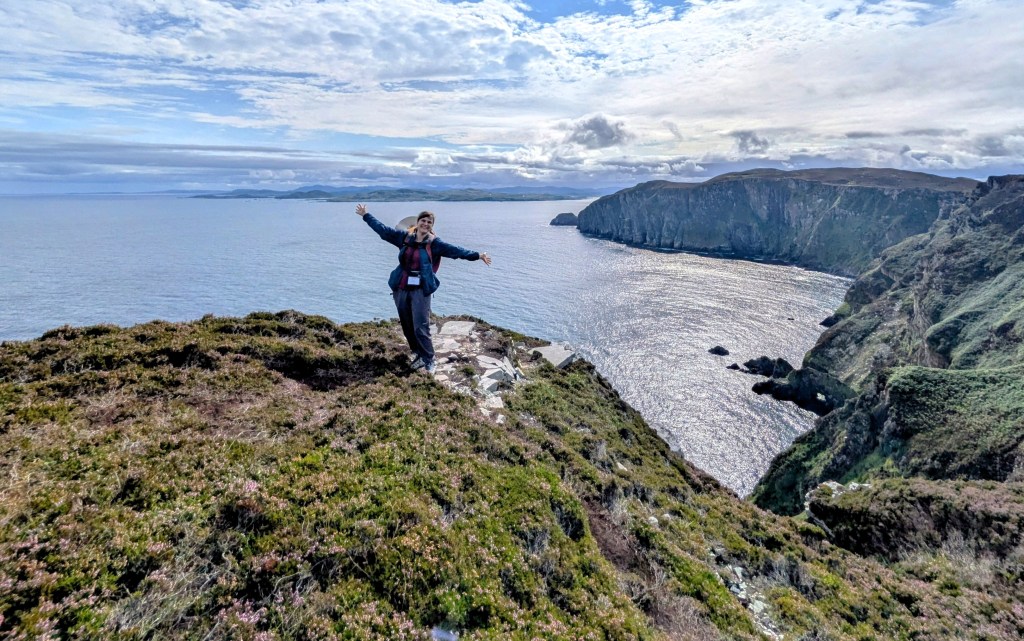
We were often quite near the cliff edge, but you were safe if you stayed on the path, so I don’t know what Nancy was doing out there….
The next feature was a WW2 lookout tower.
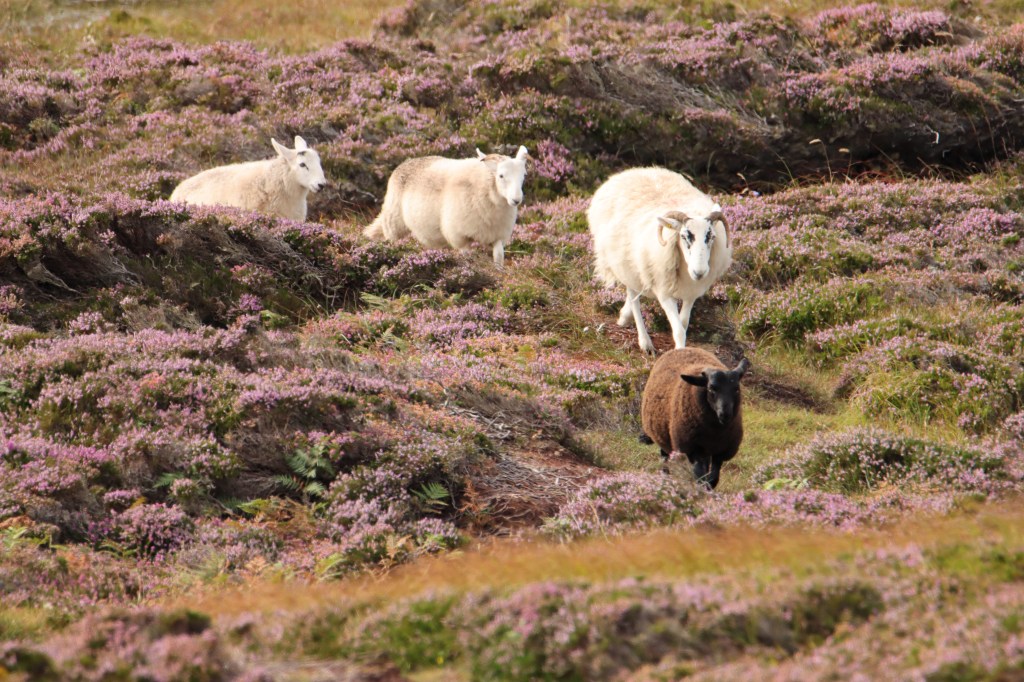
The sheep we saw in the parking area didn’t dawdle, so they beat us to the top of the hill.
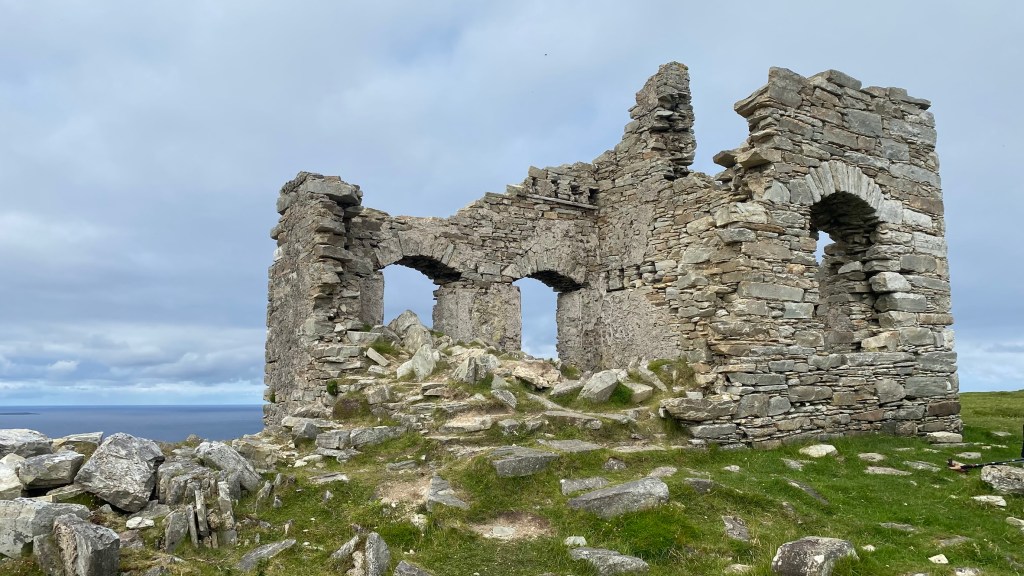
During WW2 the structure was manned by 12 soldiers to monitor shipping, submarine, and aircraft activity.
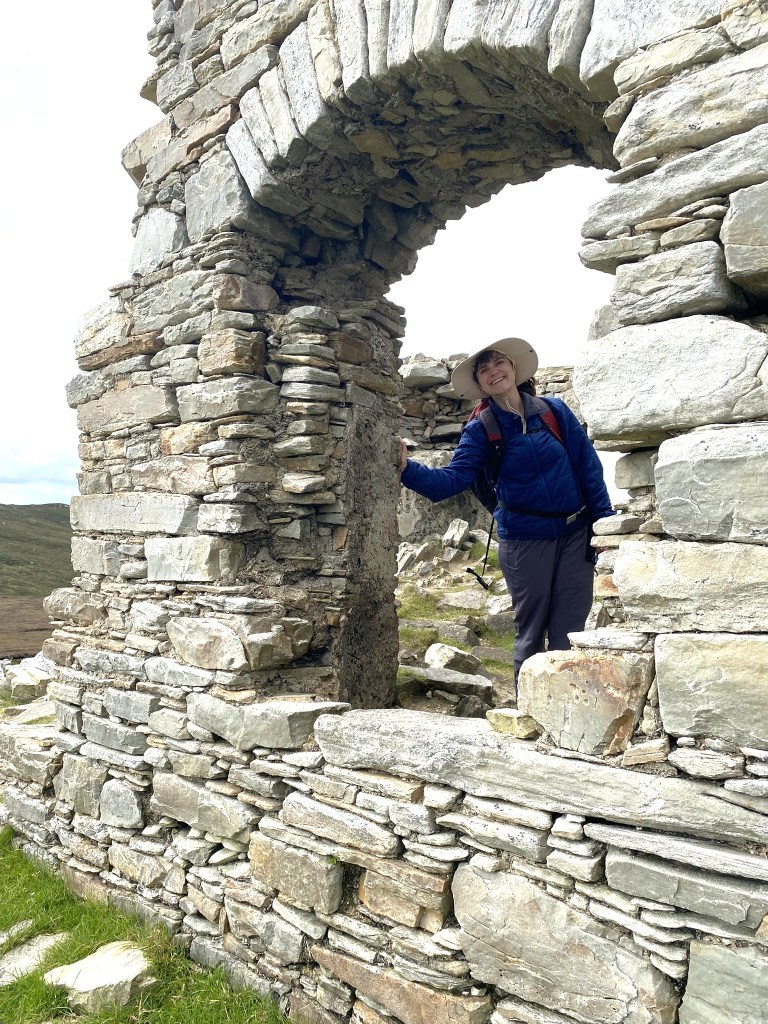
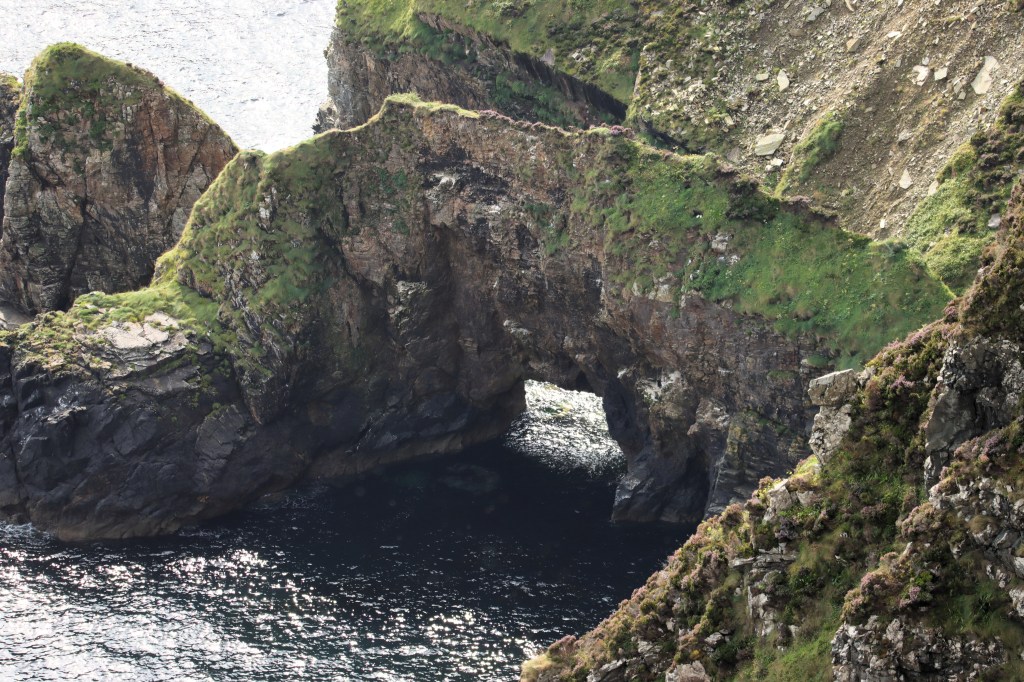
Everyone had fun staging photos in the archways.
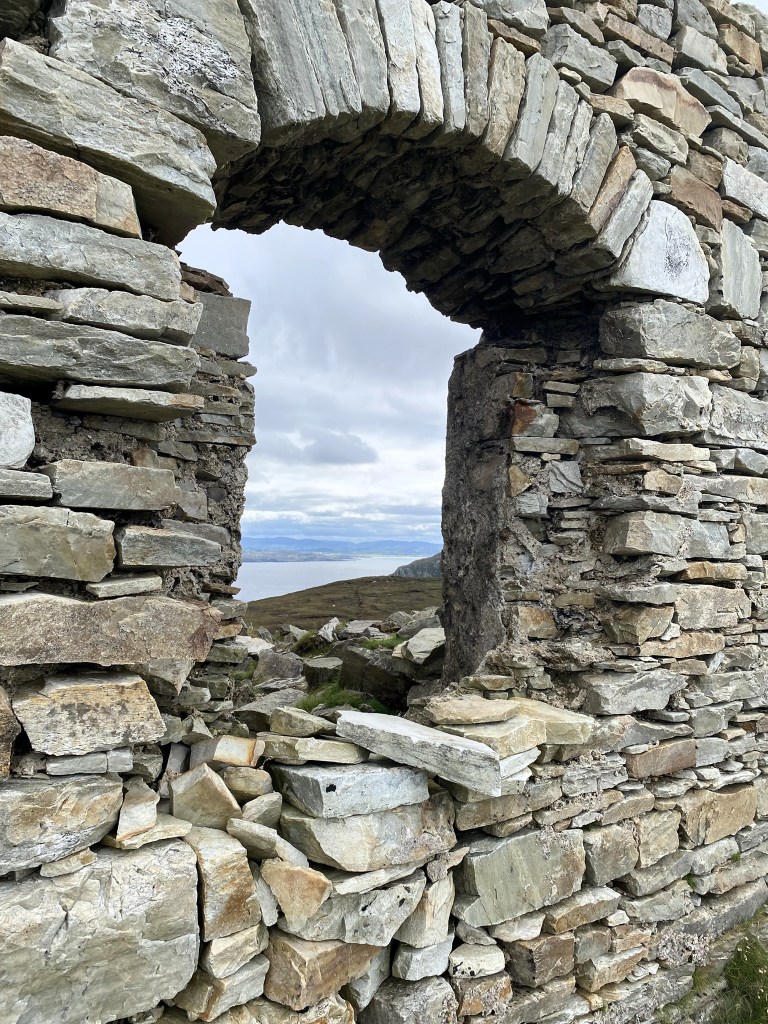
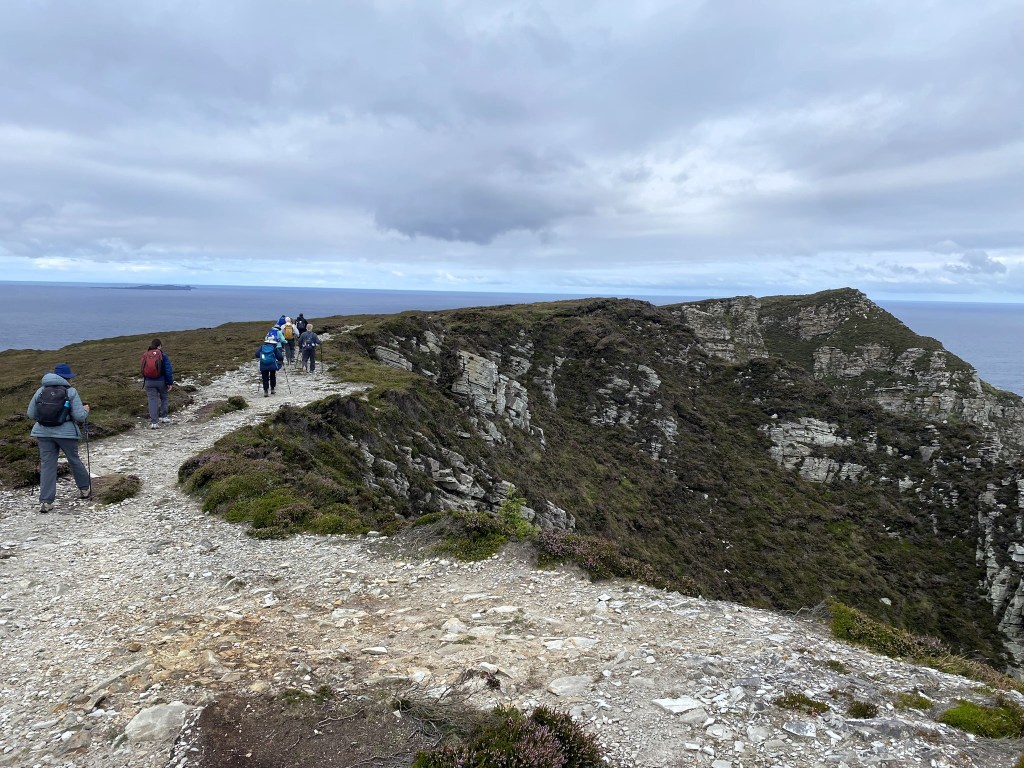
Then we continued on to the far point of the headland.
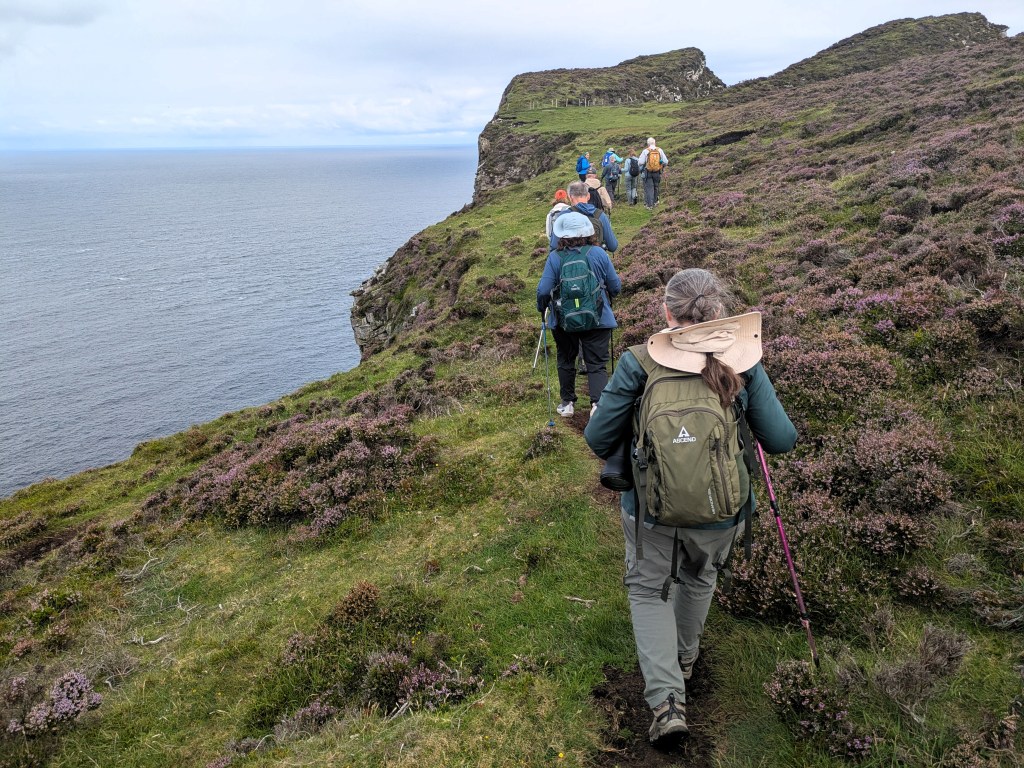
Two of our group stayed behind at the lookout tower, as the trail was too near the cliff edge for them. Everyone has their own comfort level with heights, and I was about to find mine.
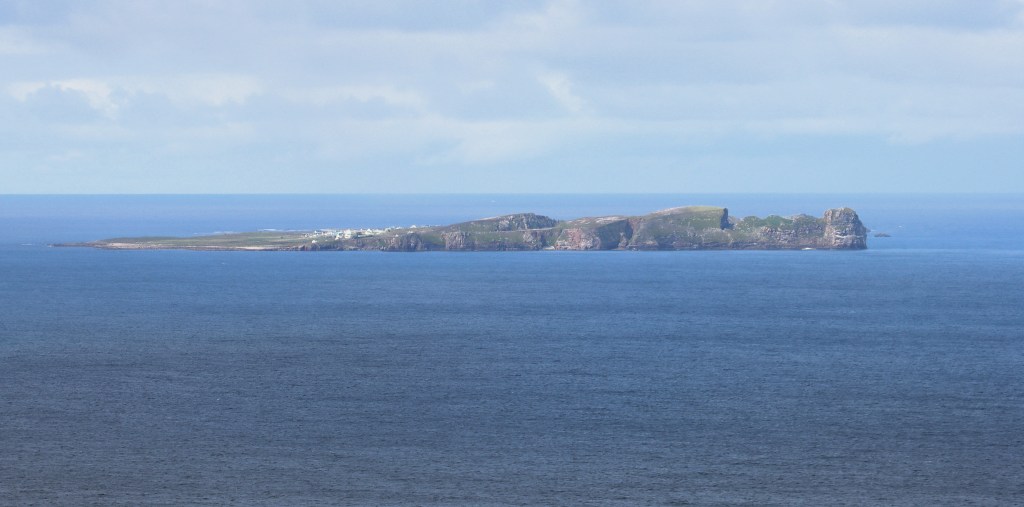
Tory Island (Toraigh – place of steep rocky heights), where Gaelic is the primary language. Tourists visit via a daily ferry. Fiona’s family used to live there, but they accepted the government incentives to leave and re-establish themselves on the mainland. There are still 140 people living there.
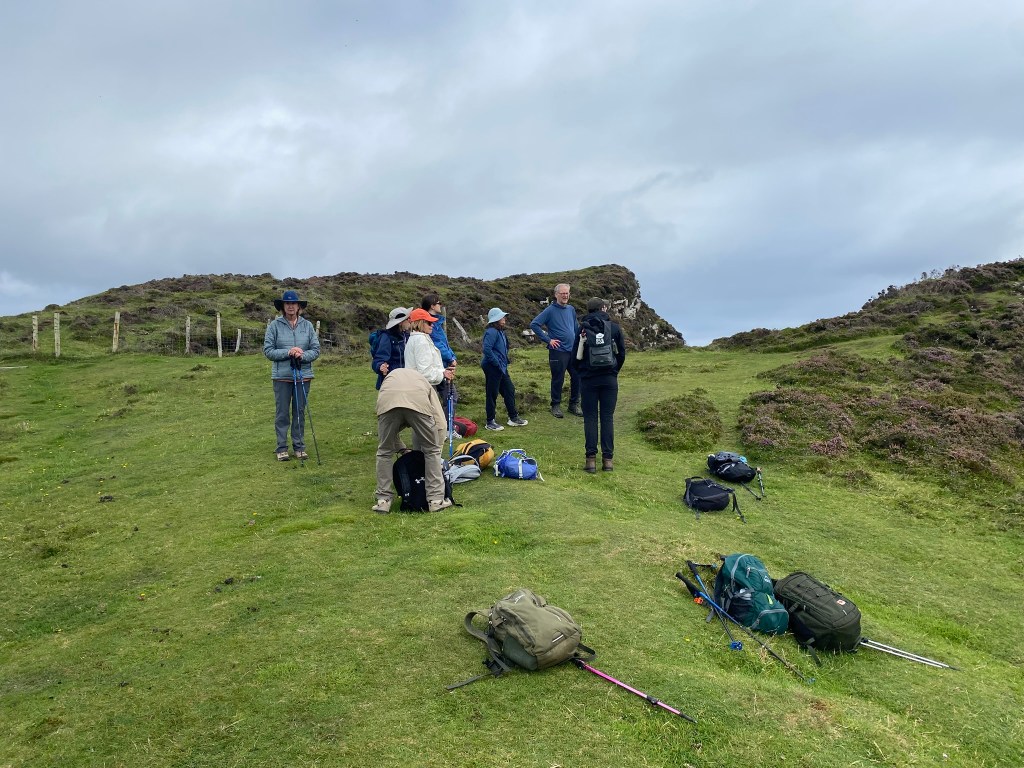
From this resting point, the trail went steeply and narrowly up to the top. Since I was assured that the view was just the same from here, I stayed back and took photos of Nancy as she made the ascent.
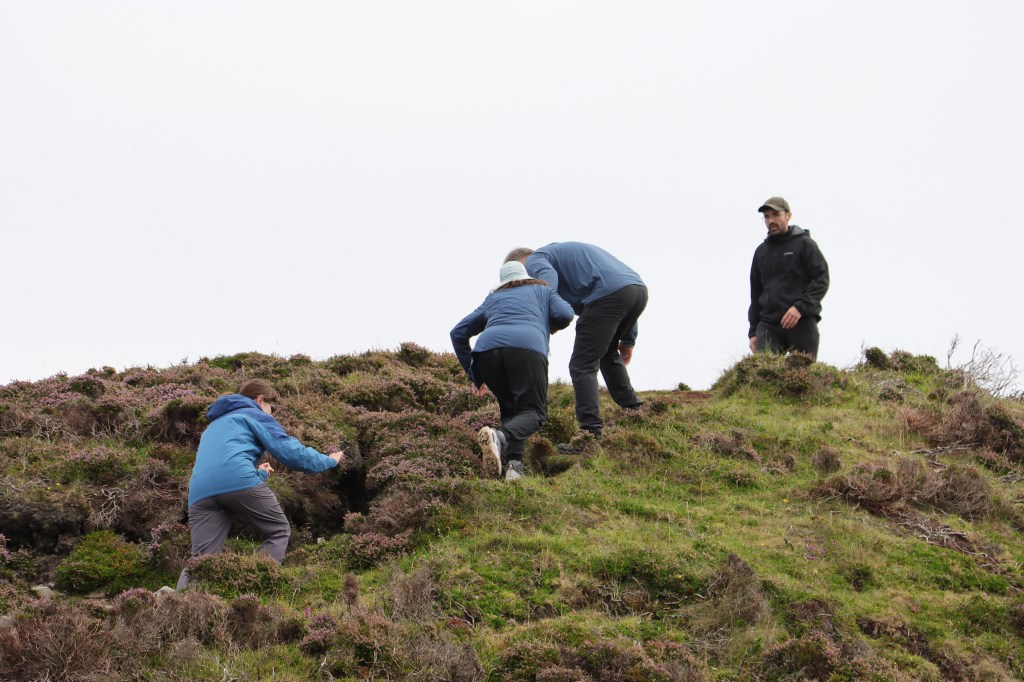
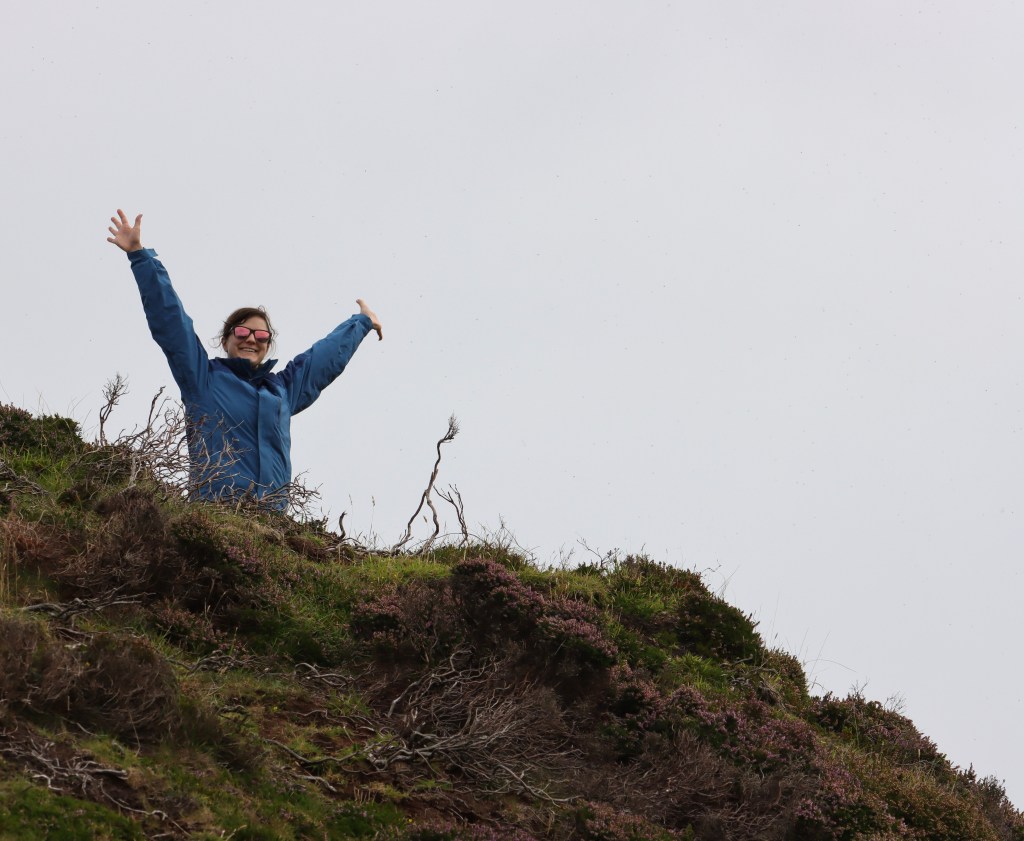
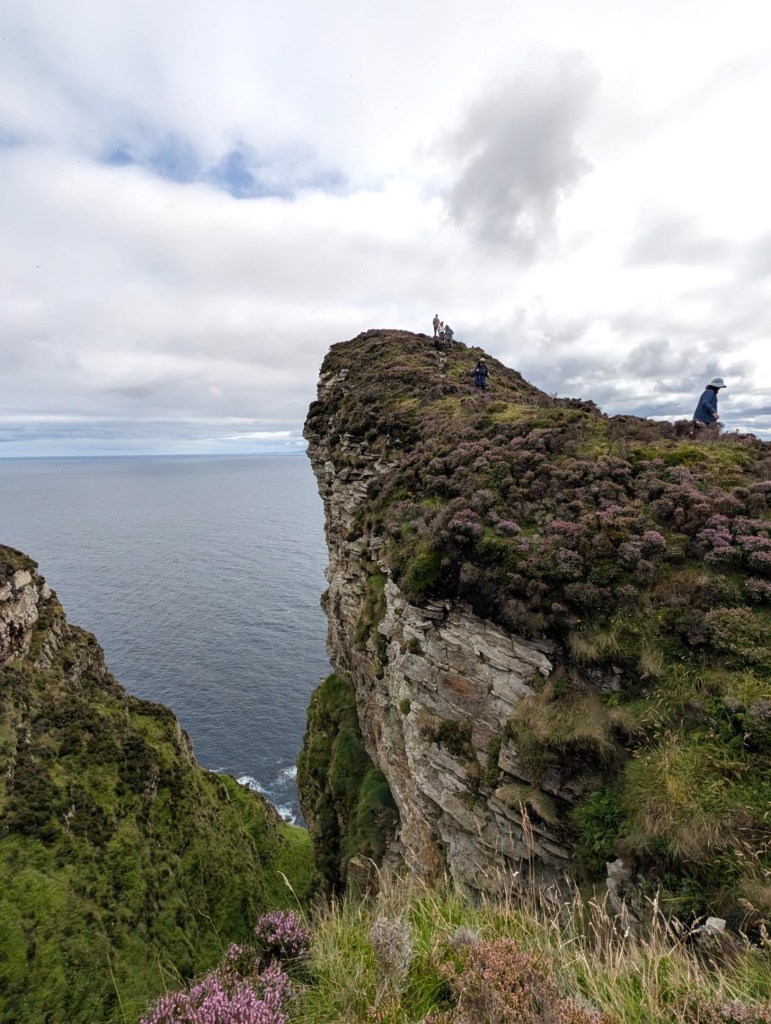
(Here’s where she was standing!)
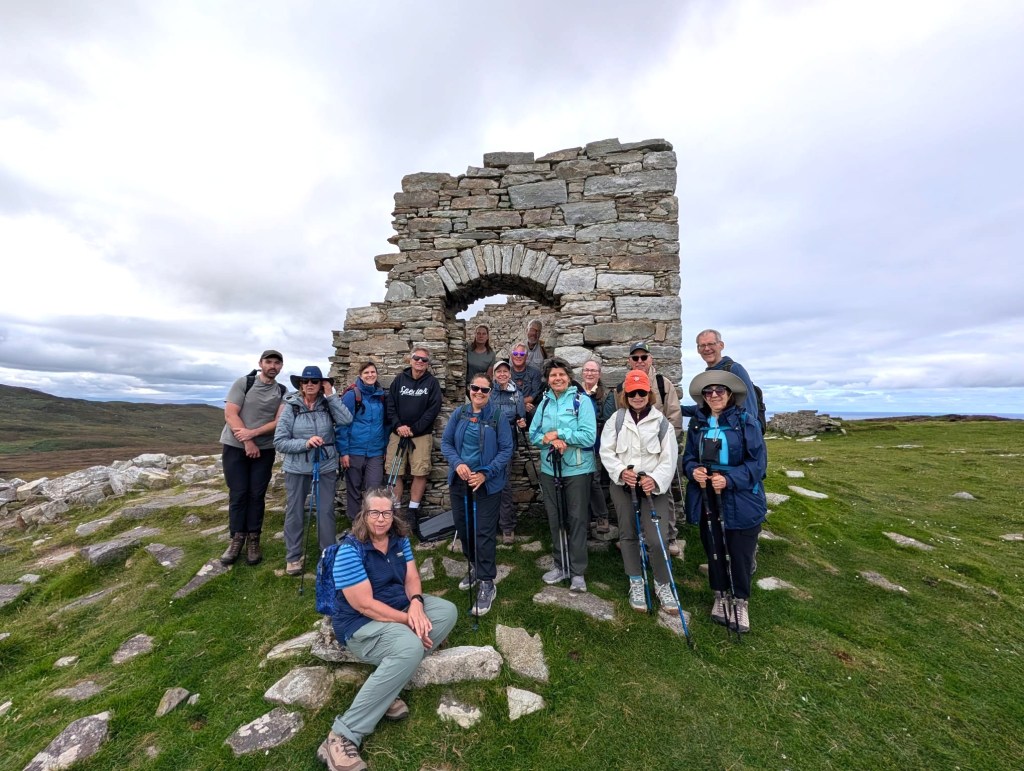
We traced our way back to the WW2 lookout and posed for a group photo.
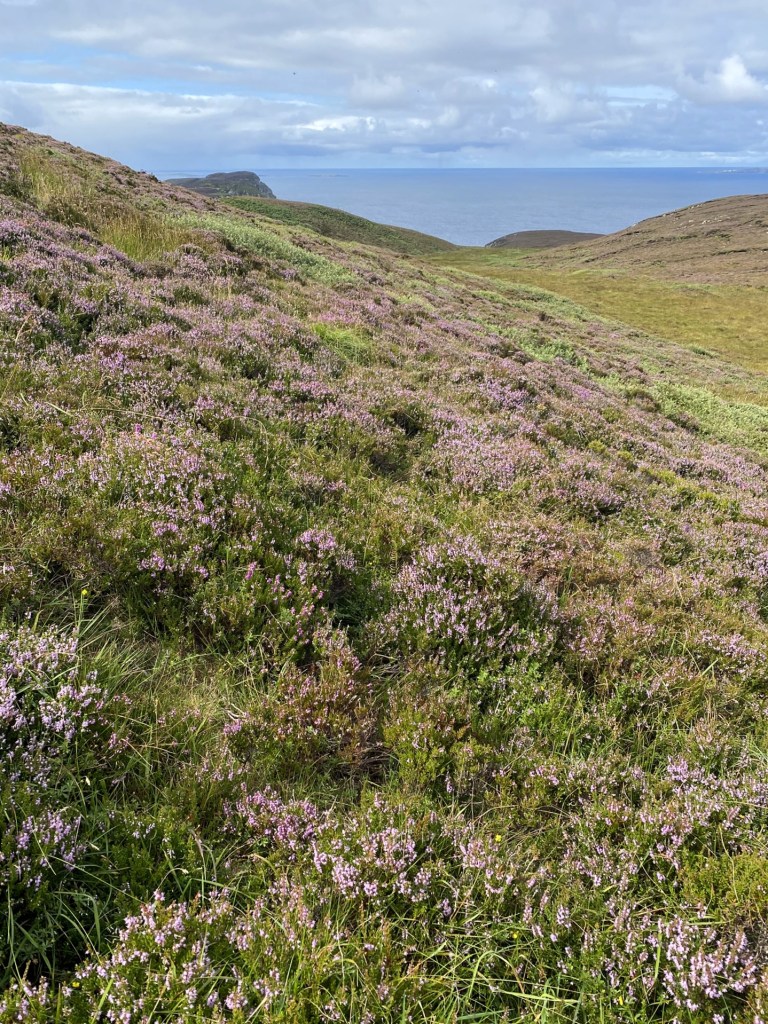
Through the heather, back to the bus.
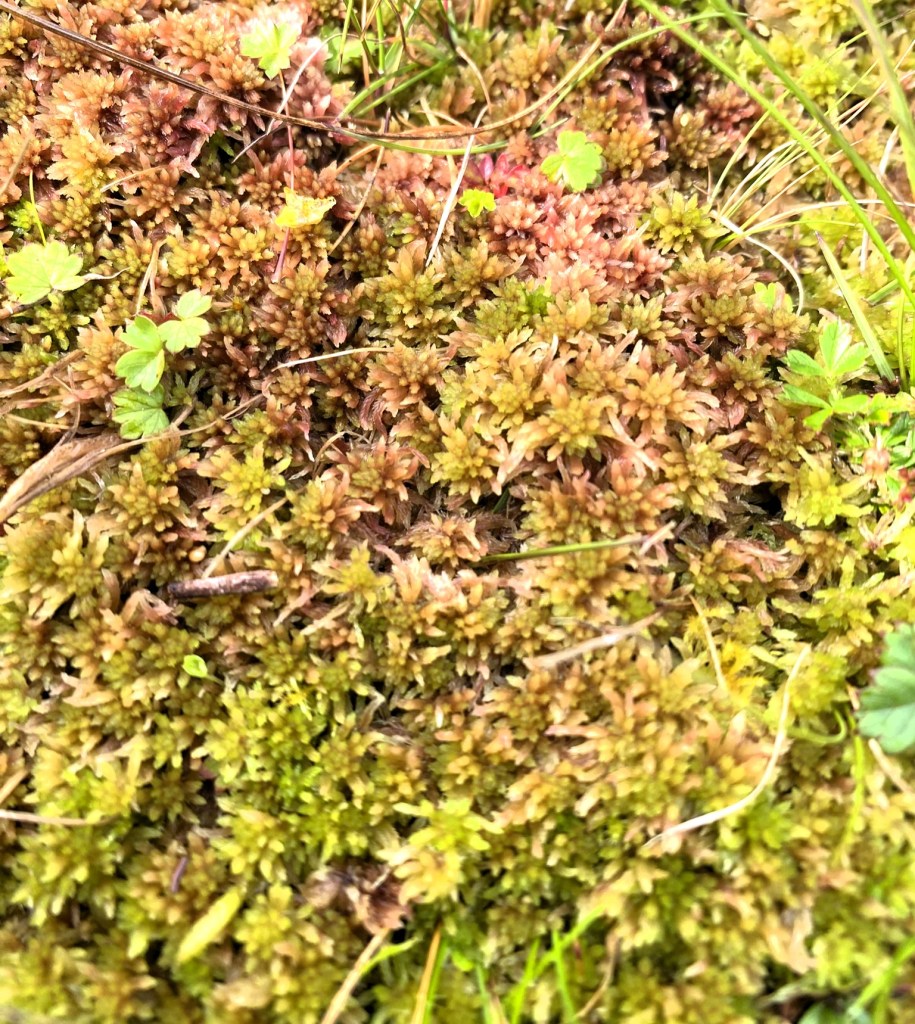
Sphagnum moss was dried and used to pack wounds prior to the discovery of penicillin, as it has both absorbent and anti-microbial properties.
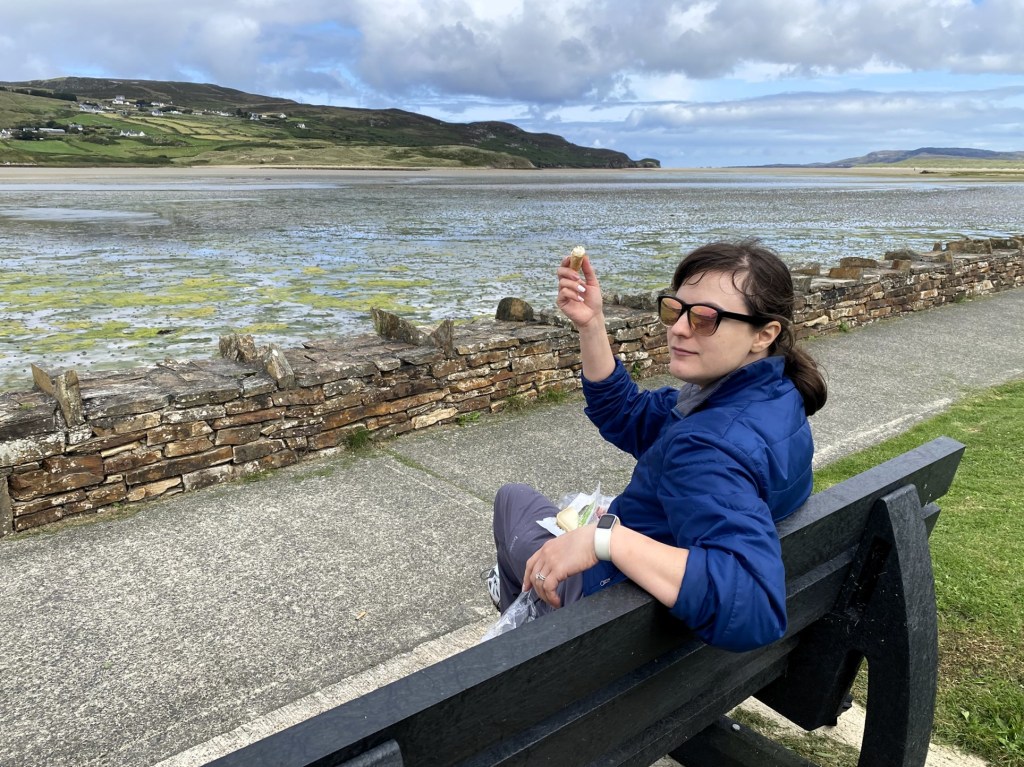
We ate our picnic lunch at Dunfanaghy Bay.
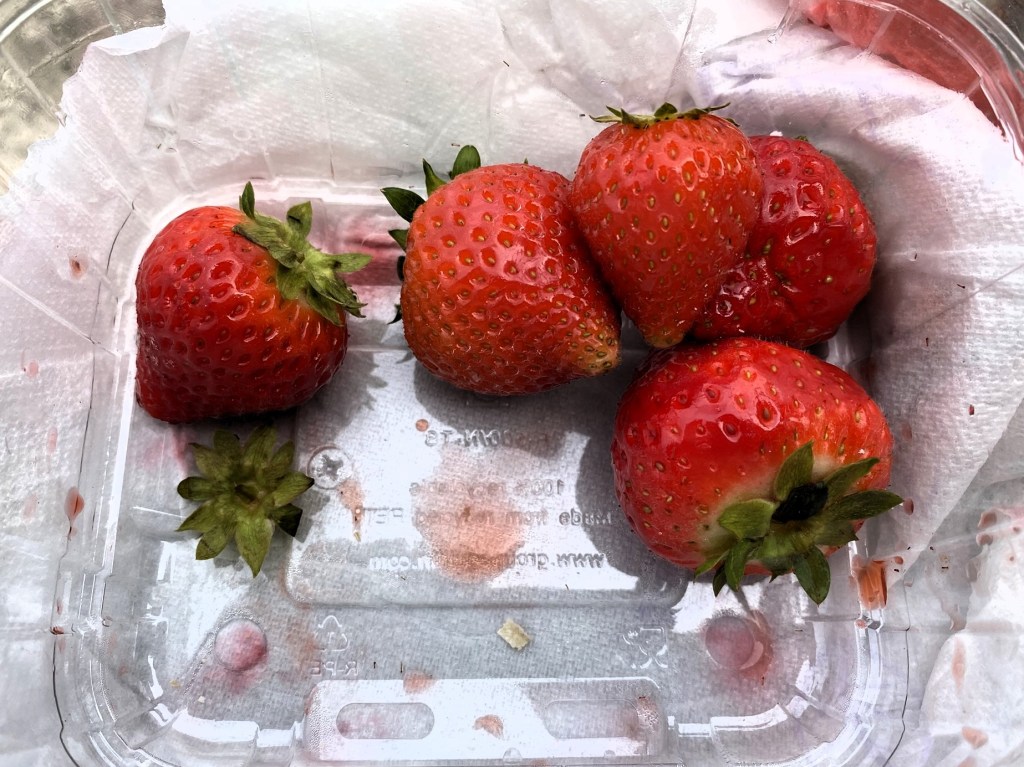
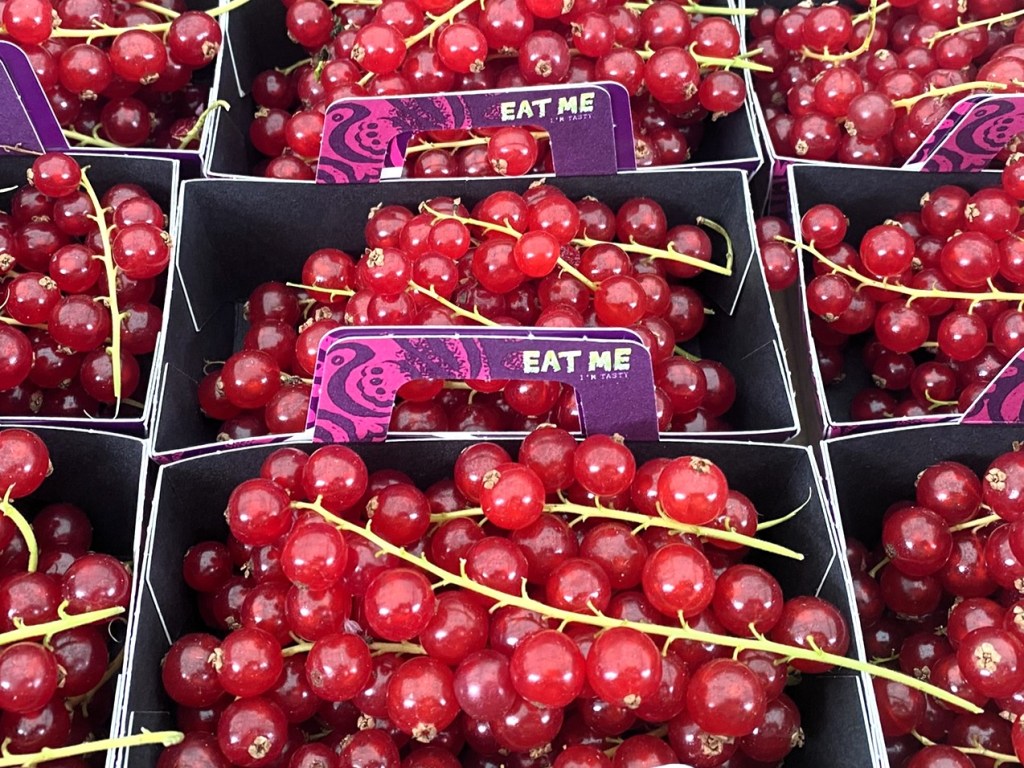
The strawberries we bought at the farmer’s market were absolutely delicious!
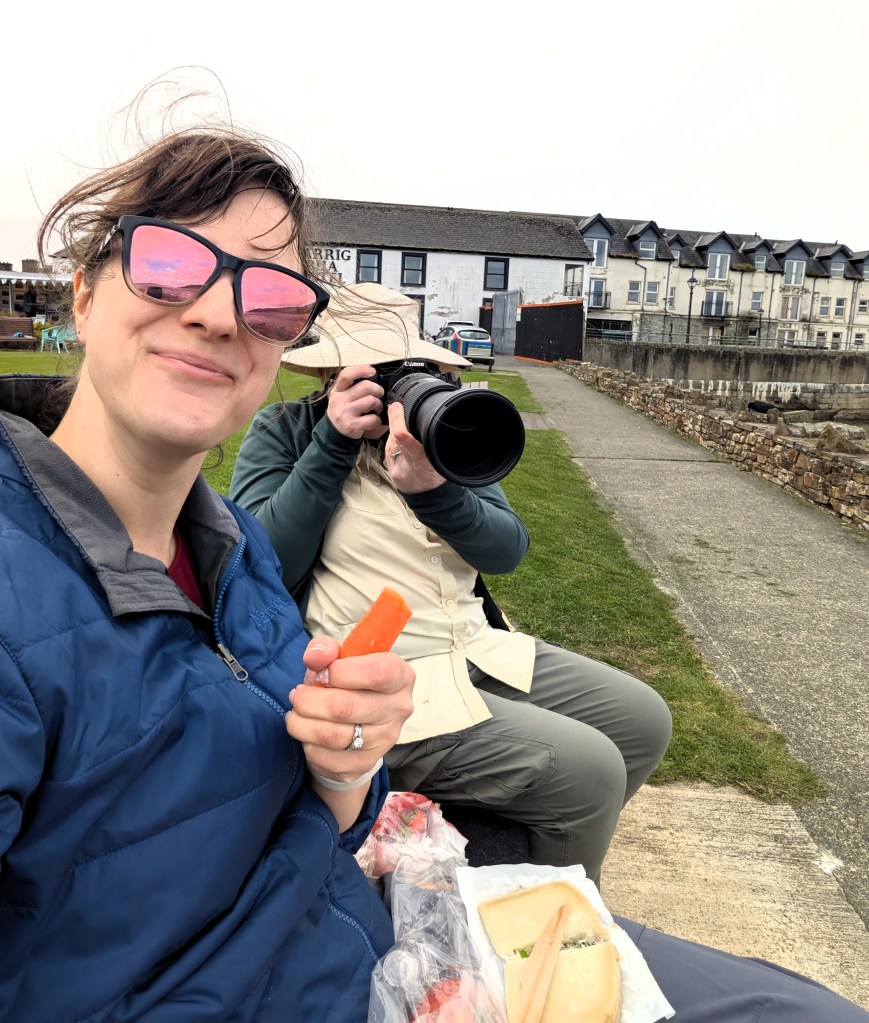
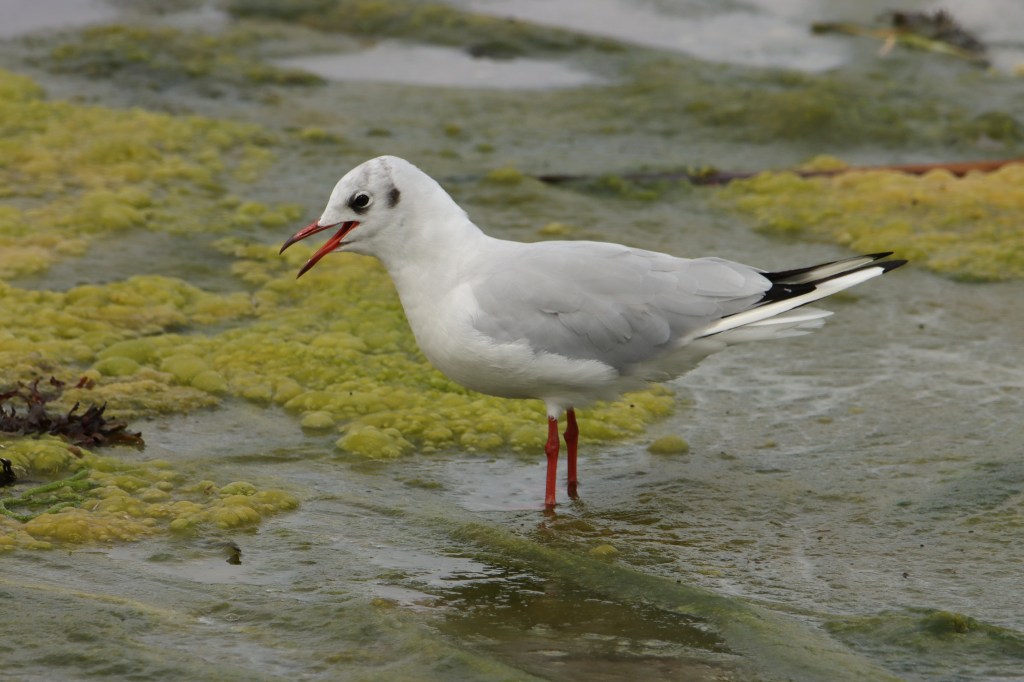
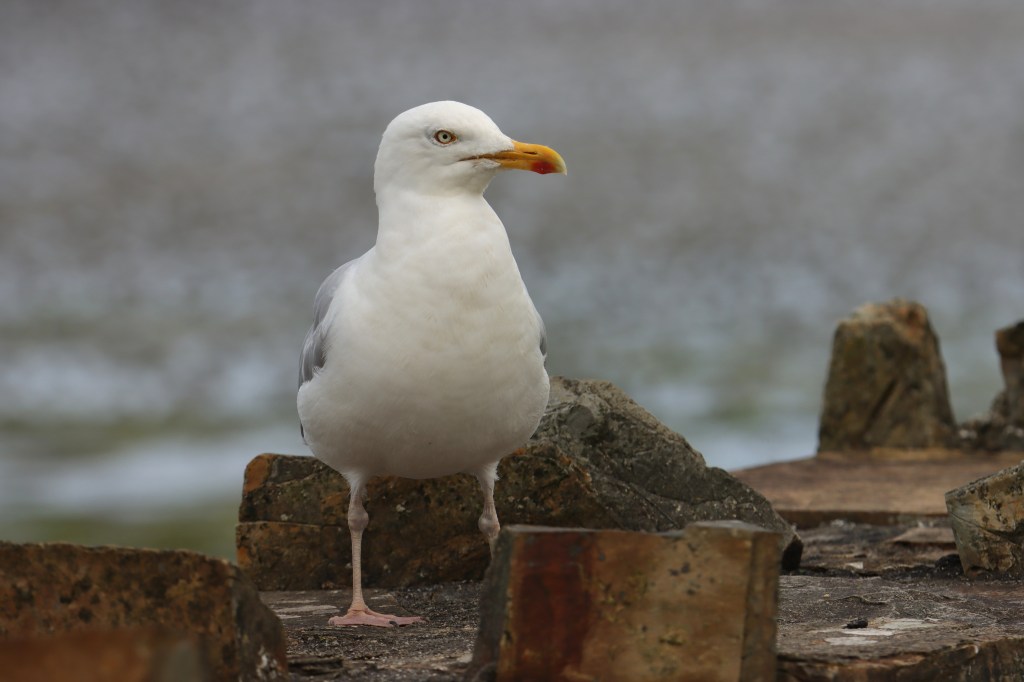
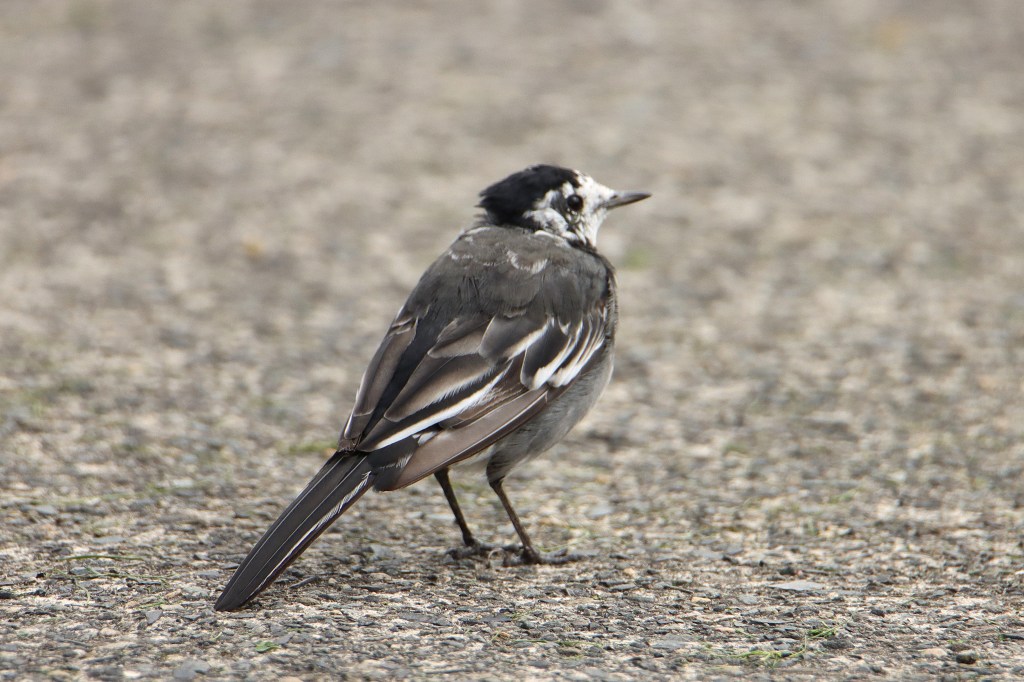
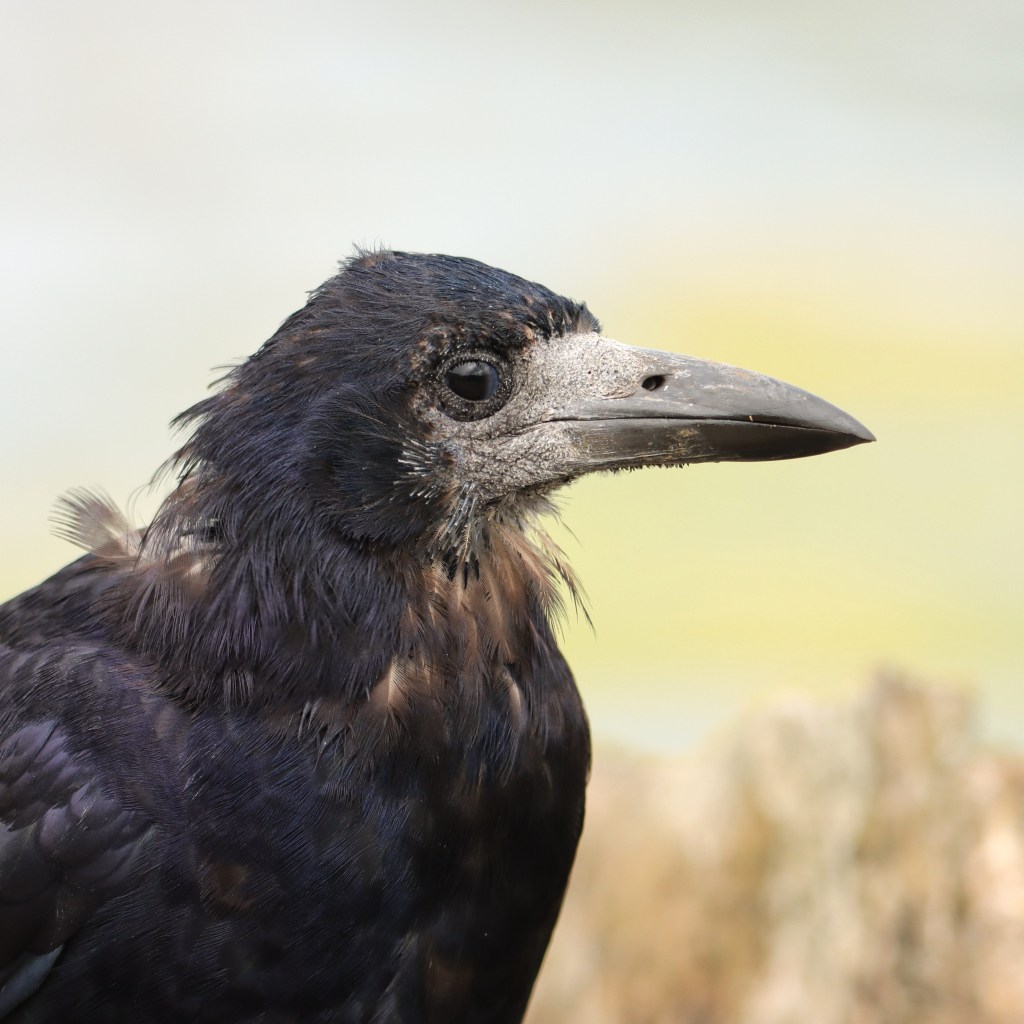
I had a lot of fun shooting birds right from our picnic bench.
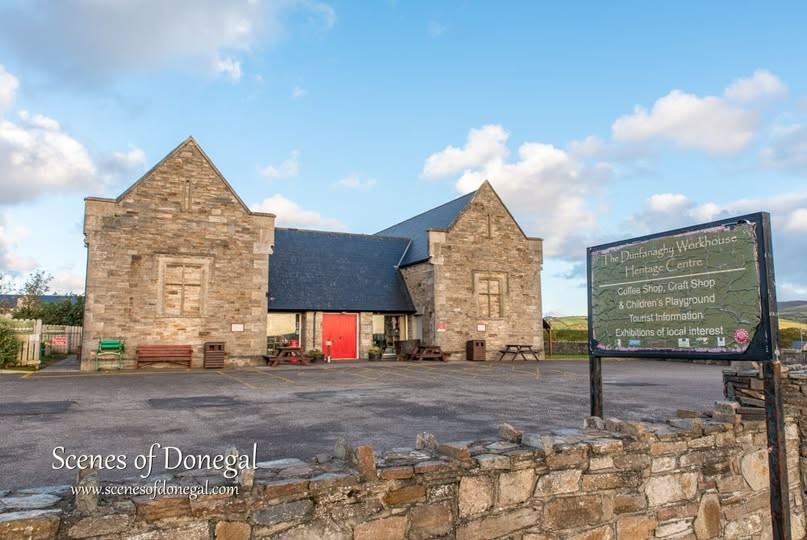
After lunch we drove to a small museum, located in a former workhouse where desperate, impoverished Irish people went when they were starving during the Great Hunger (the Potato Famine of 1845-1852). One million Irish died, and one million left the country, adding up to a 25% population loss.
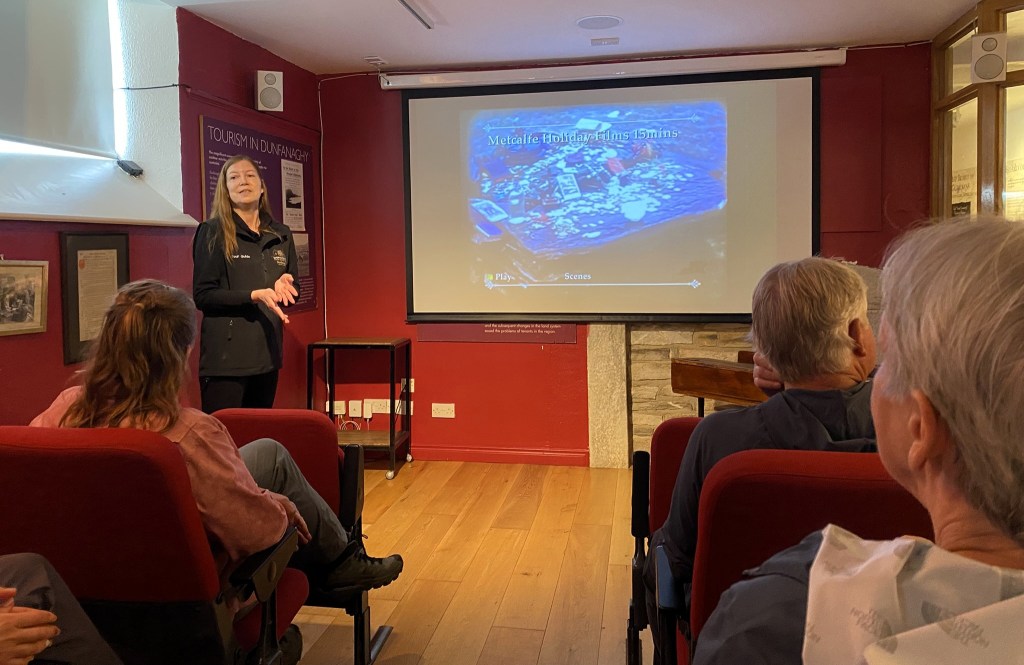
Strangely, our tour company did not pay for us to actually visit the museum exhibits, but we did watch the free film which had nothing to do with the Great Hunger, and instead was a compilation of a family’s film reels from the 1930’s.
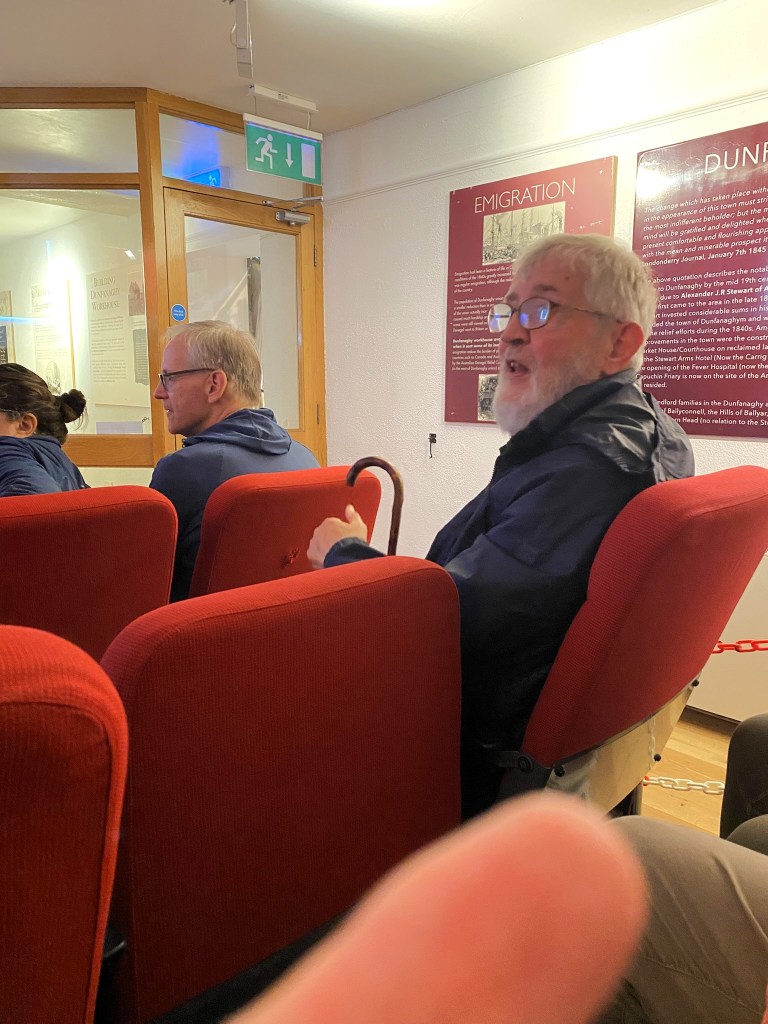
Not what we expected, but it was still interesting to watch members of the family cut and haul sod, decorate semi-pagan altars, and row their currach. This audience member gleefully counted all the donkeys in the film clips out loud in his lovely Irish accent. Nineteen Donkeys! was his final tally.
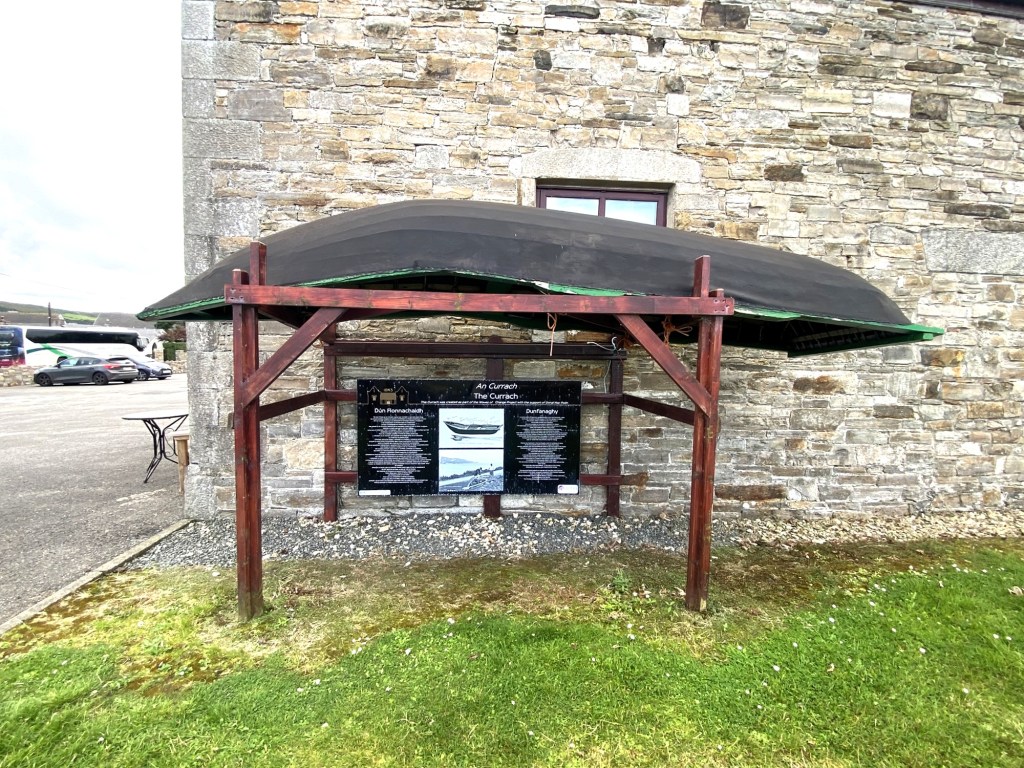
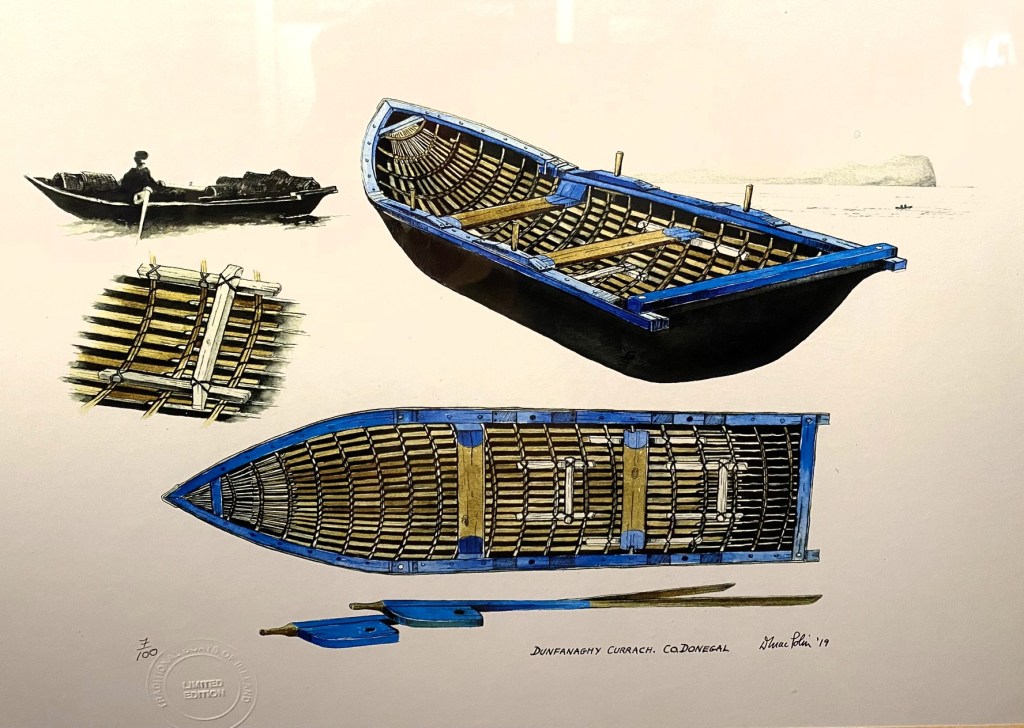
The construction and design of the currach is unique to the Irish west coast. The frames were originally covered with stretched animal skins, but now they use canvas.
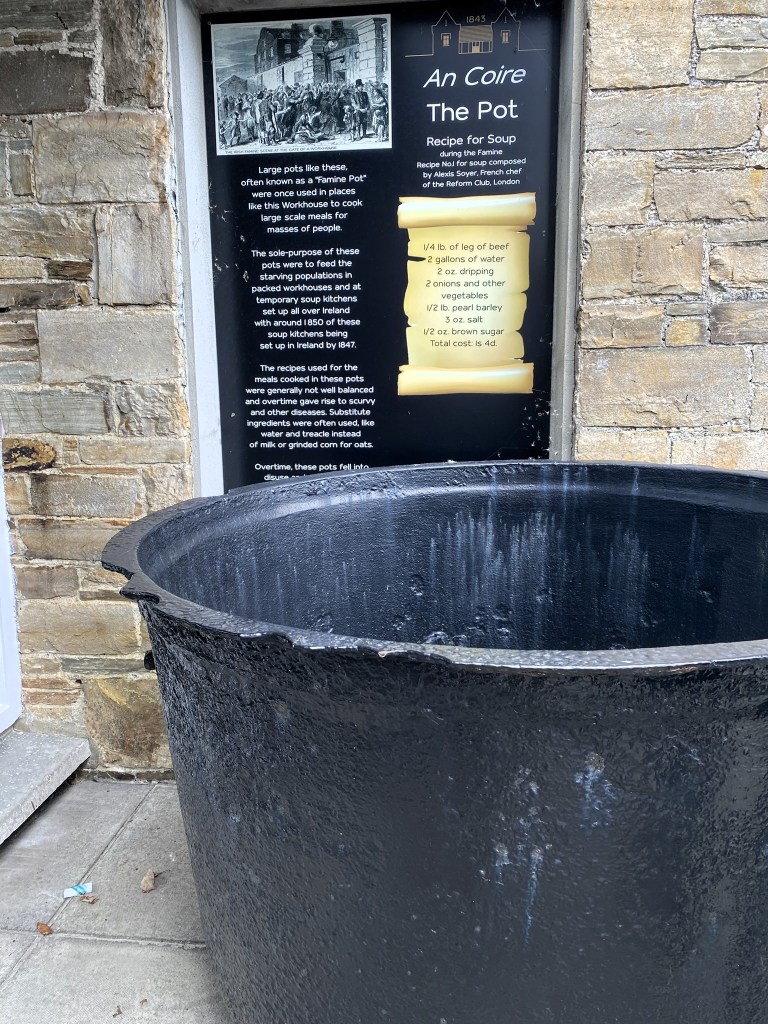
Large “famine pots” fed a meager broth to the workhouse residents. Most of them died anyway from malnutrition, overcrowding, and disease.
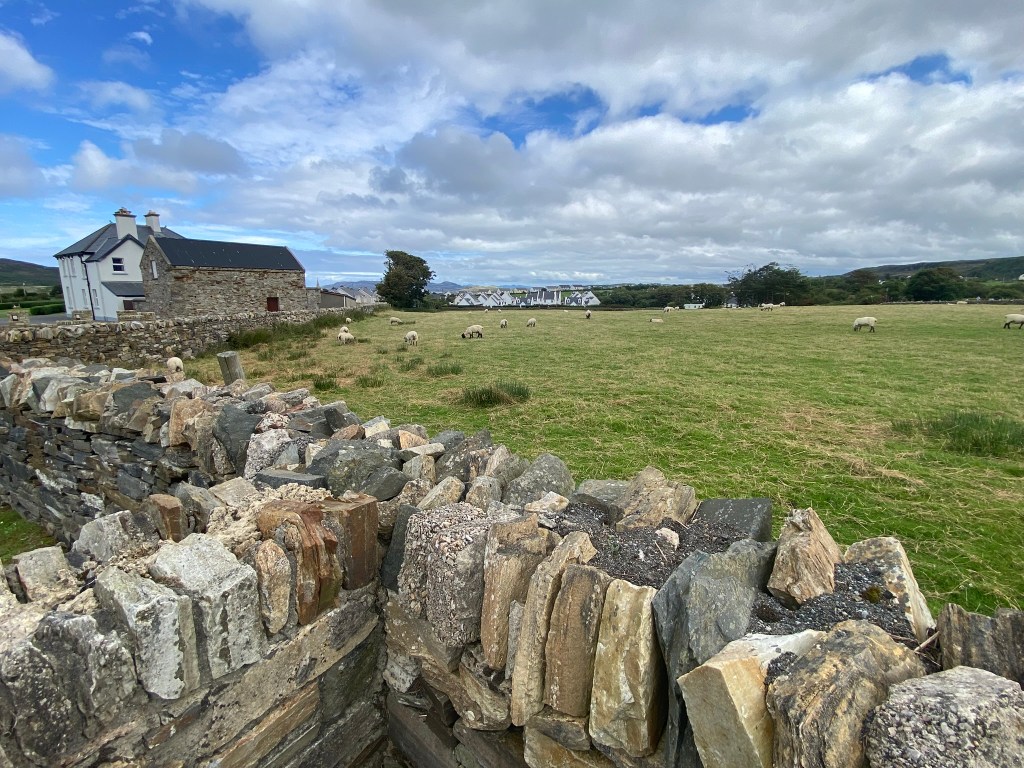
I wandered across the road to watch the sheep safely grazing.
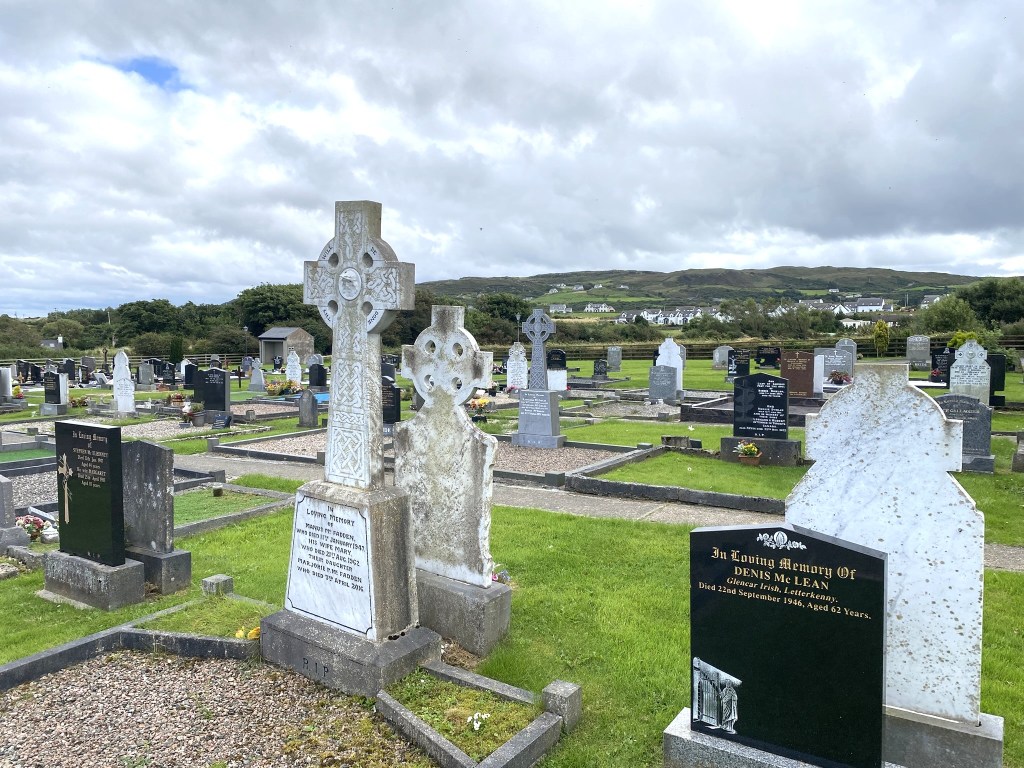
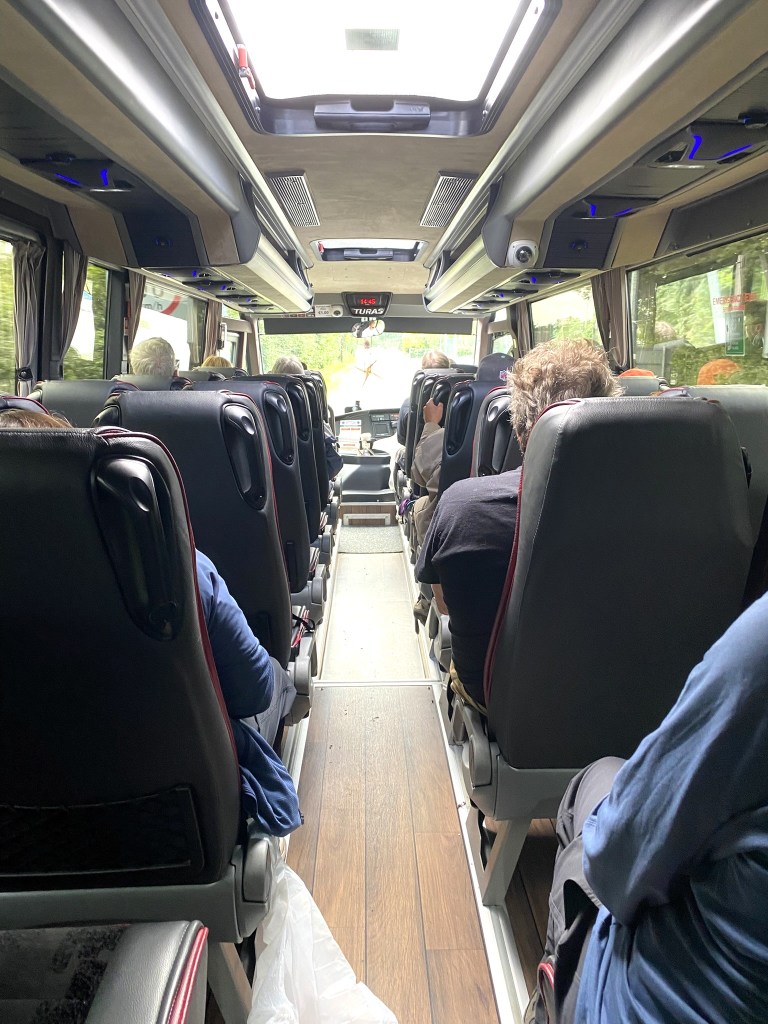
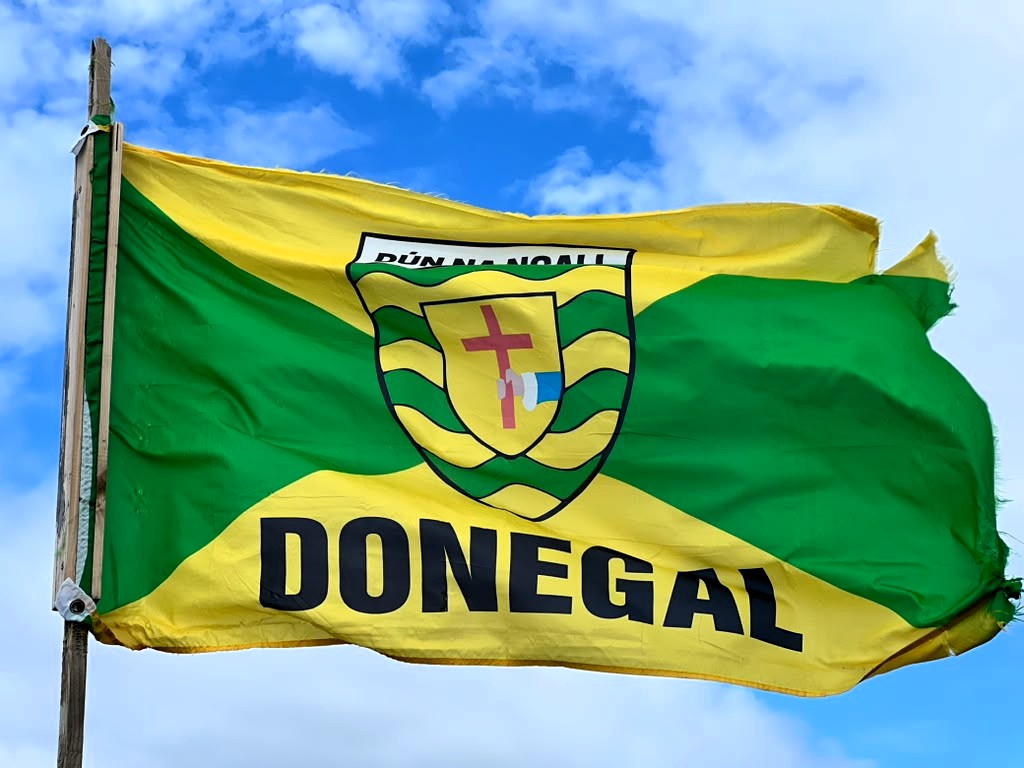
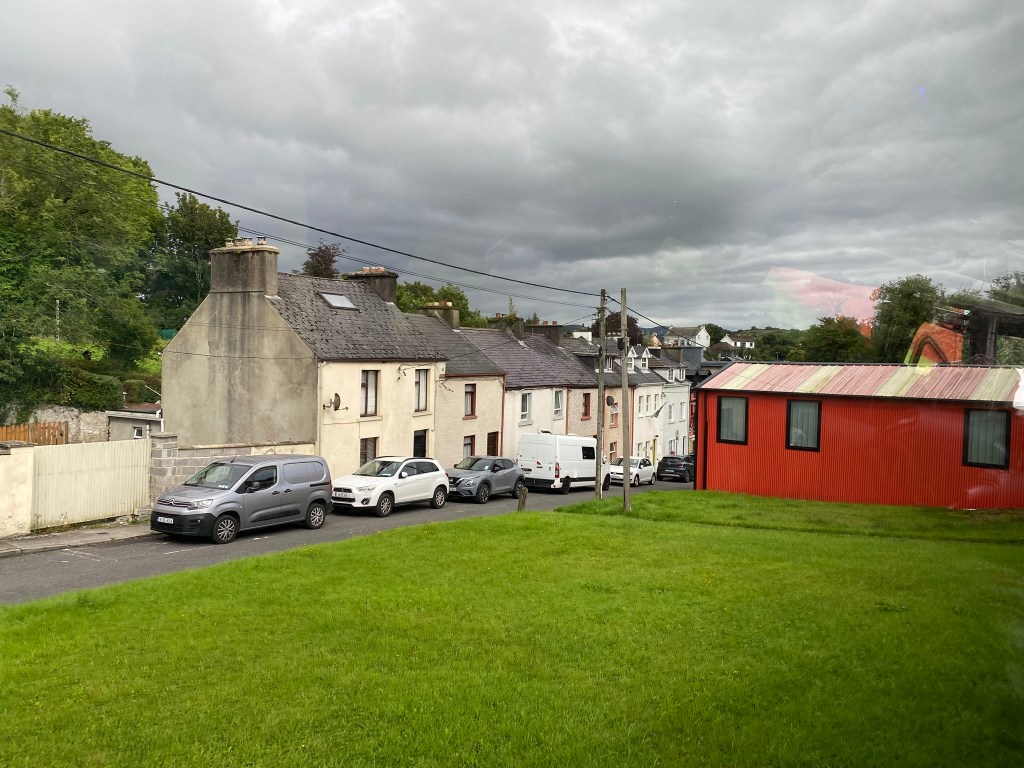
Back on the bus for a short drive to our new hotel in Donegal Town.
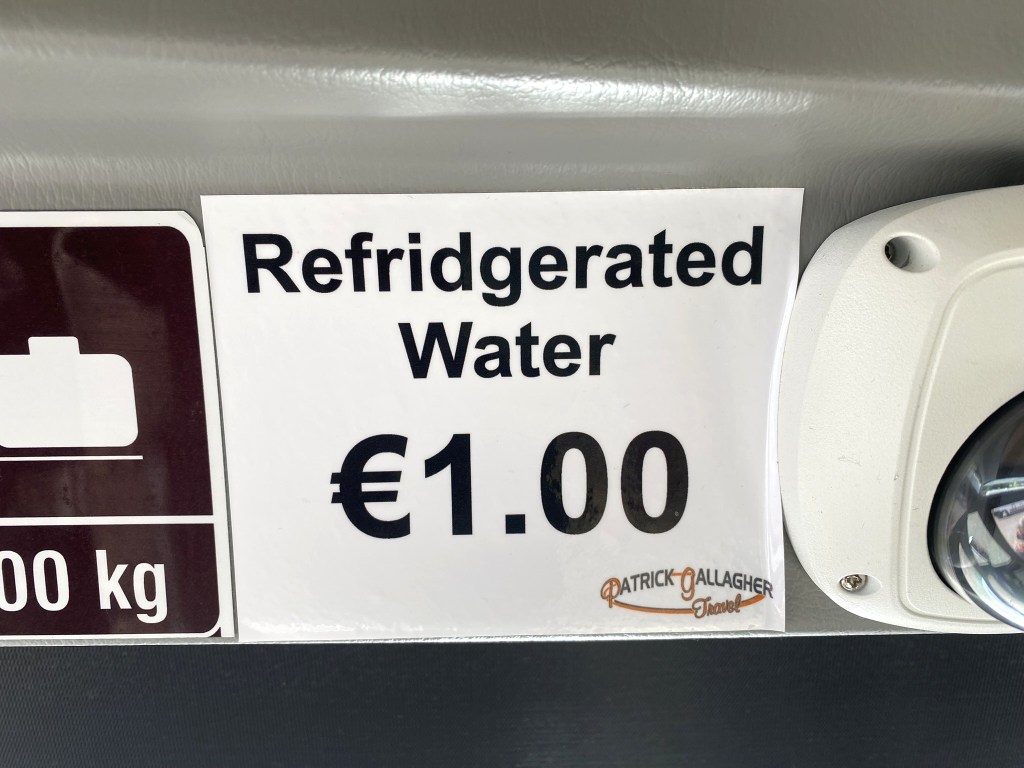
(If you know me at all, you know that looking at this sign every day is driving me crazy.)
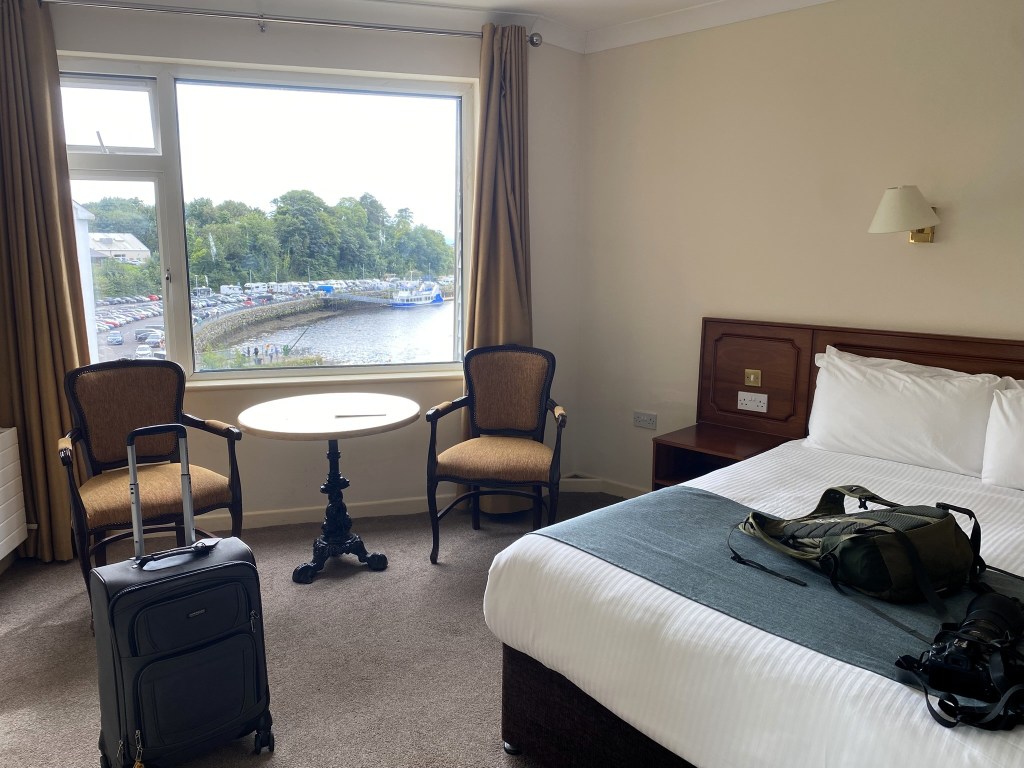
A room with a view!
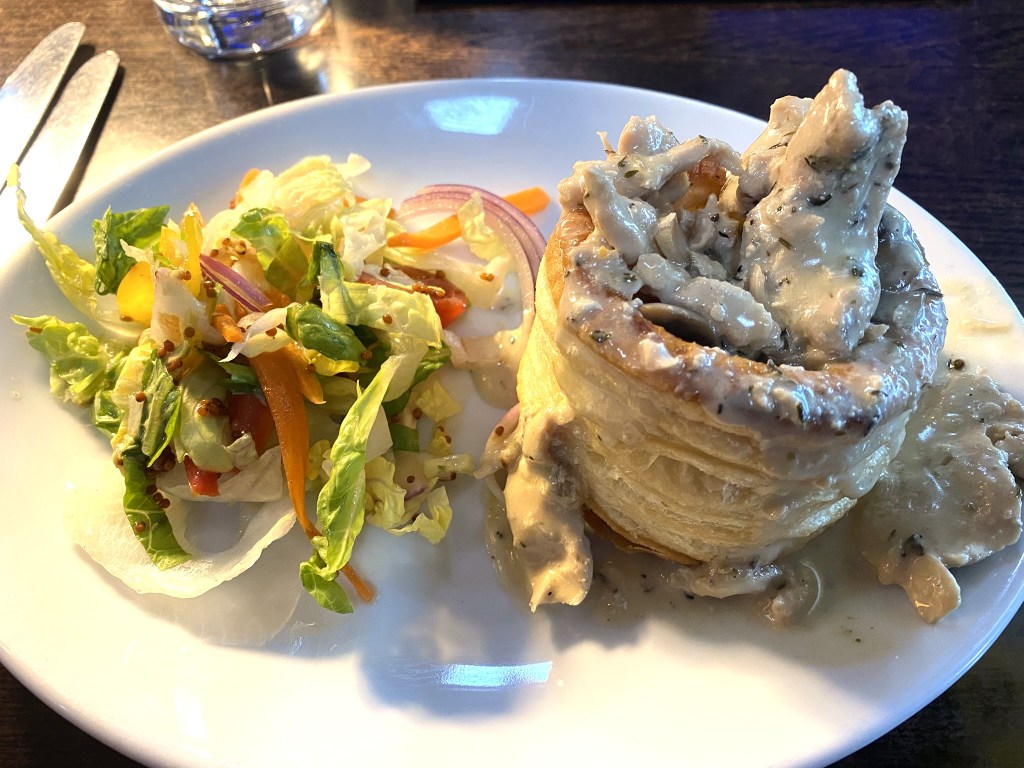
Not everything runs smoothly when you travel, and although when the food actually did show up to our table it was very tasty, the incredible length of time it took to get through the meal service left everyone a little cranky. Nancy and I both left for bed after two and a half hours, regretfully giving up on our too-long-delayed Sticky Toffee Pudding.
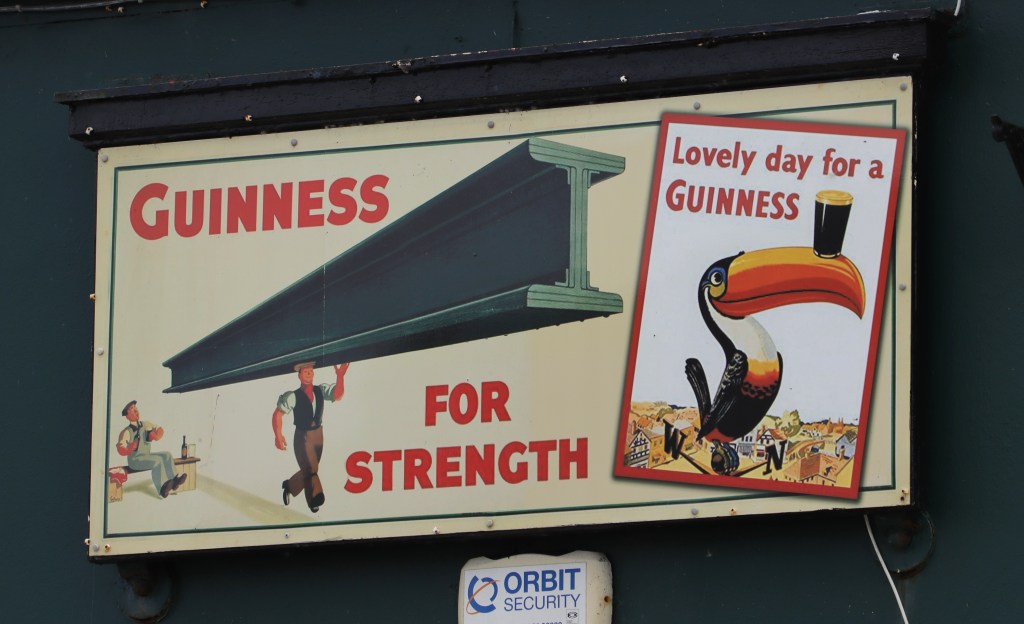
Maybe we should’ve ordered a Guinness instead!

