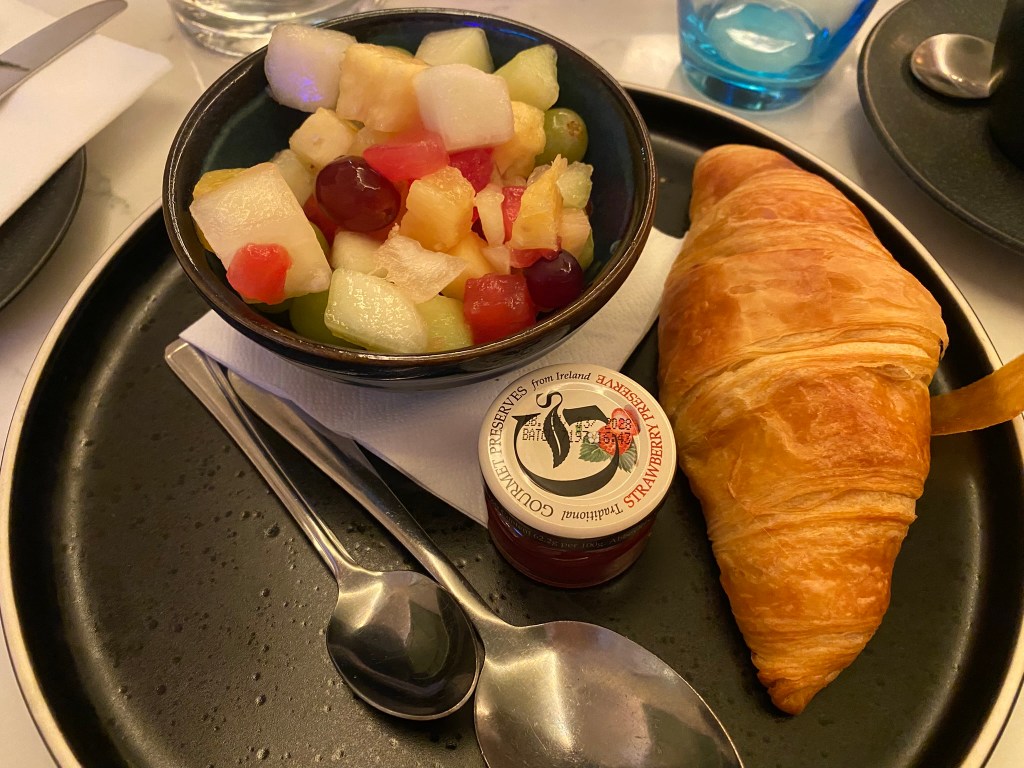
Another tasty hotel breakfast! We always had lots of options.
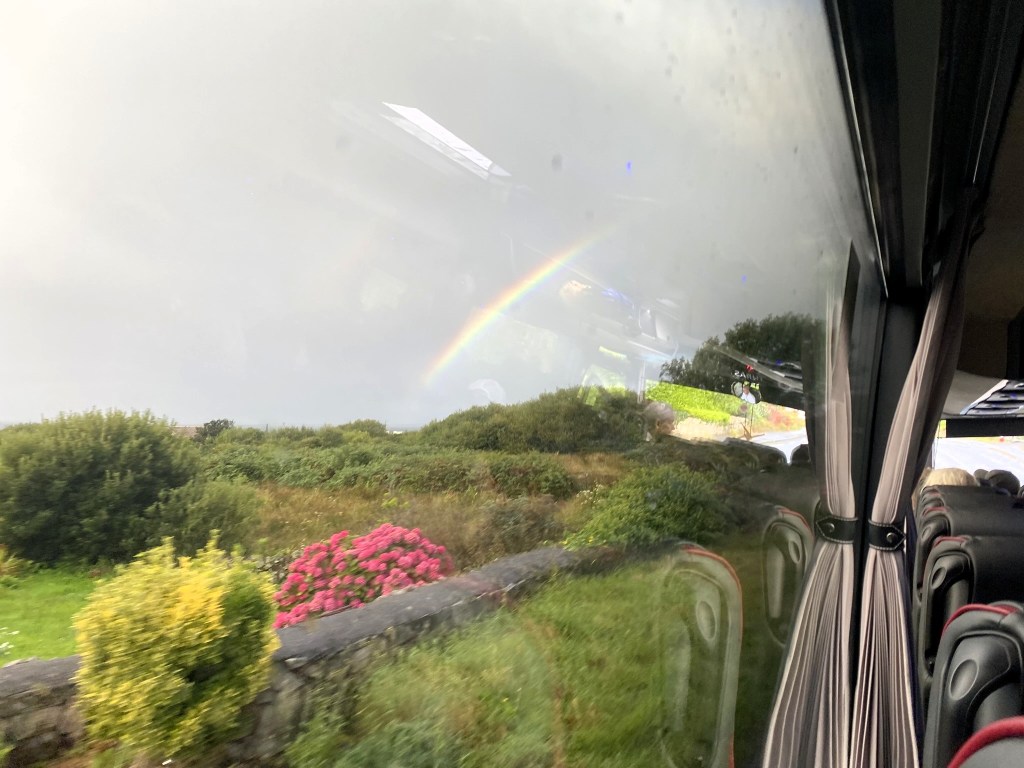
And look, the weather is so promising!
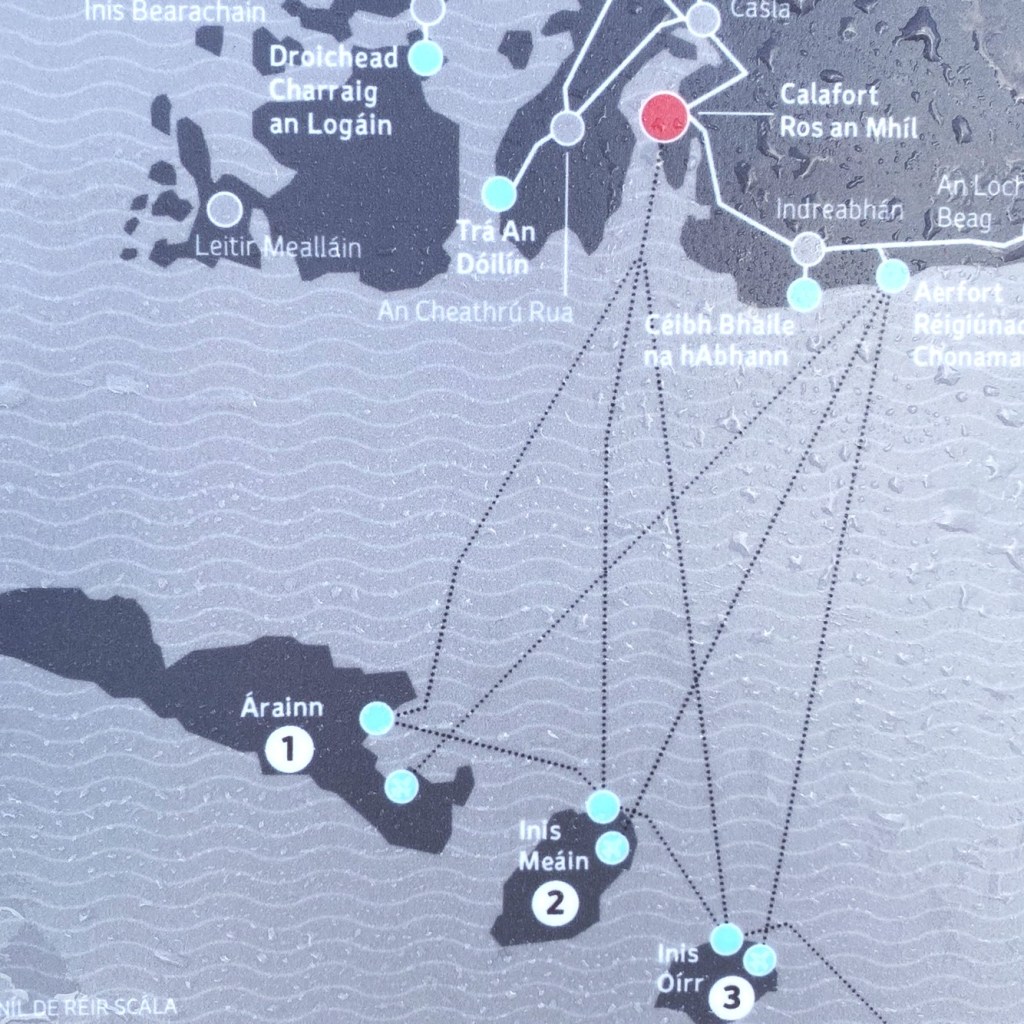
Destination: Inisheer (Inis Oirr = “eastern island”), the smallest of the three Aran Islands.
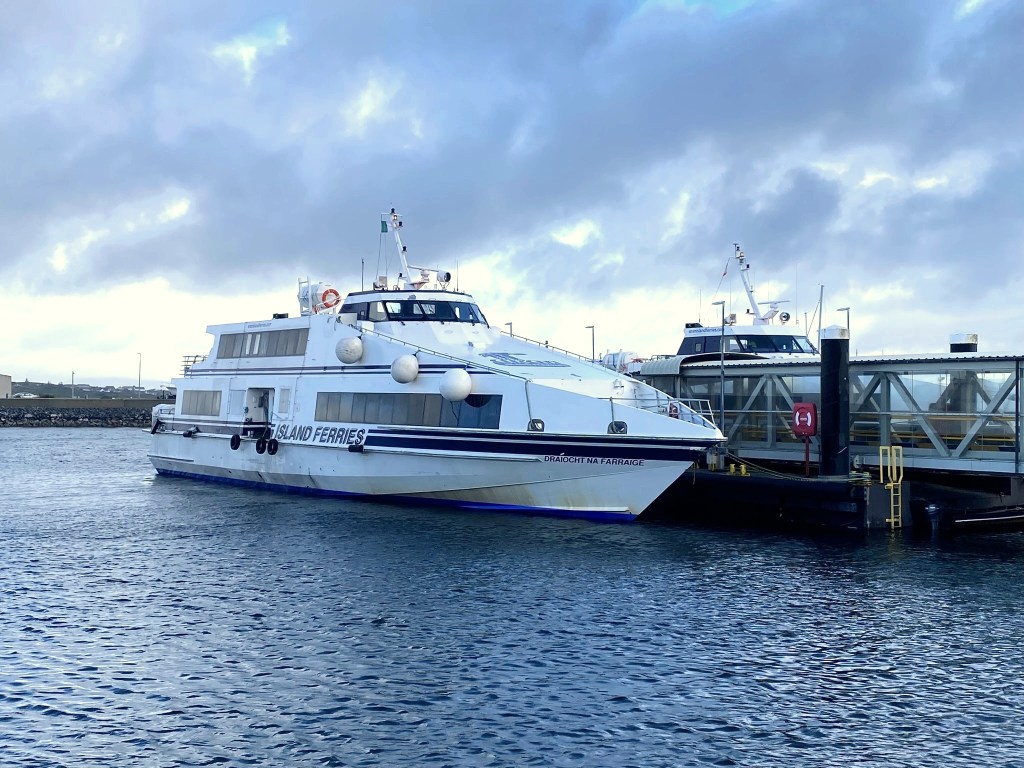
We get there by a 90-minute ferry ride.
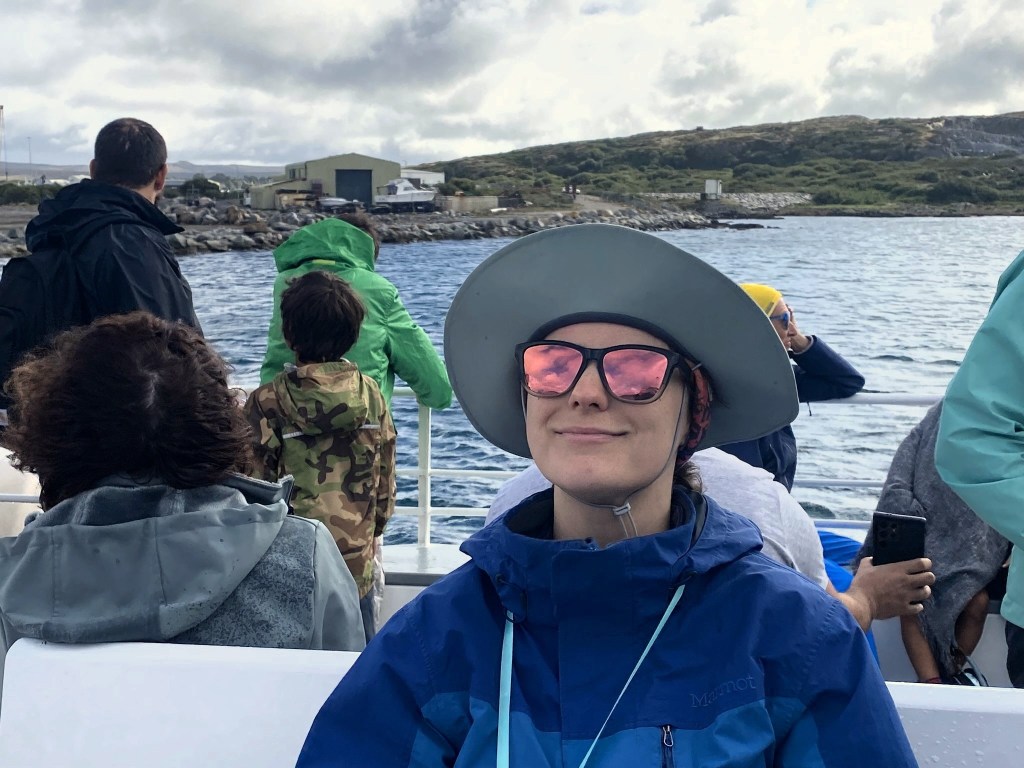
The inner waters were calm . . .
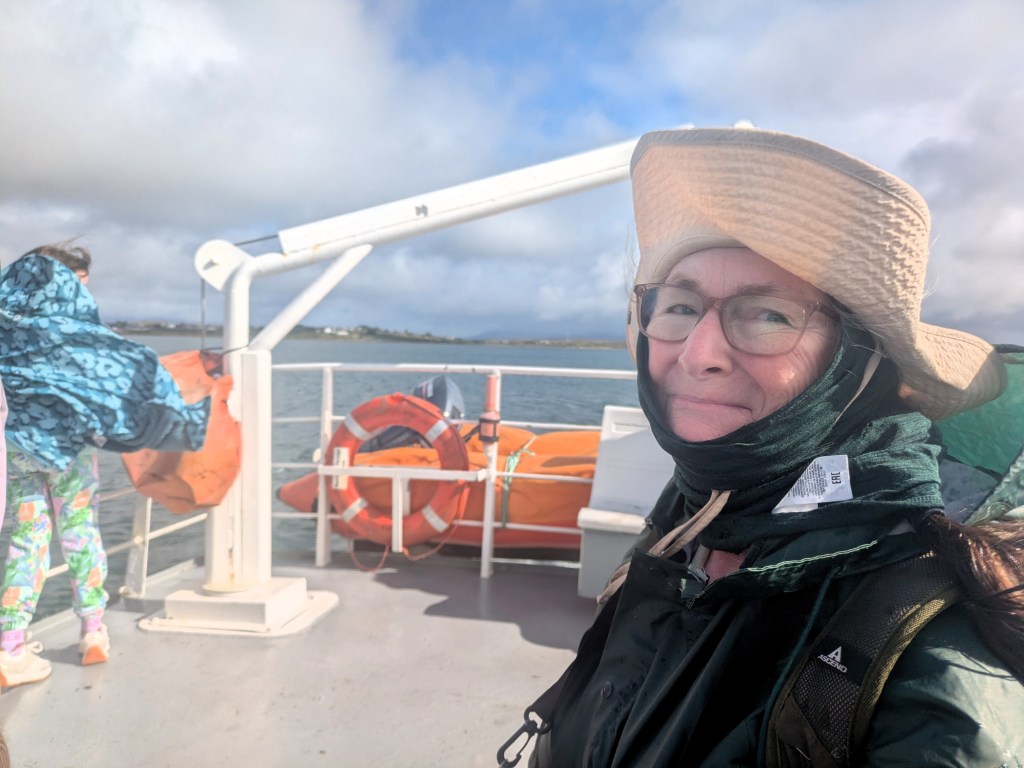
The deeper waters were not.
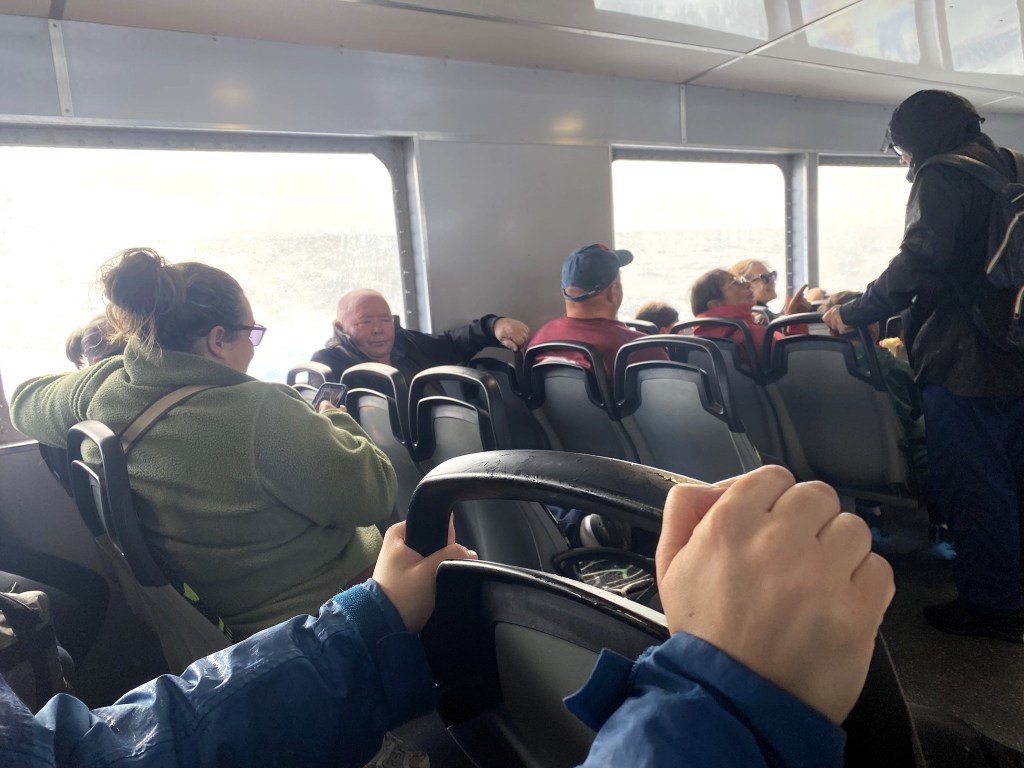
Eventually we were all inside to keep dry and maintain some semblance of equilibrium.
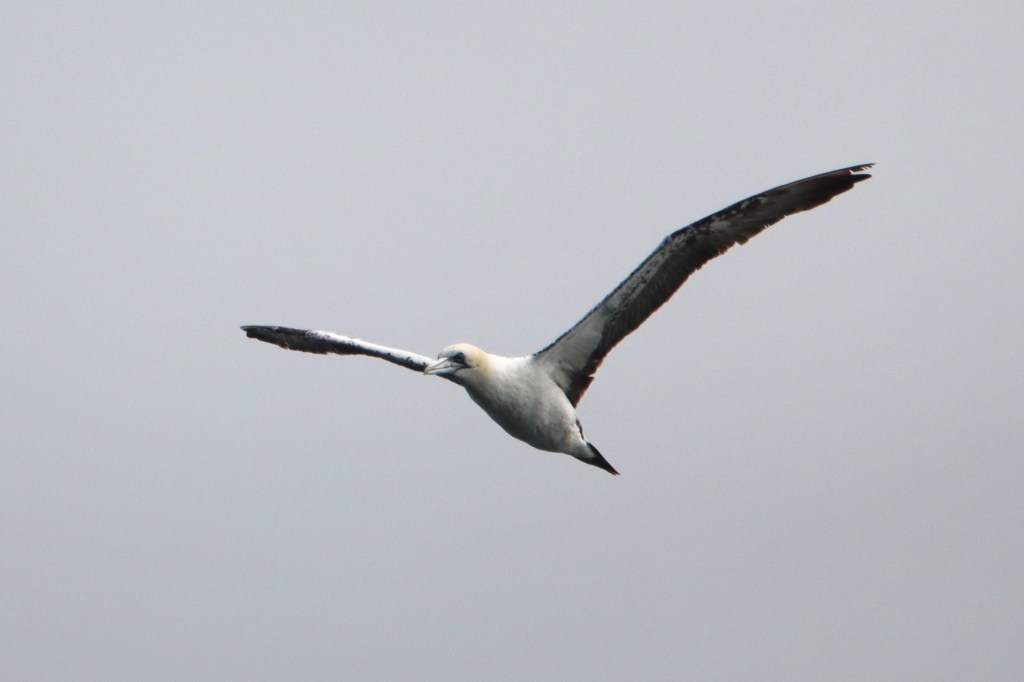
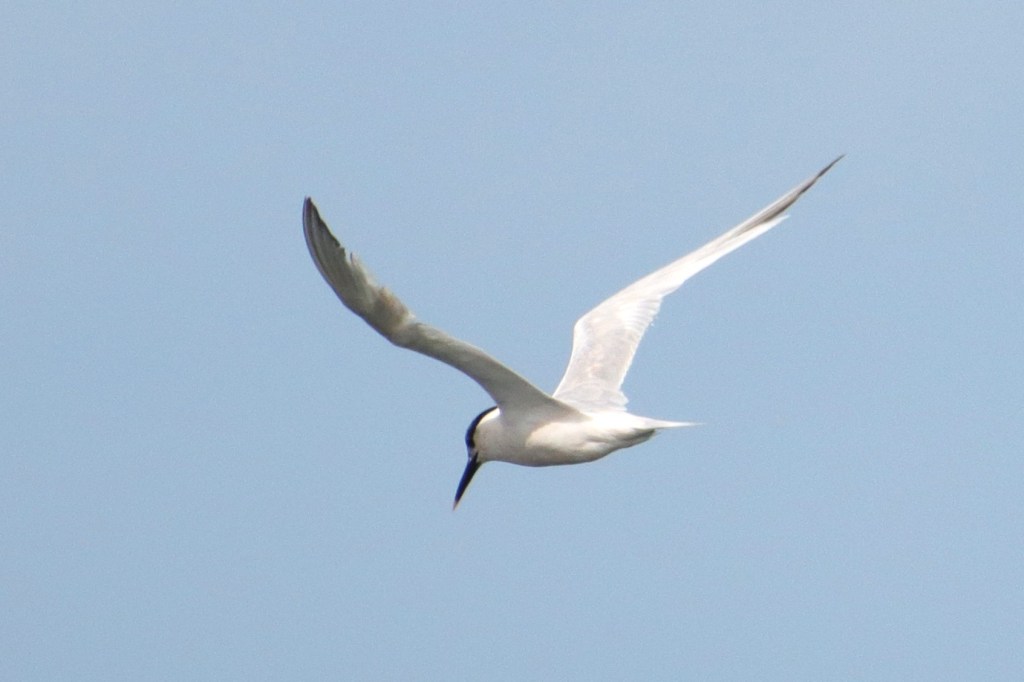
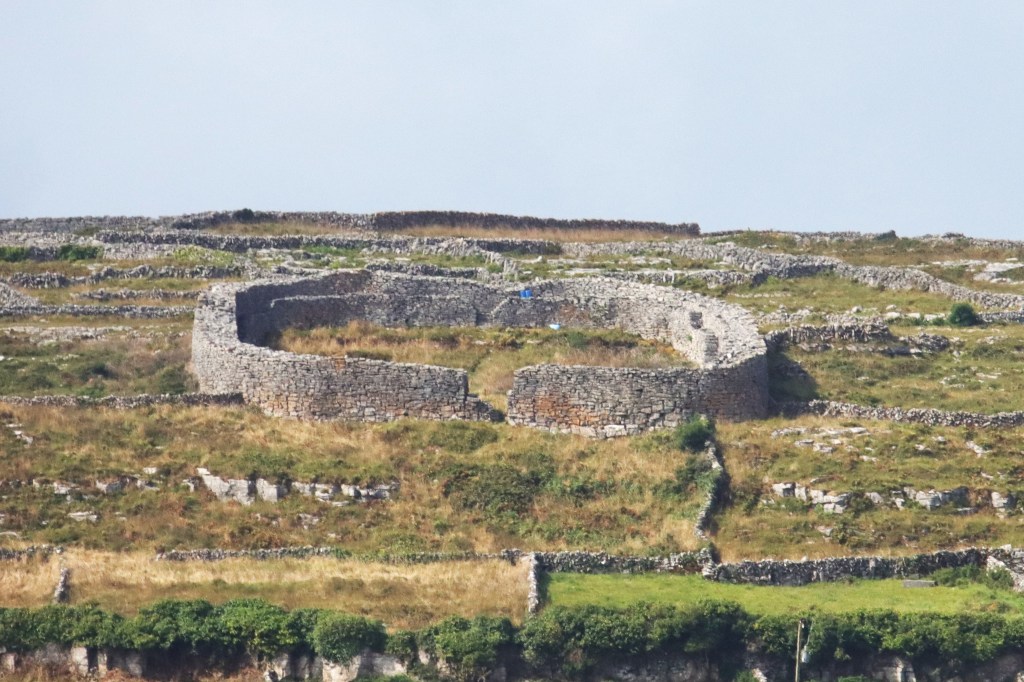
As we passed the middle Aran Island, we spotted this ringfort, a small fortified settlement from the Bronze or Iron Age. There are an estimated 40,000 ringforts in Ireland.
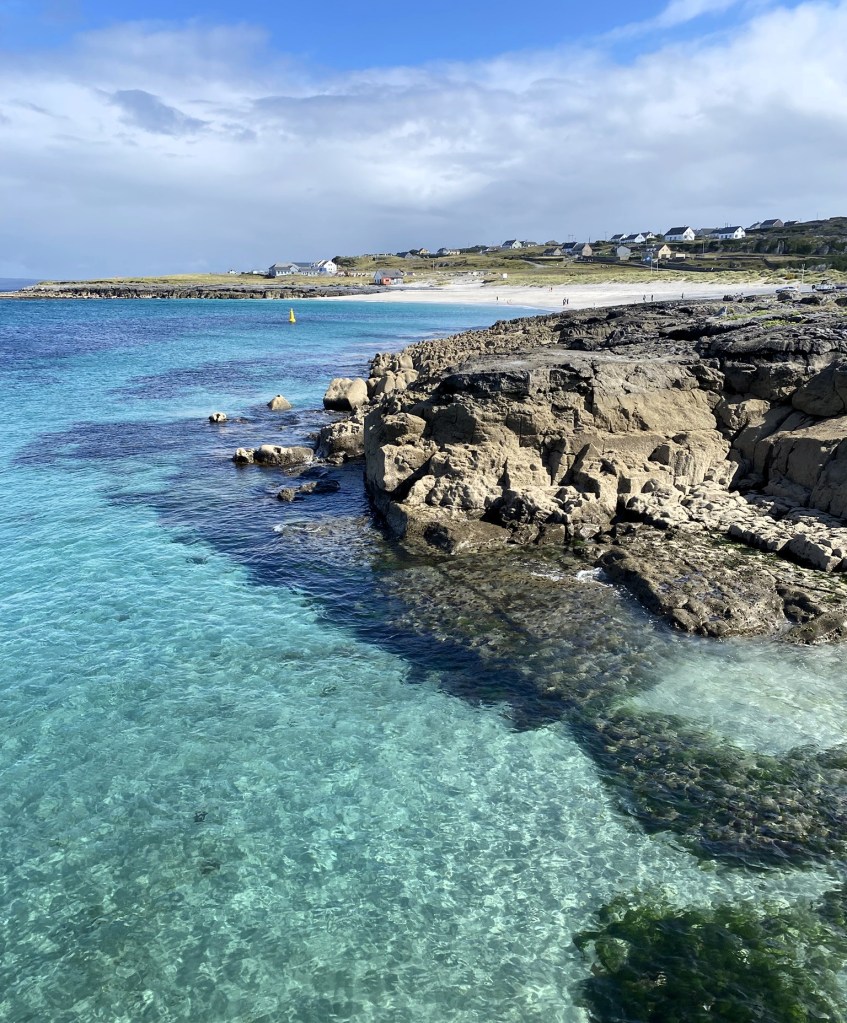
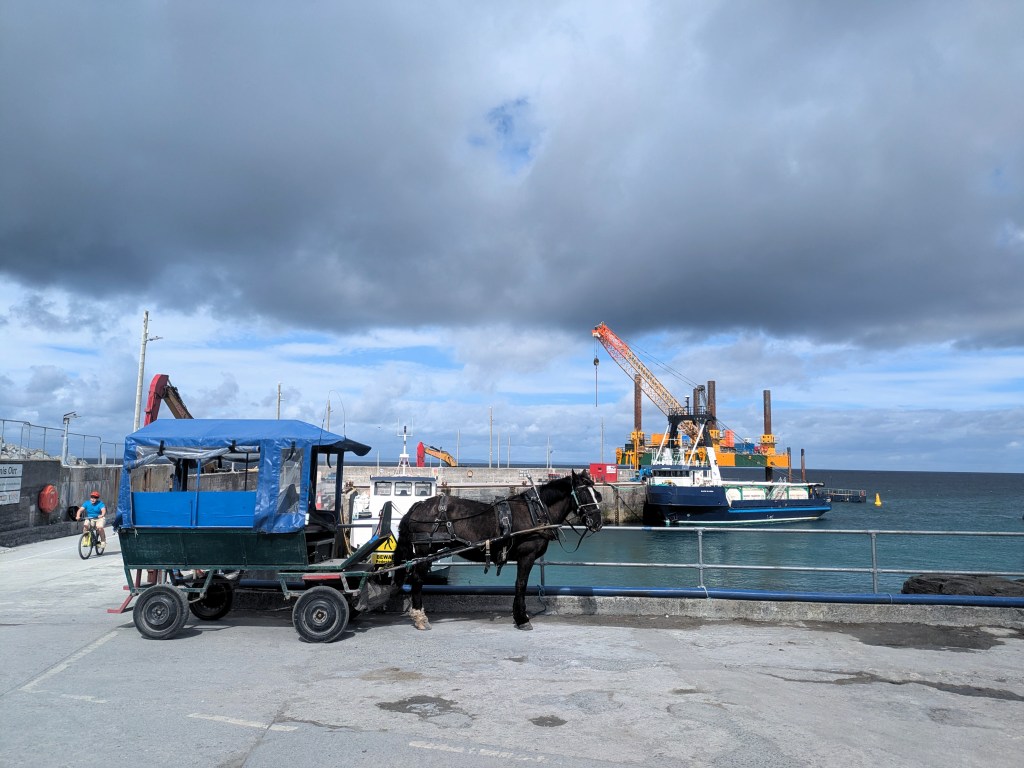
Some tourists opt for a horse and carriage, but we will do a walking tour, of course.
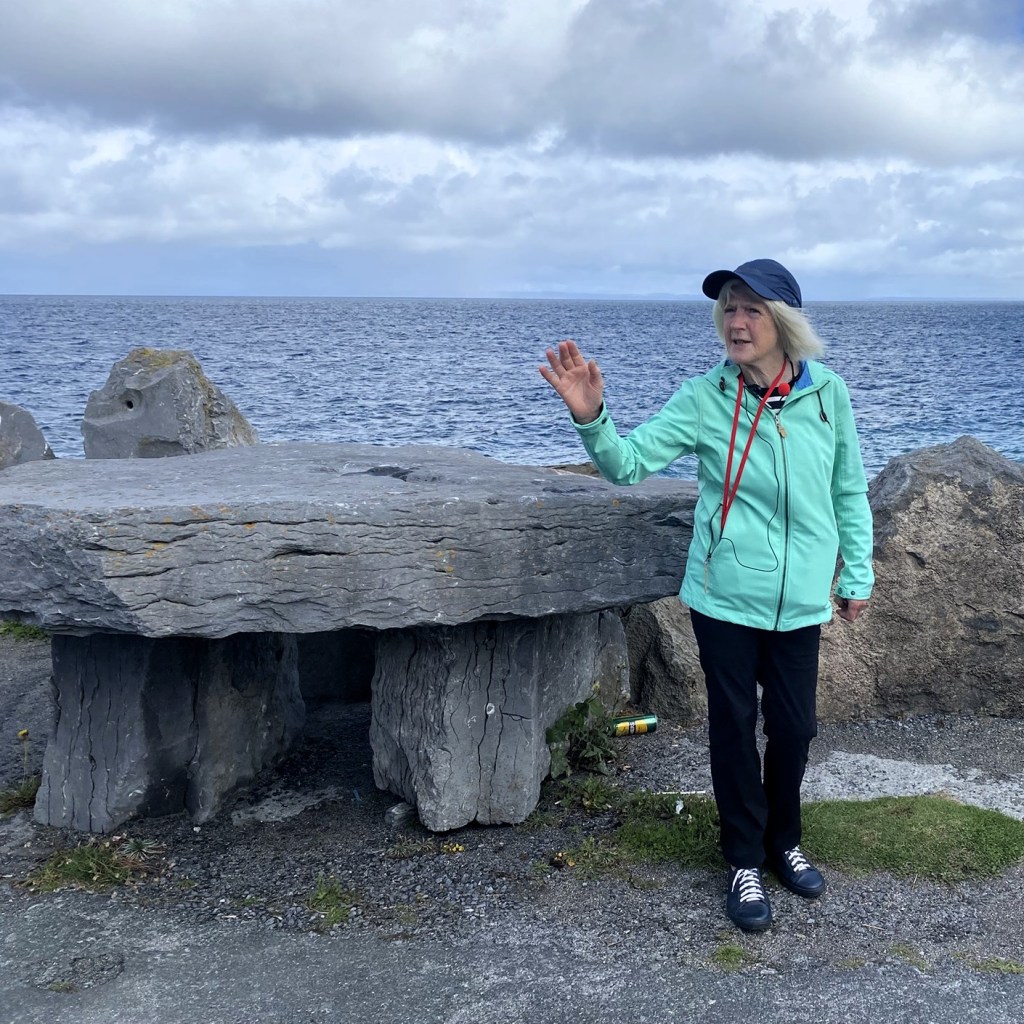
Our guide, Kathleen, is a lifelong resident of Inisheer (population 340).
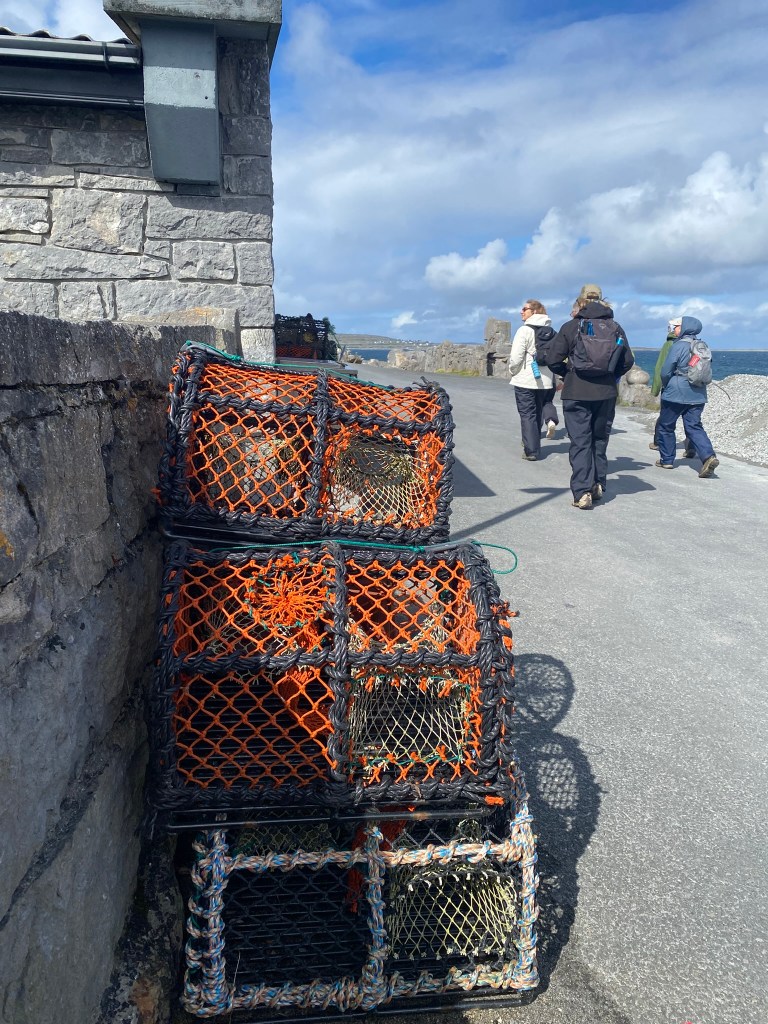
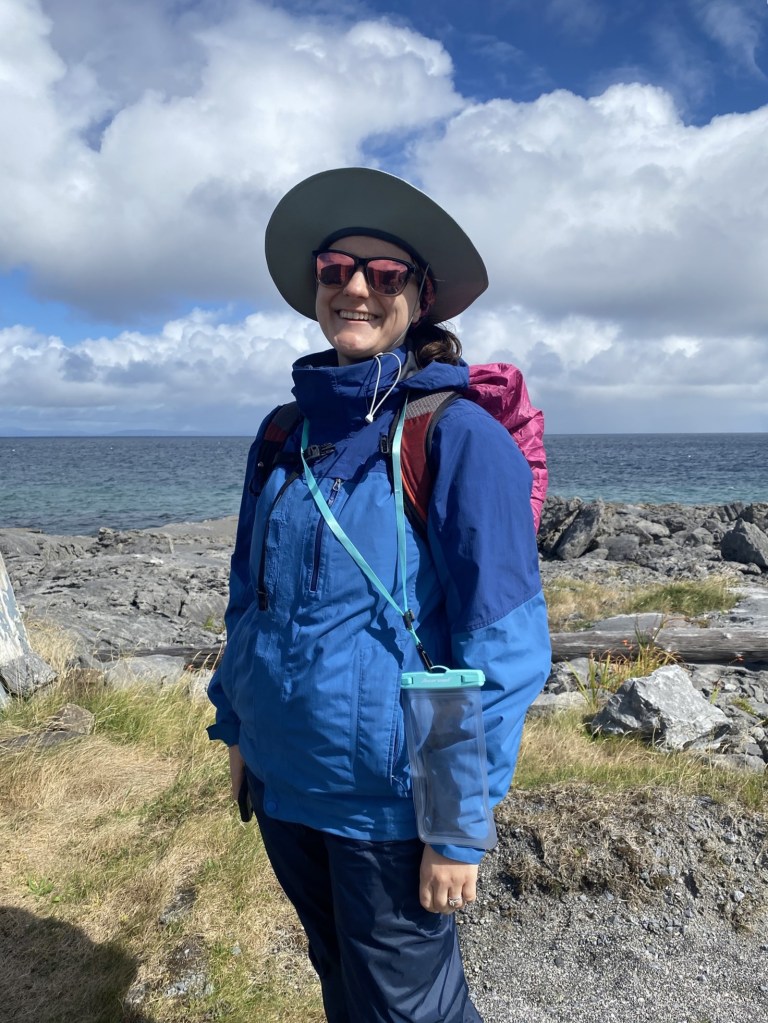
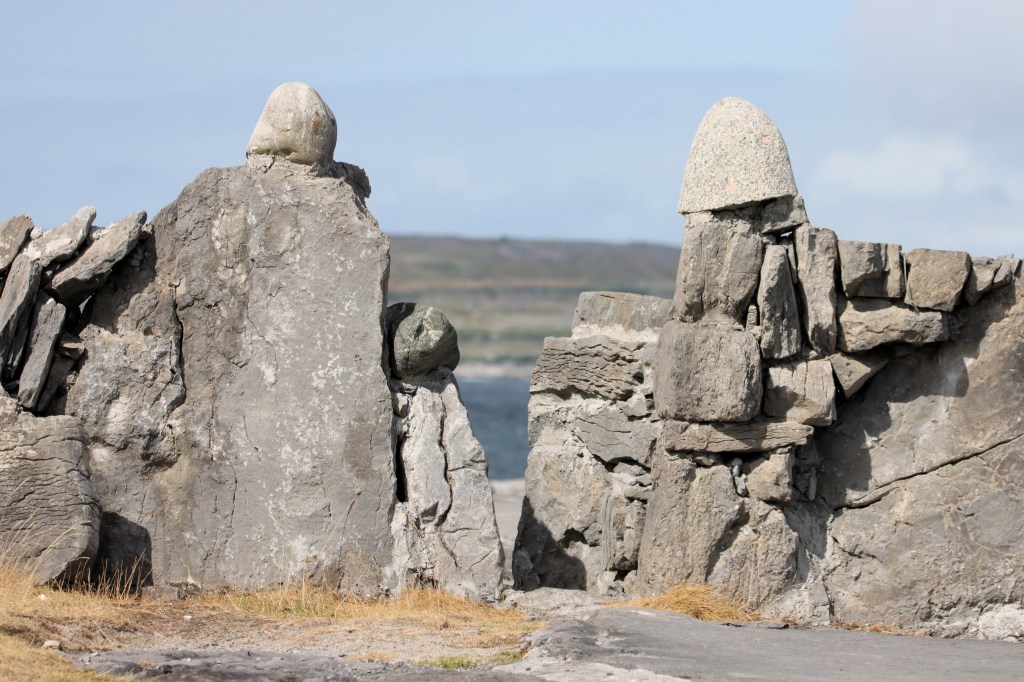
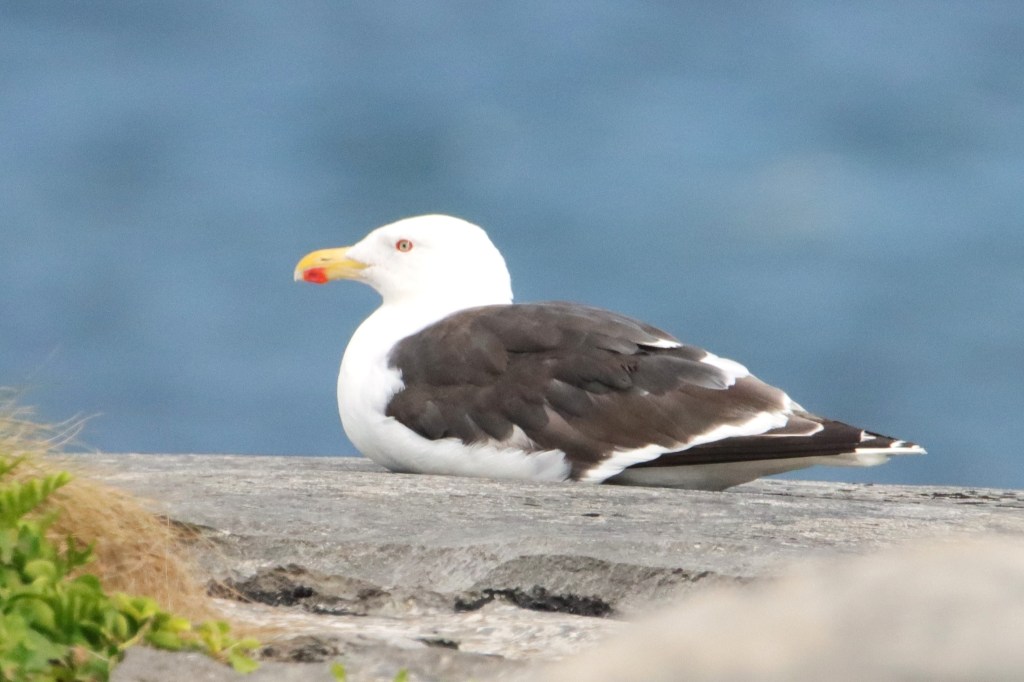
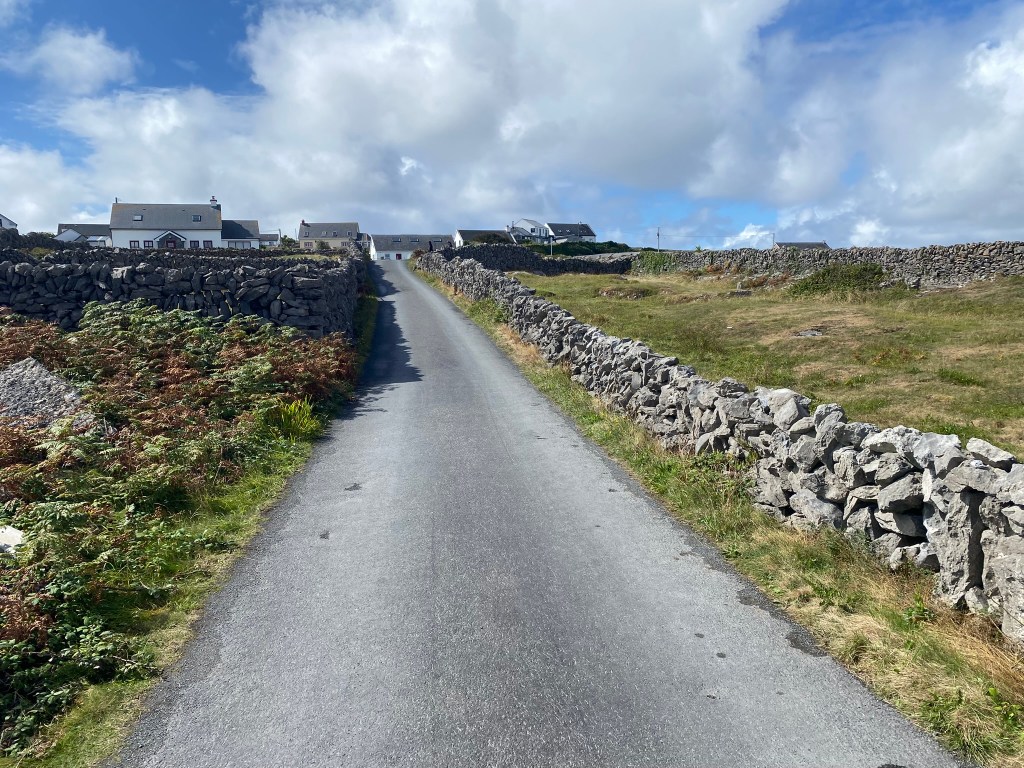
Not much traffic on a tiny island!
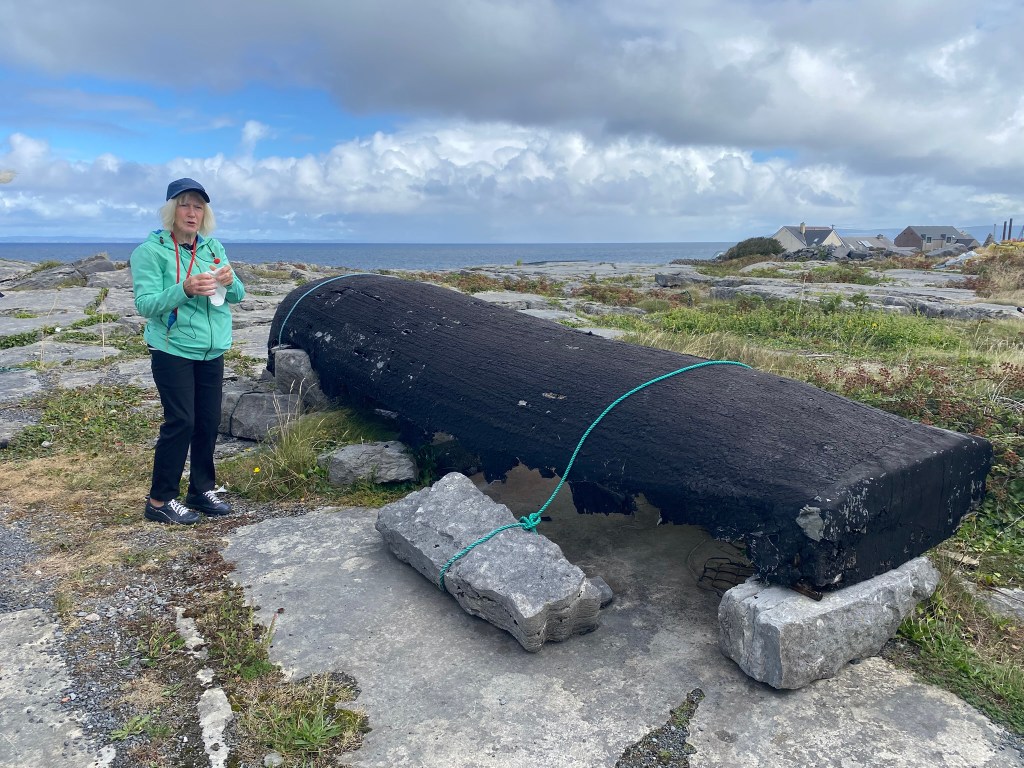
The island hosts an annual currach racing event.
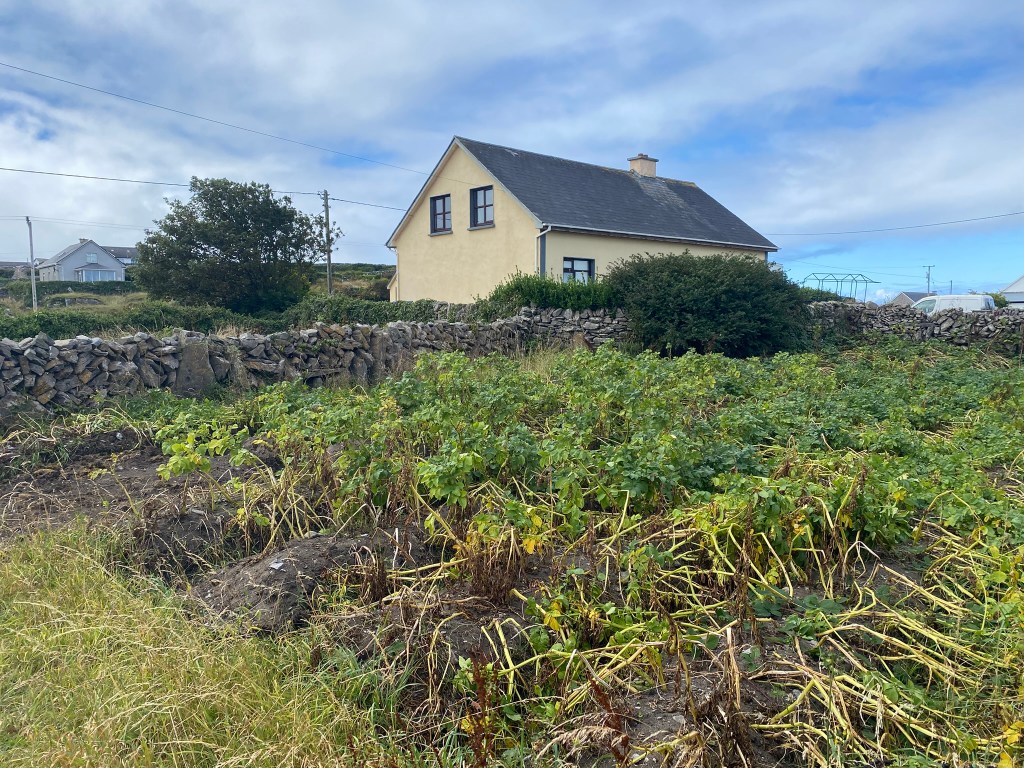
Kathleen said the potato crop was poor this year, due to–if you can believe it–drought.
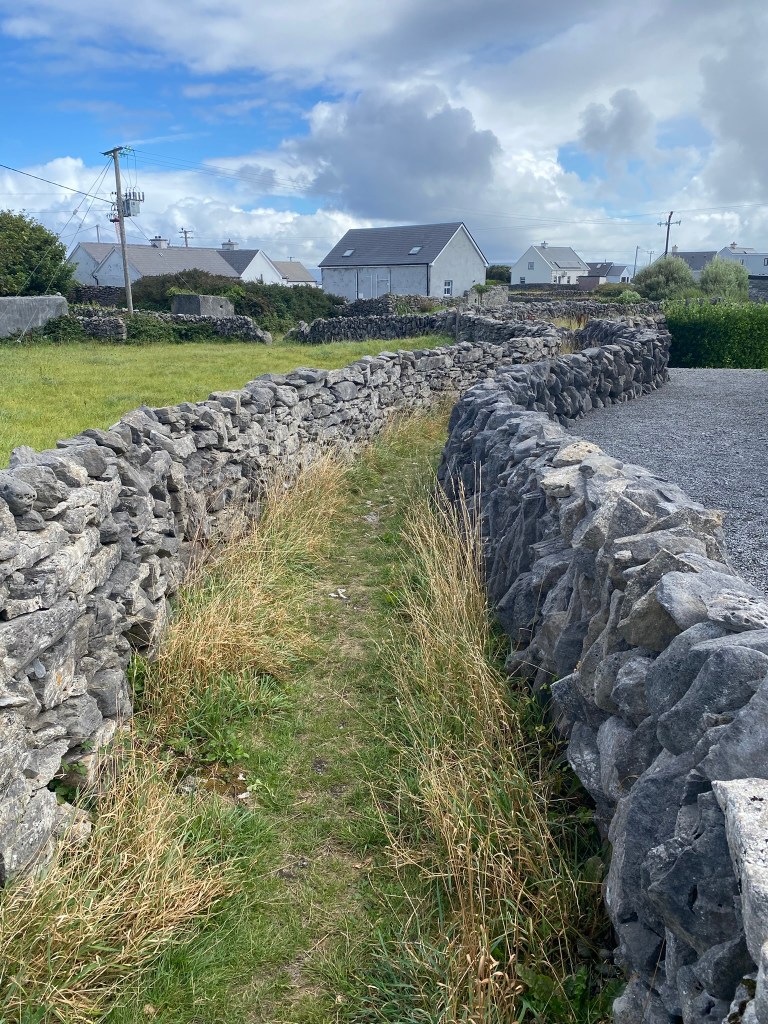
Up until modern times, the roads were all this narrow.
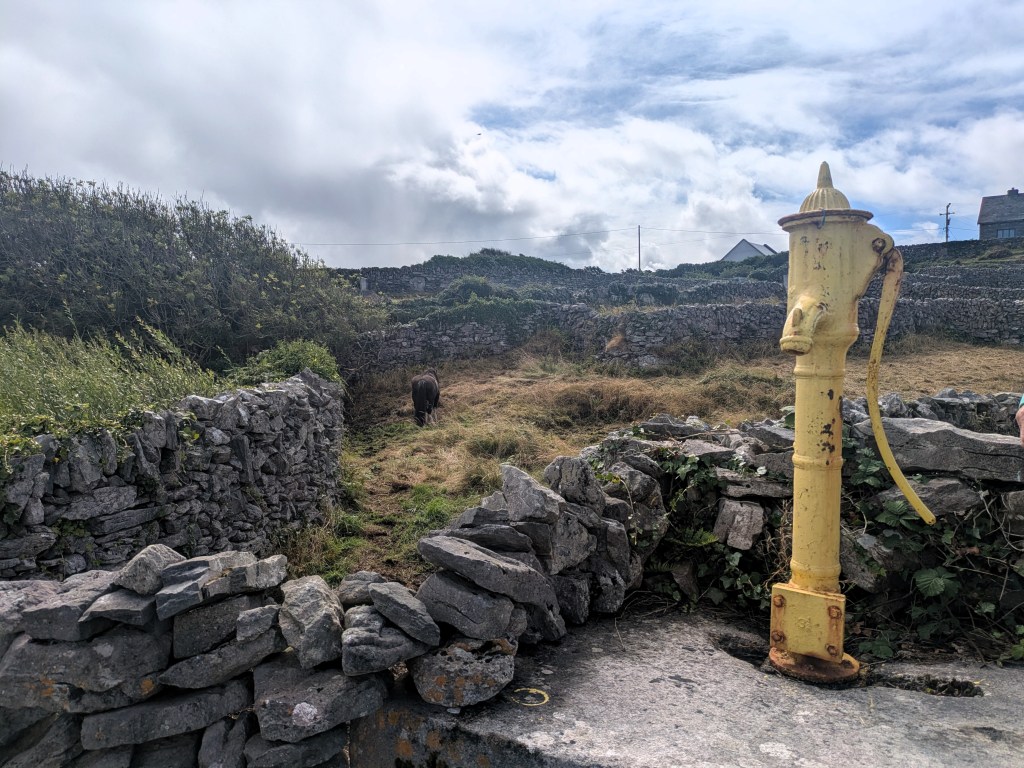
Because of the influx of tourists and government regulations about wells, the island can no longer rely on its own sources for water. A water boat arrives twice a day.
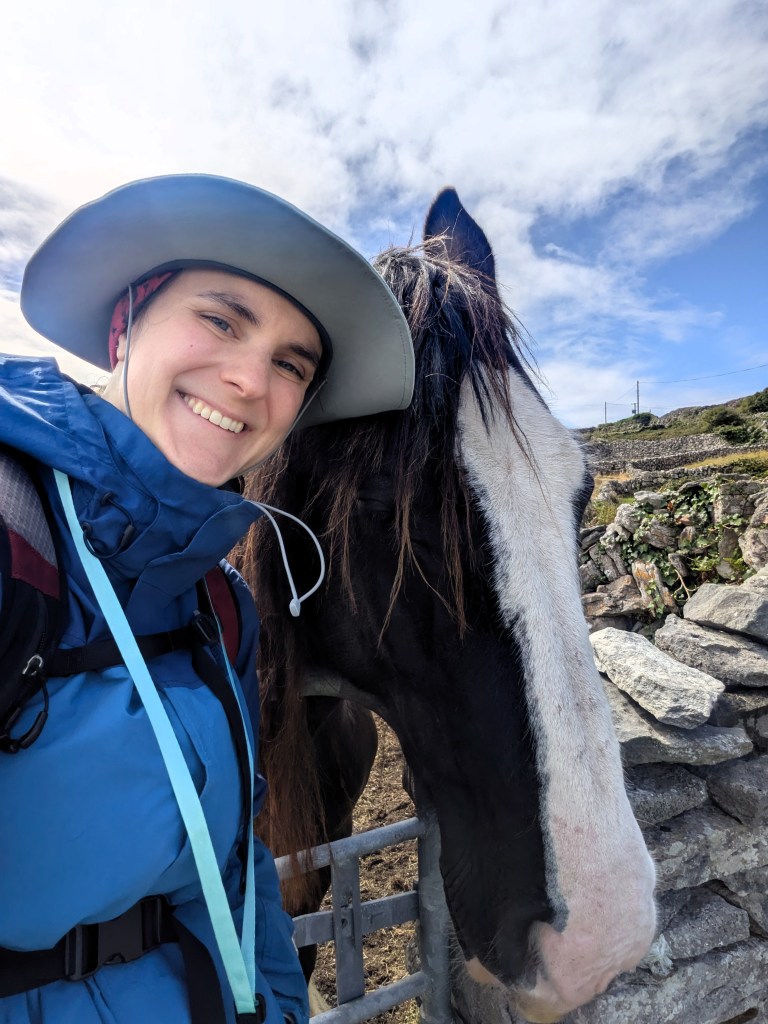
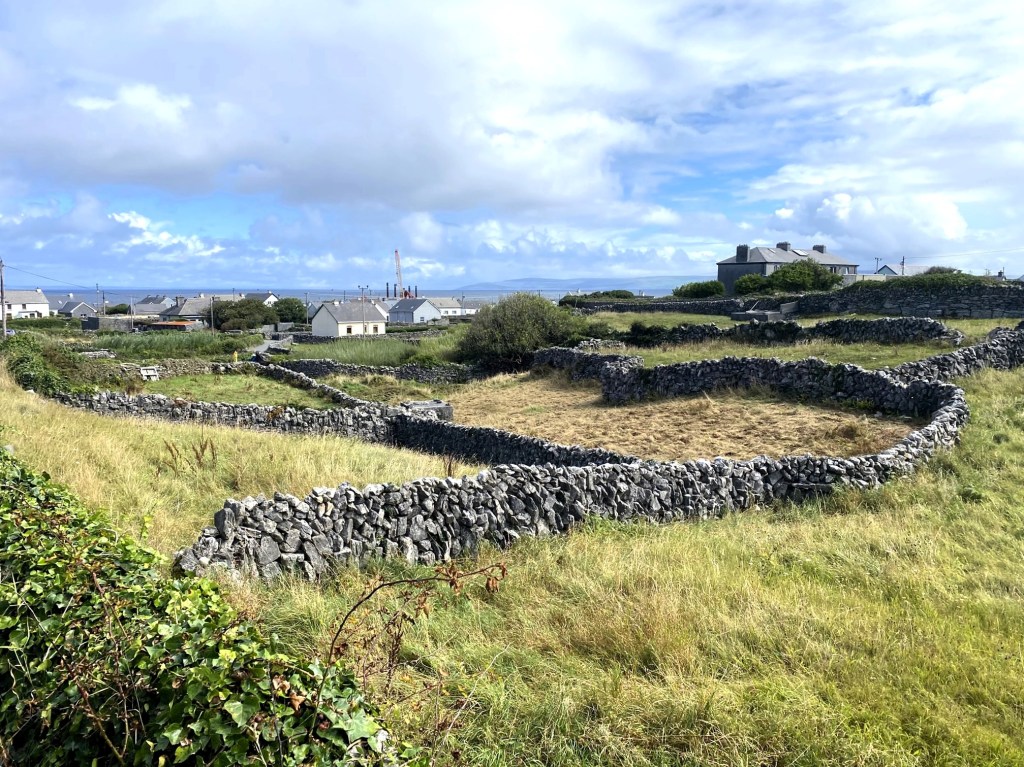
Once the stones were re-located to create walls, the soil for farming was created on top of the bare rock by layering sand, seaweed, and manure.
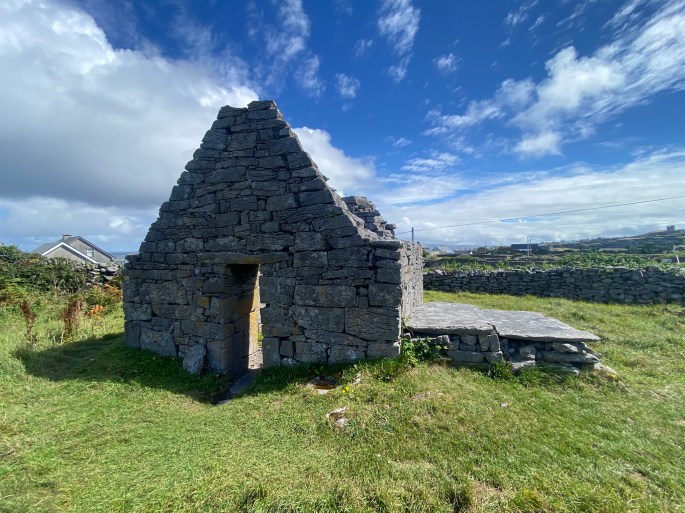
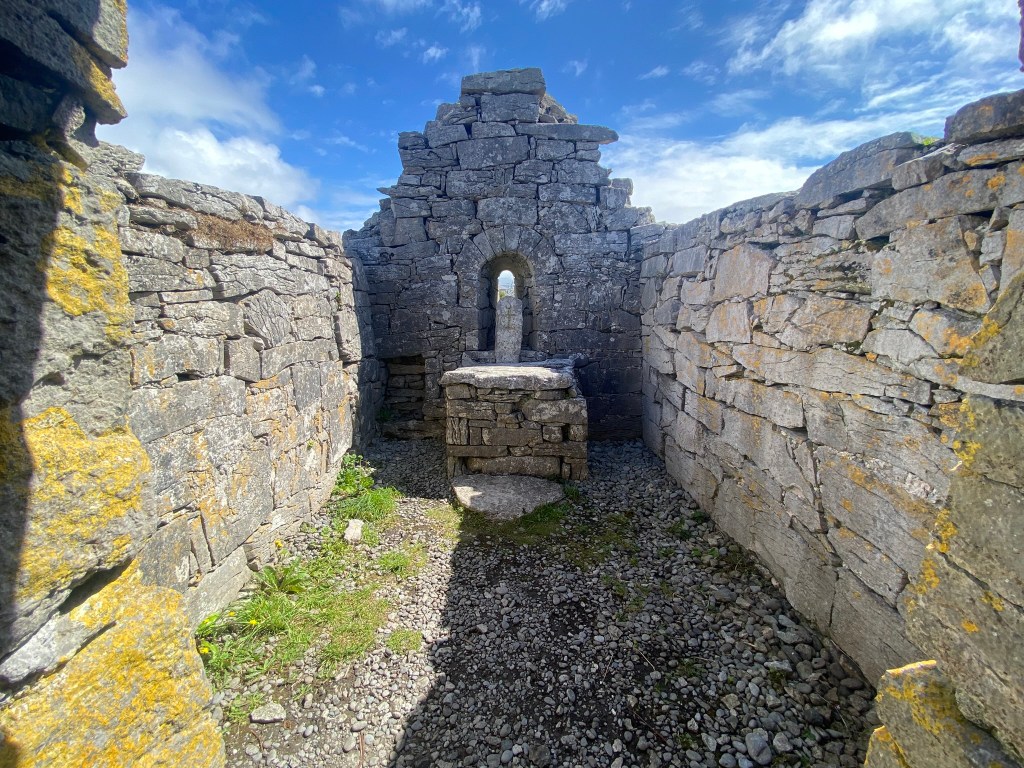
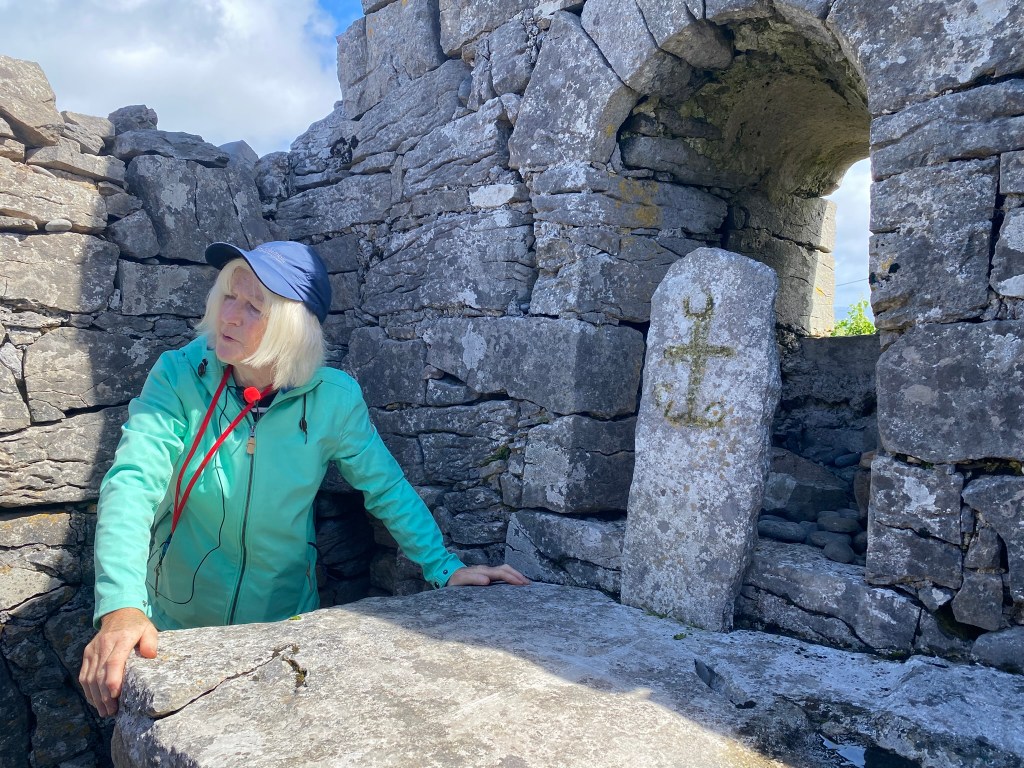
This church replaced the more primitive one built by Gobnait, a female saint, the patroness of bees and beekeeping. She had fled a family feud on the mainland and stayed here for a while before returning and founding a monastic order in the 500’s.
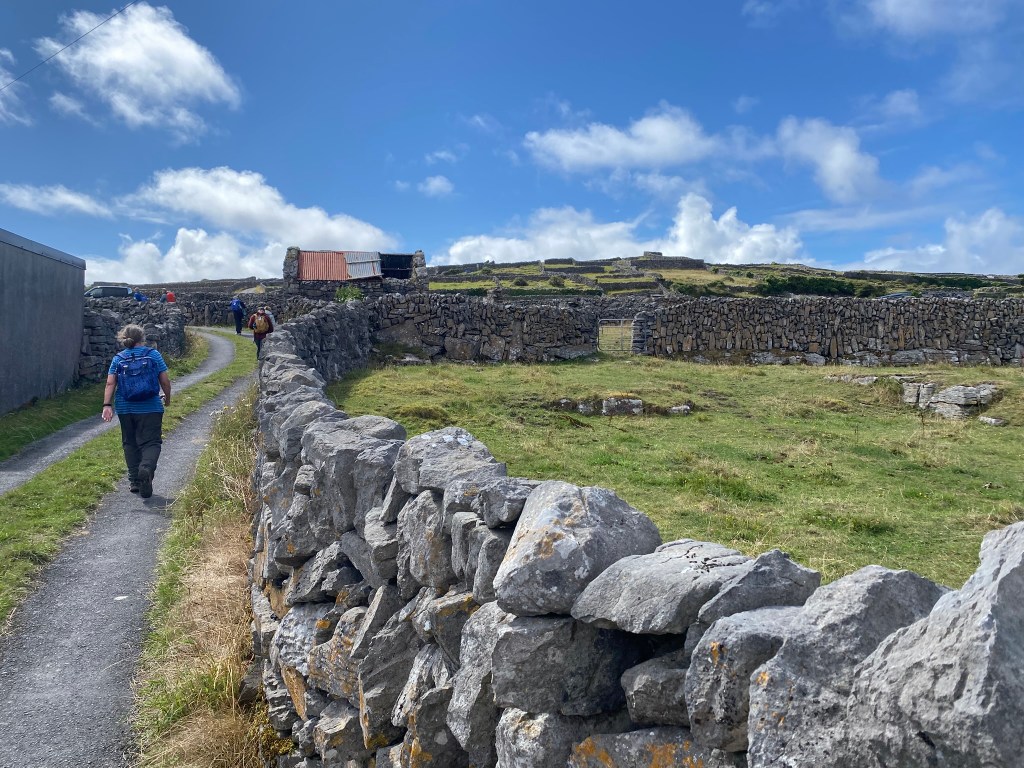
Our guide led us at a brisk pace, and since the rain was holding off, we happily stripped off all the raingear.
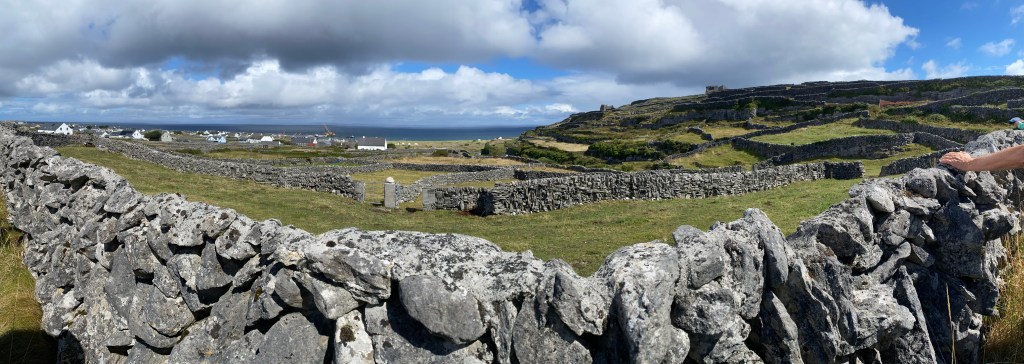
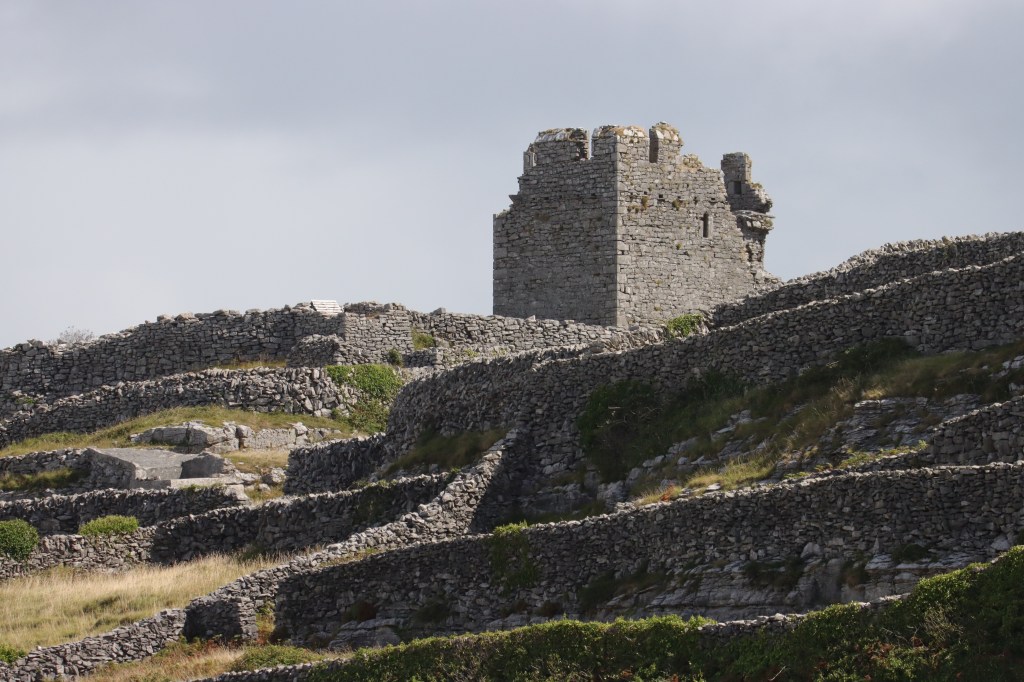
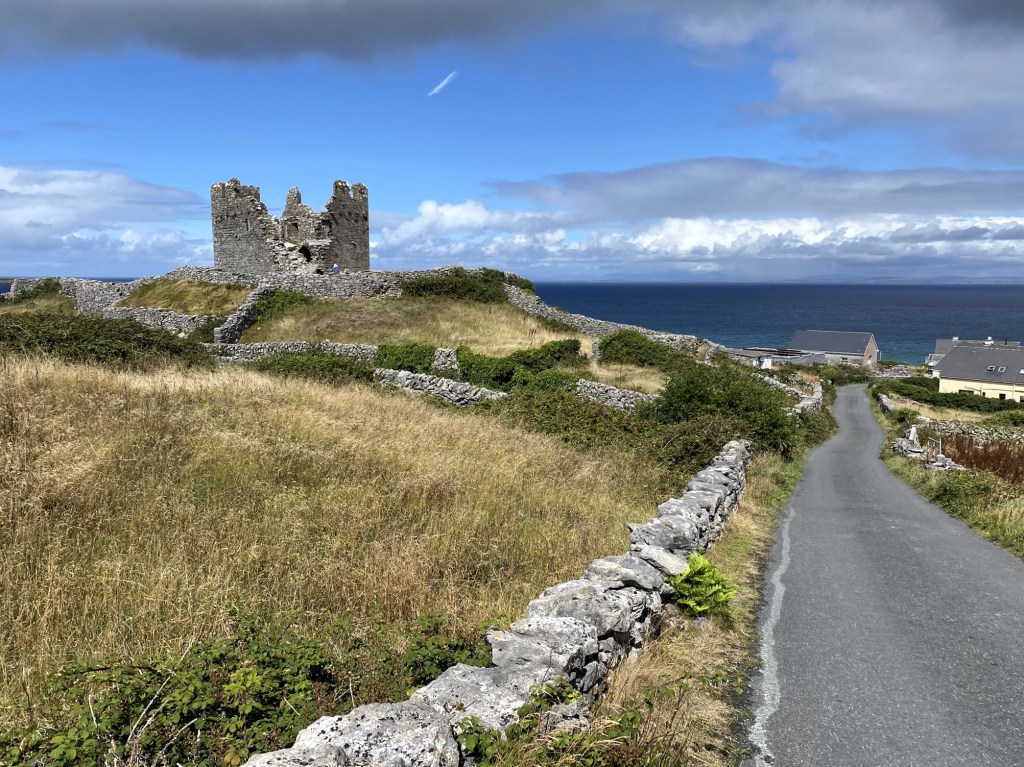
We headed up to the highest point on the island, “O’Brien’s Castle,” a fortress built in the 1400s by the O’Brien clan which overlooked the harbor and surrounding waters for surveillance and defence.
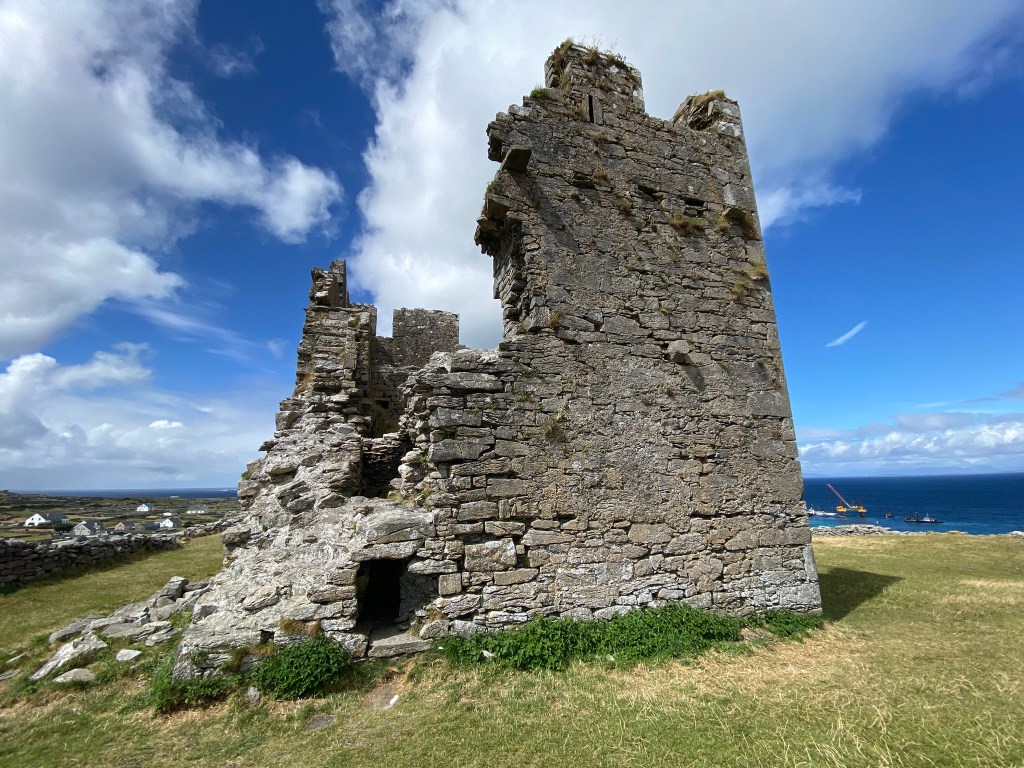
In 1652, during the British conquest of Ireland, Oliver Cromwell’s forces “slighted” it (rendered it ineffective as a stronghold).
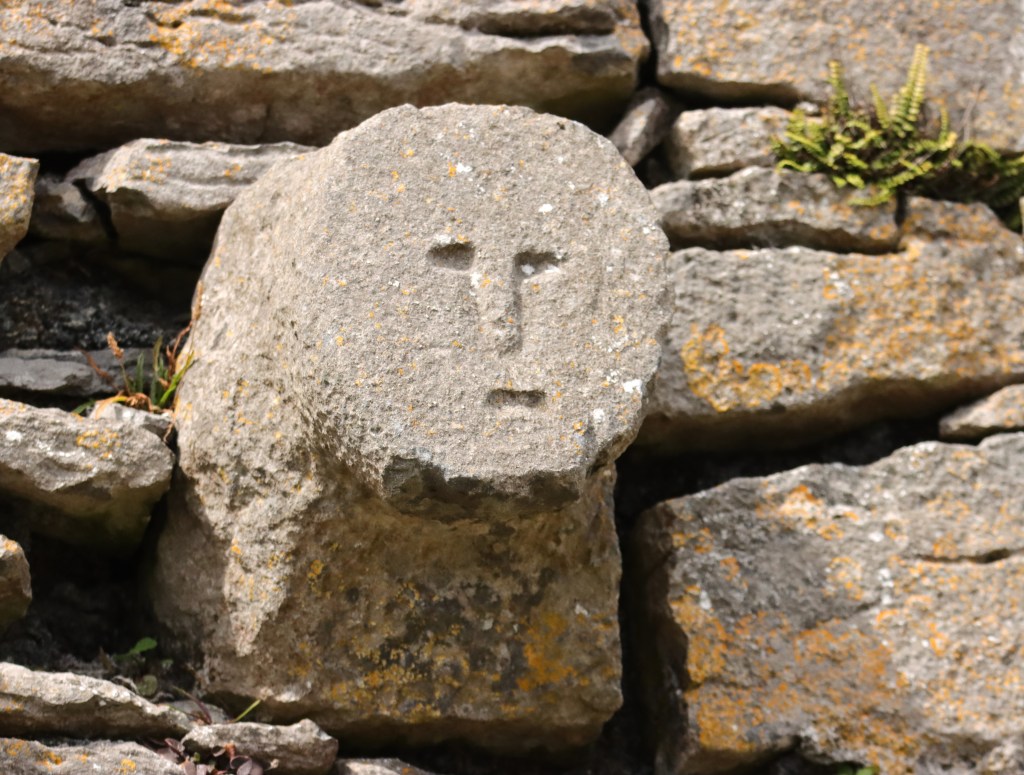
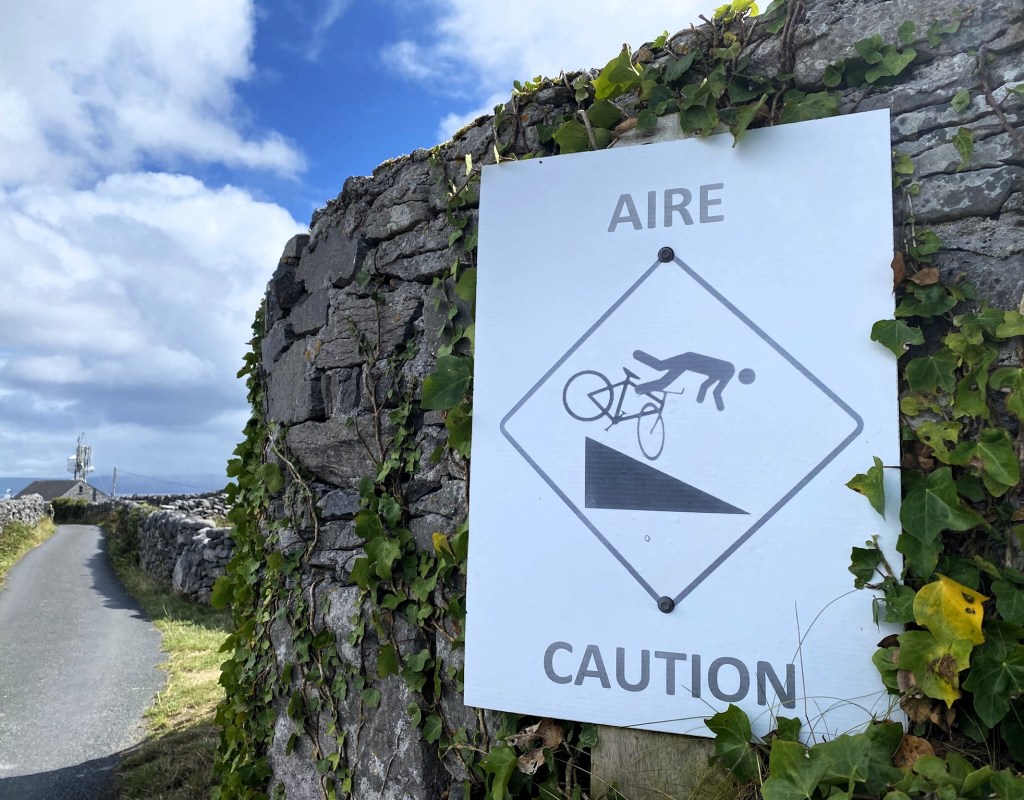
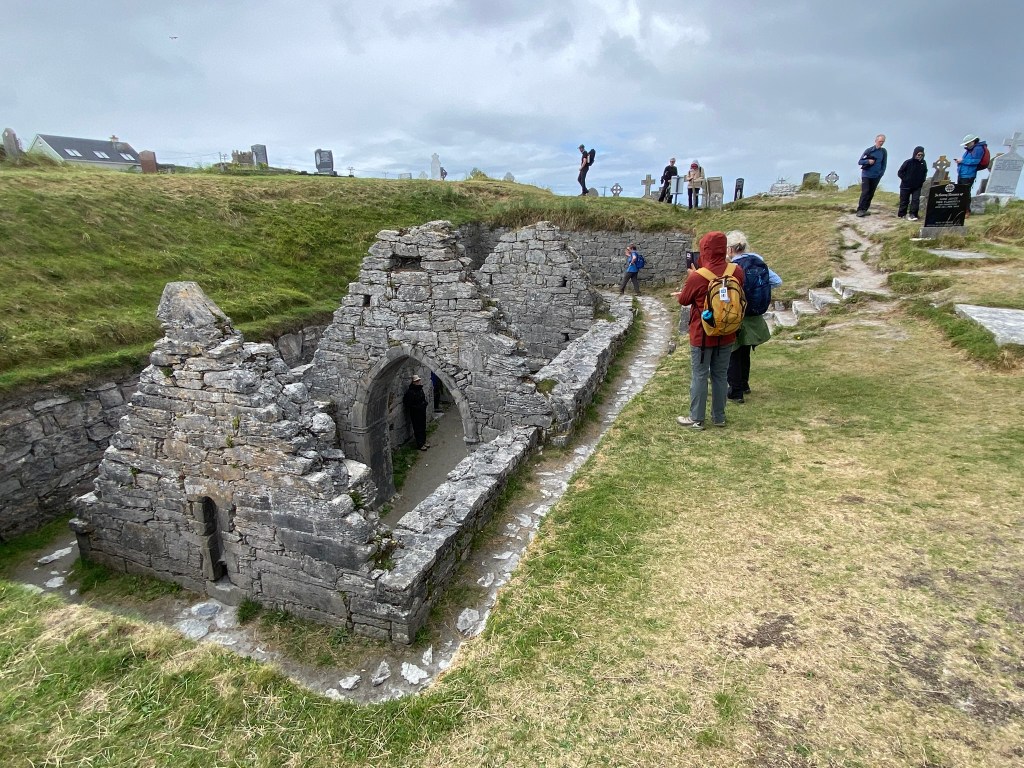
Our final historical site was St. Caomhán’s Church (Teampall Chaomhán), which dates to the 900’s, and is known familiarly as the “Sunken Church” due to shifting sand over the centuries.
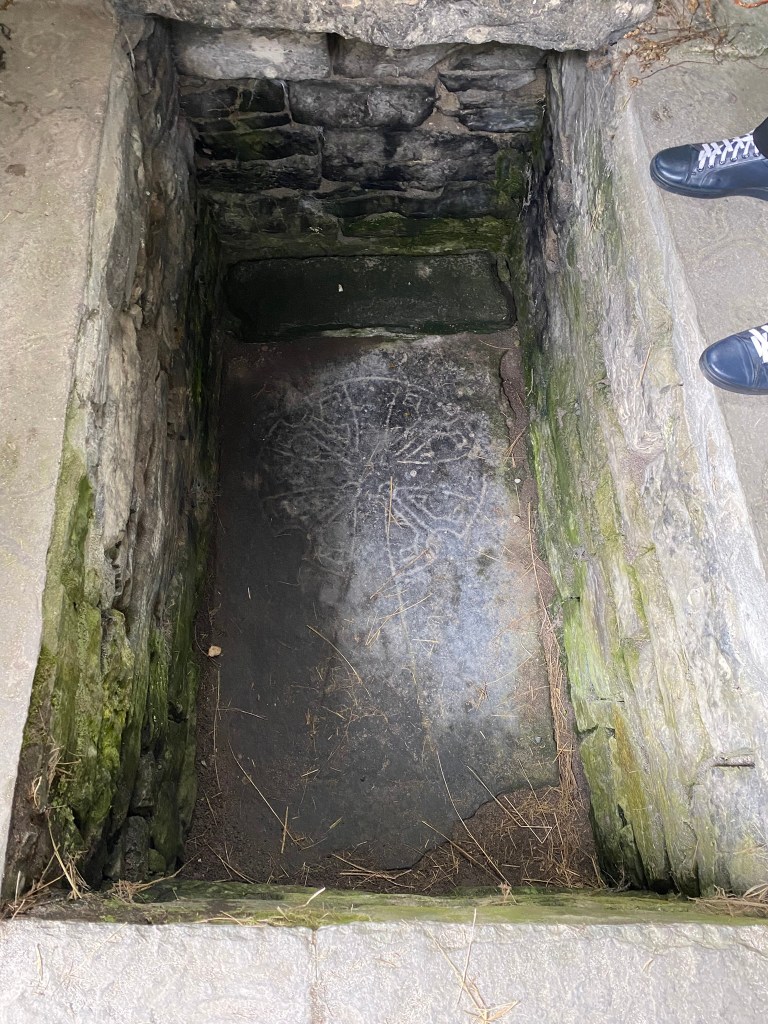
Not much is known about Caomhán (Cavan or “Kevin”), whose tomb is nearby, but he is the patron saint of this island.
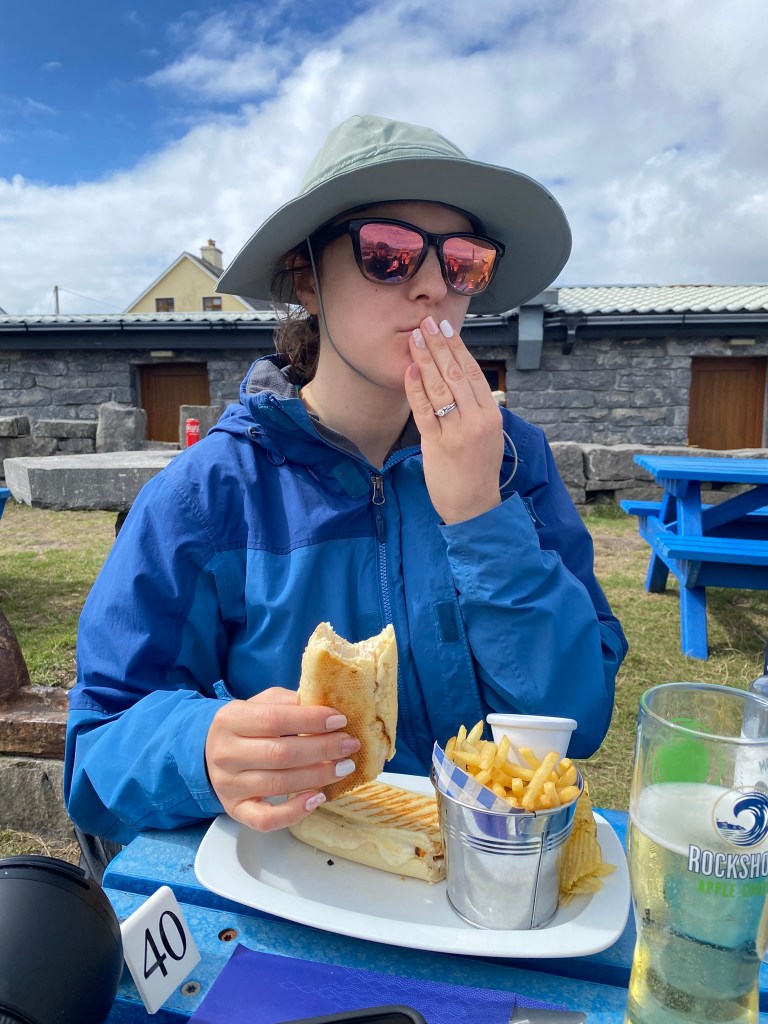
We had a very late lunch once the tour was over.
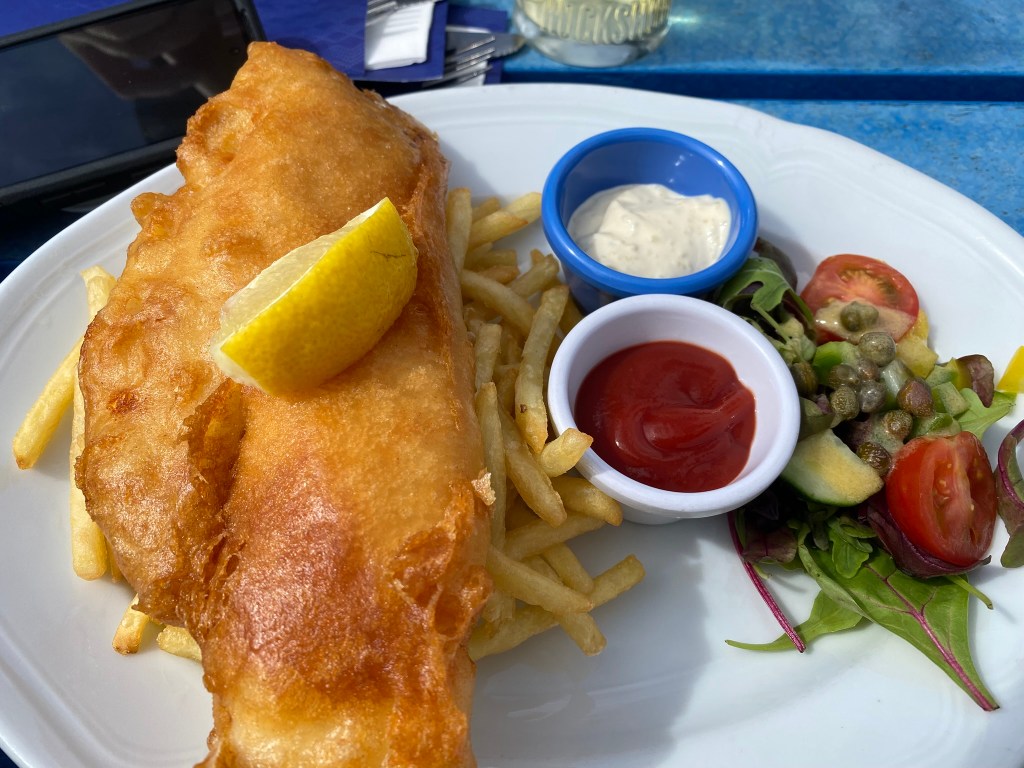
I couldn’t leave Ireland without indulging in some fish and chips!
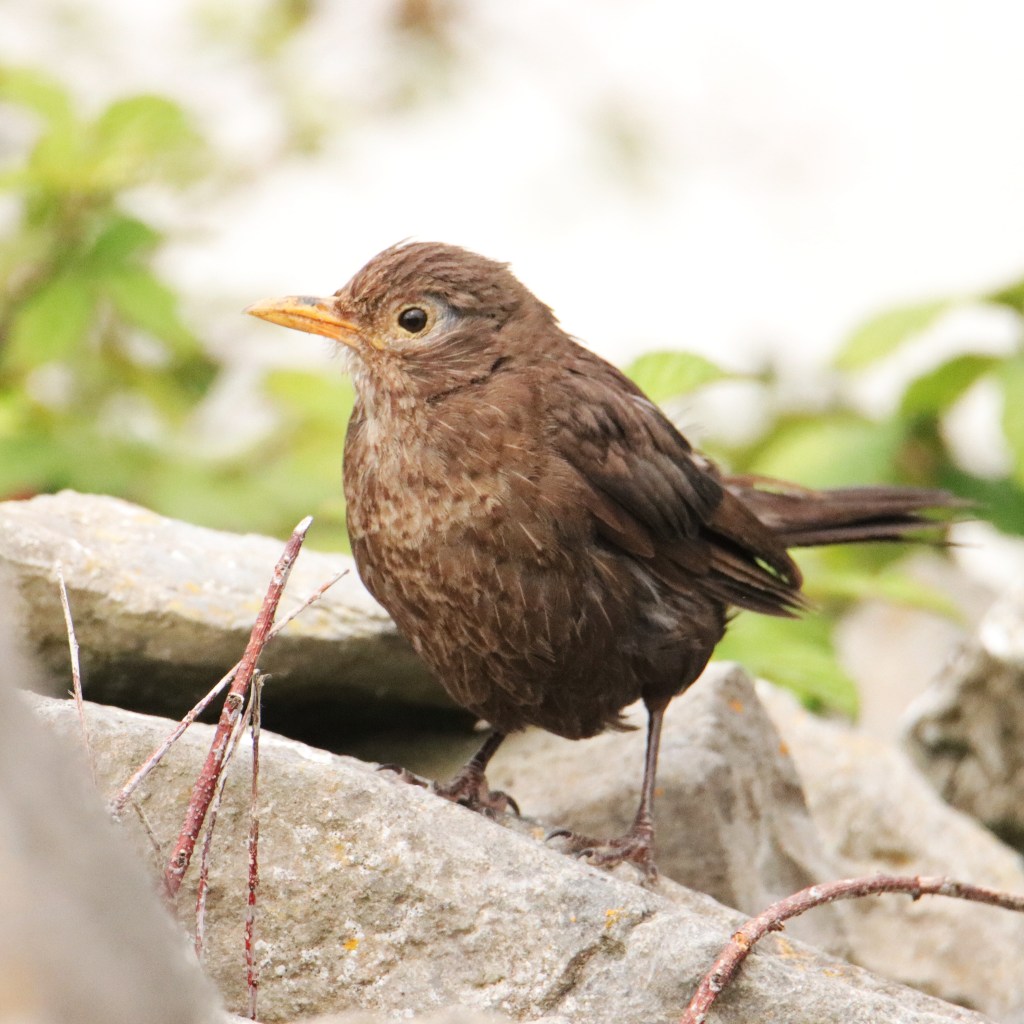
We had a bit of free time to wander on our own, and I found this Eurasian Blackbird.
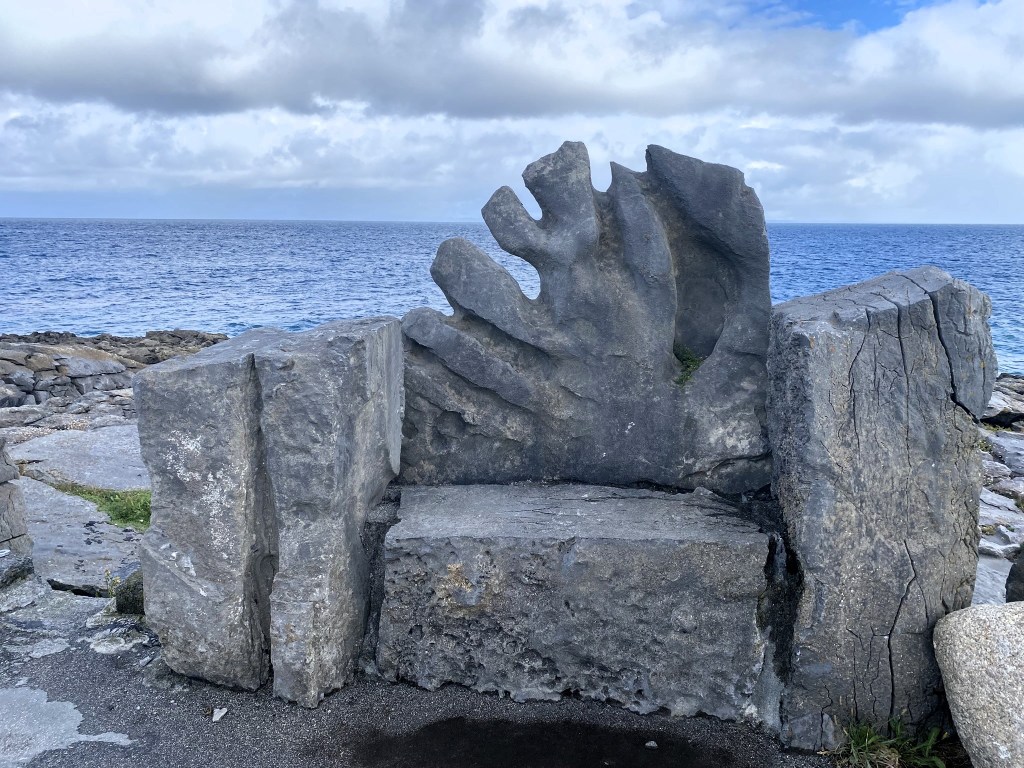
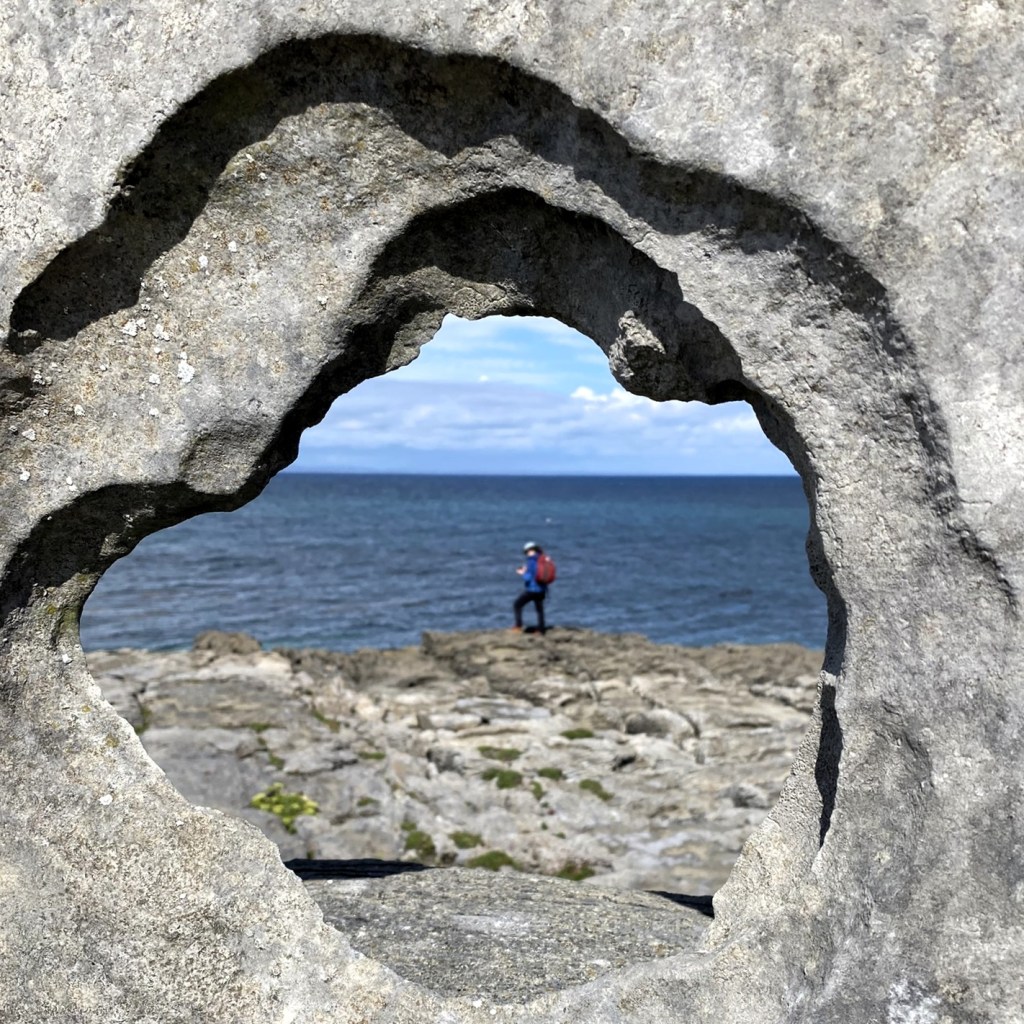
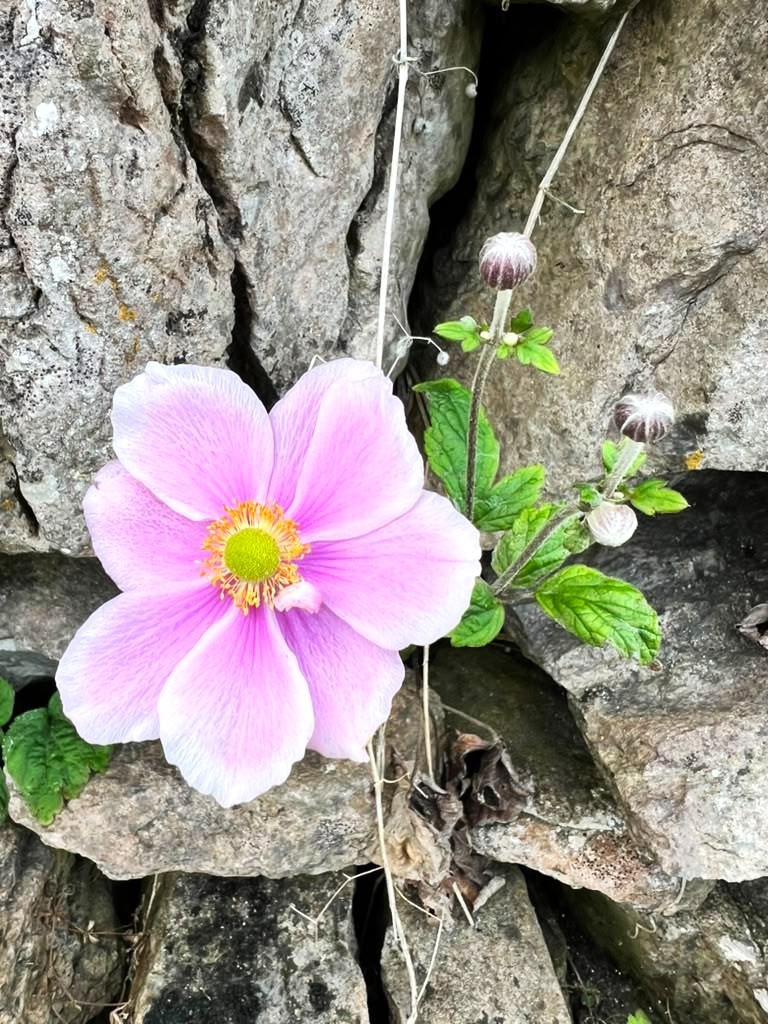
Now THAT was a beautiful day in Ireland!


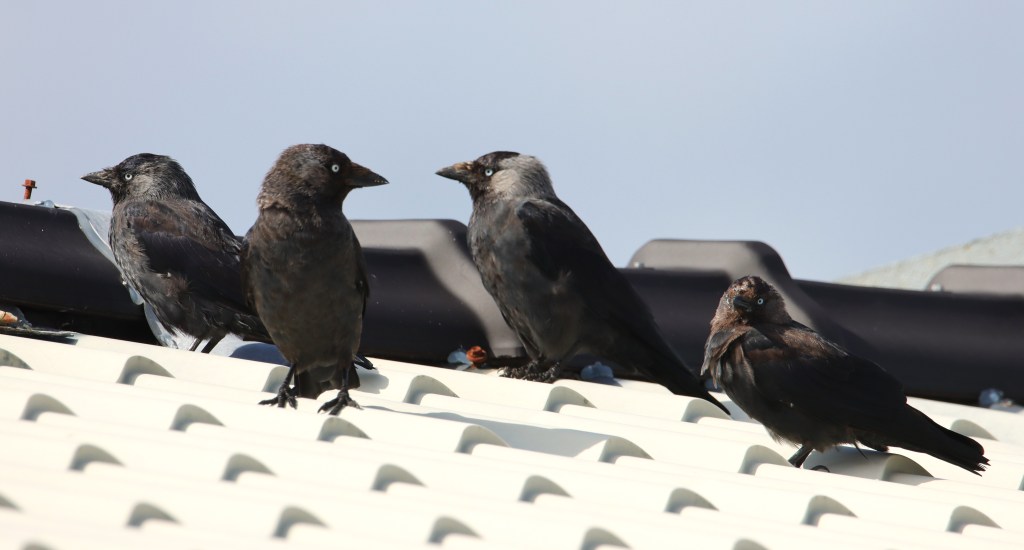
Thanks, Mary. Lots of good bird photos. Jackdaws are small!
Lorraine
LikeLike